Duxtop 9100MC review
Not a canner, and the only portable induction unit with a documented canner pairing behind it.
Disclosure: we earn a commission on purchases made through links on this page, at no extra cost to you. It does not change what we recommend — see how we pick and our affiliate disclosure.
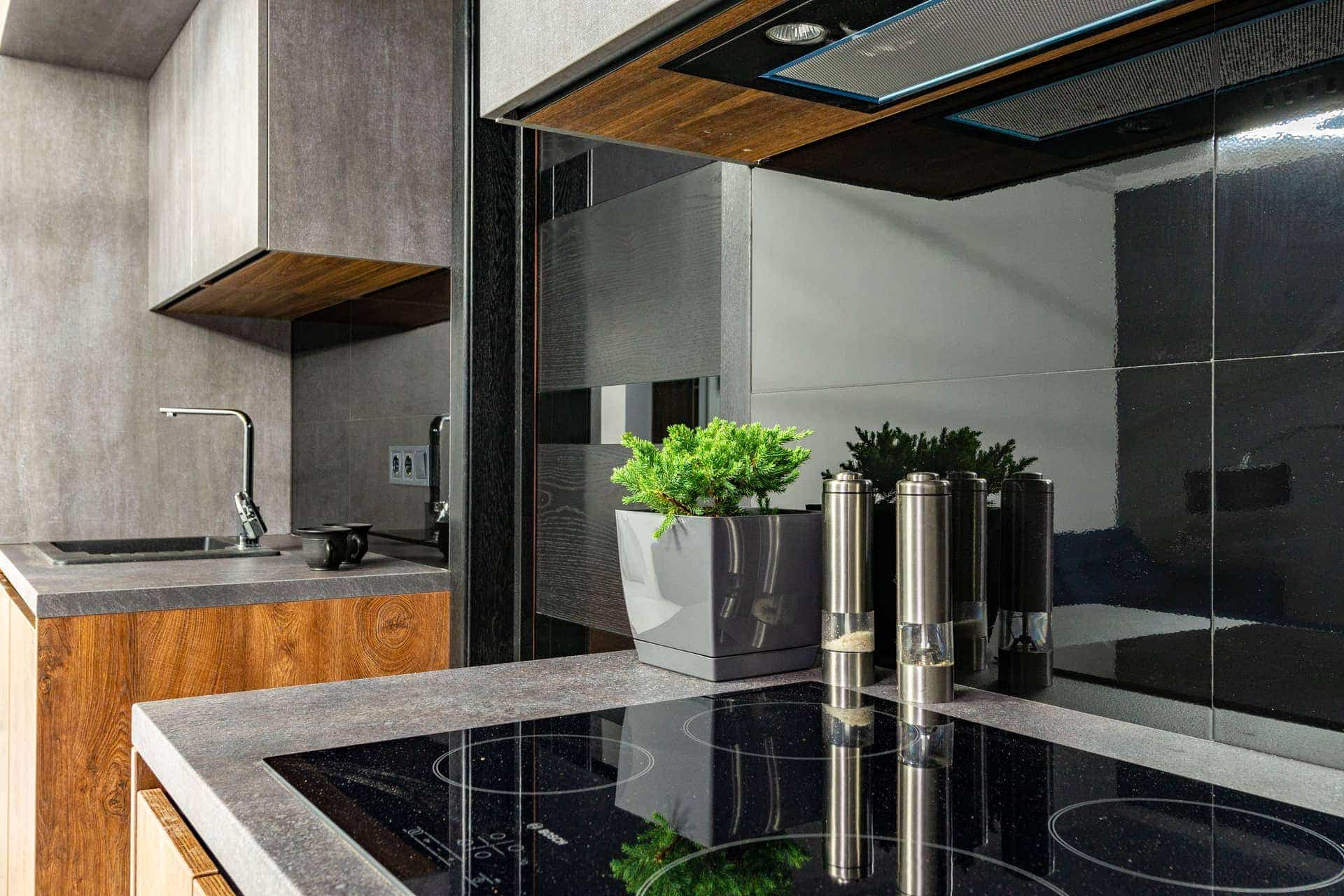
The Duxtop 9100MC is an 1800 W portable induction cooktop with 15 power levels and auto pan detection. For canning its significance is specific: Presto identified and tested this unit with its induction-compatible canner, which is a stronger claim than a compatibility label. It is not a canner and does not make a non-magnetic canner work.
This is a review of an appliance that is not a canner, on a site about canning, which needs a word of explanation. Induction is the one cooktop that can simply refuse to run a canner at all — the base has to be ferrous or nothing happens — and the way out of that is usually a portable unit. Of all the portable induction cooktops on the market, exactly one has a documented pairing with a canner behind it, and this is it.
That single fact is why it is on this site. Everything else about it is ordinary, and we will be plain about that too.
The published specifications
| Duxtop 9100MC | |
|---|---|
| Model | 9100MC / BT-M20B |
| Power | 200 W to 1800 W |
| Electrical | 120 V, 15 amp |
| Power levels | 15 preset |
| Temperature settings | 15 preset, 140 F to 460 F |
| Cookware required | Magnetic bottom, minimum 5-inch diameter |
| Safety | Auto pan detection; shuts off after 60 seconds with no or wrong cookware |
| Timer | Built-in countdown |
How it measures against the canning rules
The NCHFP publishes six guidelines for choosing a portable burner for canning, and they are numbers rather than opinions. This is how the 9100MC lands against the two that eliminate most of the market.
Wattage. The guidance is that an electric burner should be about equal to a typical household range's large burner, which is 1750 W. At 1800 W this clears it — and clears it on a single element, which is the distinction that matters. Consumer double hot plates advertise 1800 W and then split it into two 900 W sides, so only half of it is ever under your canner.
Element size. Rule three is that the burner should be no more than 4 inches smaller than the canner. Presto's own heat-source guidance suggests an 8- to 10-inch heating zone for a portable induction cooktop under its canner, which is the figure to check your unit against rather than a diameter Duxtop publishes for canning — because it does not publish one.
Quick picks
Every pick below is screened against the National Center for Home Food Preservation’s published canner rules first. Tap a row for the full write-up.
| # | Product | Best for | Key spec | Price |
|---|---|---|---|---|
| 1 |  Duxtop 9100MC 1800W Portable Induction CooktopNot a canner, but the way out of the problem. This is the specific portable induction cooktop Presto identified and tested with its induction canner, which is a much stronger claim than the words induction compatible printed on a box. Worth knowing about before you conclude that canning on induction is impossible. | A built-in cooktop that refuses | 1800 W, 5-inch minimum pan | $84.99 · View on Amazon#ad we earn a commission · price as of October 18, 2026 |
| 2 |  Presto 23-Quart Induction Compatible Pressure Canner (01784)The only full-size consumer pressure canner with a manufacturer statement that it works on induction, and Presto makes the point by excluding every other canner it sells by name. Heavy-gauge aluminum with a stainless steel-clad base, the standard seven-quart load, and it doubles as a boiling water canner. | Canning on induction | The one Presto rates for induction | $189.99 · View on Amazon#ad we earn a commission · price as of October 18, 2026 |
| 3 | Consumer countertop hot platesSkipSkip the inexpensive double hot plate for canning. They fail two of the NCHFP's six portable-burner guidelines outright, and they fail them on published numbers rather than on opinion. They are fine for warming a pot of chili and wrong for a canner. | Nothing - skip these for canning | Plate too small, watts too low | Check price on Amazon#ad we earn a commission · live price pending |
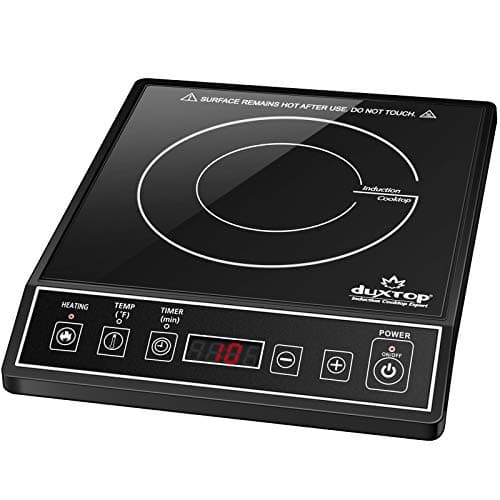
Duxtop 9100MC 1800W Portable Induction Cooktop
Not a canner, but the way out of the problem. This is the specific portable induction cooktop Presto identified and tested with its induction canner, which is a much stronger claim than the words induction compatible printed on a box. Worth knowing about before you conclude that canning on induction is impossible.
Published specs
- Model
- 9100MC / BT-M20B
- Power
- 200 W to 1800 W
- Electrical
- 120 V, 15 amp
- Power levels
- 15 preset
- Temperature settings
- 15 preset, 140 F to 460 F
- Cookware required
- Magnetic bottom, minimum 5-inch diameter
- Safety
- Auto pan detection shuts the unit off after 60 seconds if no cookware, or the wrong cookware, is detected
What works
- 1800 W meets the NCHFP guidance that a portable electric burner should be about equal in wattage to a household range burner, which is roughly 1750 W
- It is the one portable induction unit Presto actually identified and tested with its induction canner, rather than a cooktop that merely says induction on the box
- Auto pan detection gives you an unambiguous answer about whether the cooktop has recognized your canner, instead of a batch that quietly never comes to a boil
What to know first
- It is a second appliance and a second cost stacked on top of the canner. If your built-in cooktop already drives the canner, you do not need this at all
- A portable cooktop has to sit level, sturdy and secure under a fully loaded canner, which the NCHFP calls out specifically and is a real demand on your counter space
- The documented pairing is with the Presto induction canner. Nothing in the published specs promises it will drive another large canner you already own
Specs from Duxtop, 1800W Portable Induction Cooktop 9100MC/BT-M20B, Iowa State University Extension, Exploring Portable Burners and Other Canner Options, NCHFP, Recommended Canners. We have not handled this product — see how we pick.
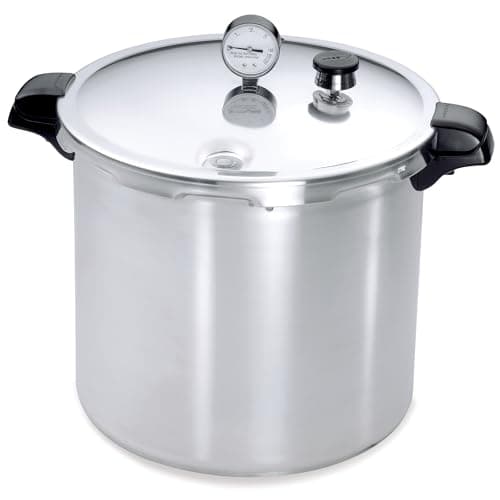
Presto 23-Quart Induction Compatible Pressure Canner (01784)
The only full-size consumer pressure canner with a manufacturer statement that it works on induction, and Presto makes the point by excluding every other canner it sells by name. Heavy-gauge aluminum with a stainless steel-clad base, the standard seven-quart load, and it doubles as a boiling water canner.
Published specs
- Liquid capacity
- 23 quarts (21.8 liters)
- Jar capacity
- 26 half-pints, 20 pints, 7 quarts
- Material
- Heavy-gauge polished aluminum with a stainless steel-clad base
- Ranges
- Gas, electric, smooth-top and induction
- Gauge
- Dial gauge
- Base (Presto's own guidance figure)
- 8 to 9 inches
- Burner limit
- 12,000 BTUs or less
- Also
- Doubles as a boiling water canner
- Warranty
- 12-year limited
What works
- The only canner in this category whose manufacturer puts induction compatibility in writing. Presto states plainly that apart from this model its pressure canners do not work on induction ranges, which is a far more useful sentence than a listing keyword
- Takes the same 7 quarts or 20 pints as the standard 23-quart and doubles as a boiling water canner, so on a cooktop that rejects nearly every canner this one pot still covers both methods
- The stainless-clad base is not induction-only. It heats on gas, coil and smooth-top too, so the canner survives a move to a different stove
What to know first
- Presto cautions that it may not work on all portable induction ranges. The company tested one specific portable unit, so a portable unit you already own is not a safe assumption
- Still a dial gauge, which should be checked for accuracy every year. A weighted gauge never needs it, and there is no induction-rated weighted canner to switch to
- Rated for burners of 12,000 BTUs or less, and Presto tells you not to use it on outdoor LP gas burners at all
Specs from Presto, 23-Quart Induction Compatible Pressure Canner (01784), Presto, Canning Heat Source, Iowa State University Extension, Exploring Portable Burners and Other Canner Options. We have not handled this product — see how we pick.
Consumer countertop hot plates
Skip the inexpensive double hot plate for canning. They fail two of the NCHFP's six portable-burner guidelines outright, and they fail them on published numbers rather than on opinion. They are fine for warming a pot of chili and wrong for a canner.
Published specs
- Typical plate size
- Around 7.4" and 6.1" on a double unit — smaller than the canner needs
- Typical power split
- 1800 W total often means about 900 W per side, not 1800 W under one canner
- Guideline 3
- Burner no more than 4 inches smaller than the canner — a 7-inch plate caps you at an 11-inch canner
- Guideline 4
- About 1750 W for electric, matching a household range's large burner
What works
- There is no upside for canning. This entry is here so you can read the wattage split on the box before you rely on one
What to know first
- A 1800 W double burner is usually two 900 W elements. Only one of them is under your canner, so you are canning on roughly half the power a range burner gives you
- An undersized plate heats the middle of the canner base and not the outside, which is the exact uneven-heating failure the 4-inch rule exists to prevent
- Long come-up times on an underpowered burner push the whole batch out of the timing the tested recipe assumes
Specs from Iowa State University Extension, Exploring Portable Burners and Other Canner Options, NCHFP, Recommended Canners. We have not handled this product — see how we pick.
What it does not solve
Three things, and they are the reasons not to buy it:
- It does not make a non-magnetic canner work. Induction needs ferrous metal in the base. An aluminum canner on this unit is an aluminum canner on any induction cooktop: nothing happens. Presto states that apart from the 01784, its pressure canners do not work on induction ranges.
- It is a second appliance and a second cost. If your built-in cooktop already drives your canner, this solves a problem you do not have.
- It needs somewhere to stand. A portable cooktop under a loaded canner has to be level, sturdy and secure on a hard heat-tolerant surface with clearance underneath — that is NCHFP rule two, and a full canner is the heaviest hottest thing most kitchens handle.
Auto pan detection is more useful here than it sounds
On a normal appliance, a feature that switches the unit off after 60 seconds when it cannot detect cookware is a safety footnote. For canning it is a diagnostic, and a genuinely valuable one.
The failure you want to avoid on induction is a batch that quietly never comes to a boil because the cooktop is not really driving the pot. Pan detection turns that into an immediate, unambiguous answer: either the cooktop recognizes your canner within a minute or it does not, and you find out before the jars are in rather than forty minutes into a process you then cannot trust.
Who should actually buy it
A narrow group, and it is worth saying so on a page that could easily just sell it. Buy it if induction is your cooking surface, you are buying or already own the Presto 01784, and you want the one combination a manufacturer has actually tested — or if your built-in induction cooktop refuses to detect the canner and you need a unit that will.
Do not buy it as a general canning upgrade. If you cook on gas or an electric coil, a portable unit buys you nothing your range does not already do better, and the wider portable-burner picture — including why most of that category fails the published rules — is in portable burners for canning.
The controls, in canning terms
Fifteen power levels and fifteen temperature presets sound like more precision than canning needs, and for water bath work they are. A boiling water bath has exactly one setting that matters: hot enough to hold a full rolling boil for the whole processing time. You will find the level that does that and leave it there.
Pressure canning is where fine control earns its place. Holding a steady pressure for ninety minutes means making small heat adjustments rather than large ones, and a unit that steps in fifteen increments is easier to settle than one with three. The countdown timer is genuinely useful too — though it should be a backup to a separate timer, not the only one, because a canning process is timed from the moment pressure is reached rather than from when you pressed start.
Living with a portable unit
Two practical points that apply to any portable cooktop under a canner and are worth planning for before the first batch. A 15 amp circuit running an 1800 W appliance is close to its working limit, so it should not be sharing a circuit with a kettle, a toaster or a second cooktop — a tripped breaker forty minutes into a pressure process is not a recoverable situation.
And the surface underneath matters. Hard, flat, heat-tolerant and level, with clearance for air to move under the housing. Not a wooden board, not a laminate edge, and not a folding table — this is NCHFP rule two and a loaded canner is the heaviest hottest thing the kitchen handles.
The verdict
A competent 1800 W portable induction cooktop whose canning relevance rests entirely on one thing: it is the unit Presto tested with its induction canner. That makes it the sensible choice for an induction kitchen committed to the 01784, and irrelevant for everybody else. It does not make a non-magnetic canner work, and nothing will.
Next stepThe full induction pictureCommon questions
Can you can on a Duxtop 9100MC?
Is 1800 watts enough for canning?
Will it run a Presto 01781?
What cookware does it need?
Do I need this if my cooktop is already induction?
Do you earn a commission on these?
Sources
- Duxtop — 1800W Portable Induction Cooktop 9100MC
- Iowa State University Extension — Exploring Portable Burners and Other Canner Options
- Presto — Canning Heat Source
- NCHFP — Recommended Canners
Product specifications are taken from each manufacturer’s own published page, cited on the product. We have not handled these products — how we pick.