Portable burners for canning
Six published rules decide this, and most of the burners sold for it fail at least two. Here is the honest map.
Disclosure: we earn a commission on purchases made through links on this page, at no extra cost to you. It does not change what we recommend — see how we pick and our affiliate disclosure.
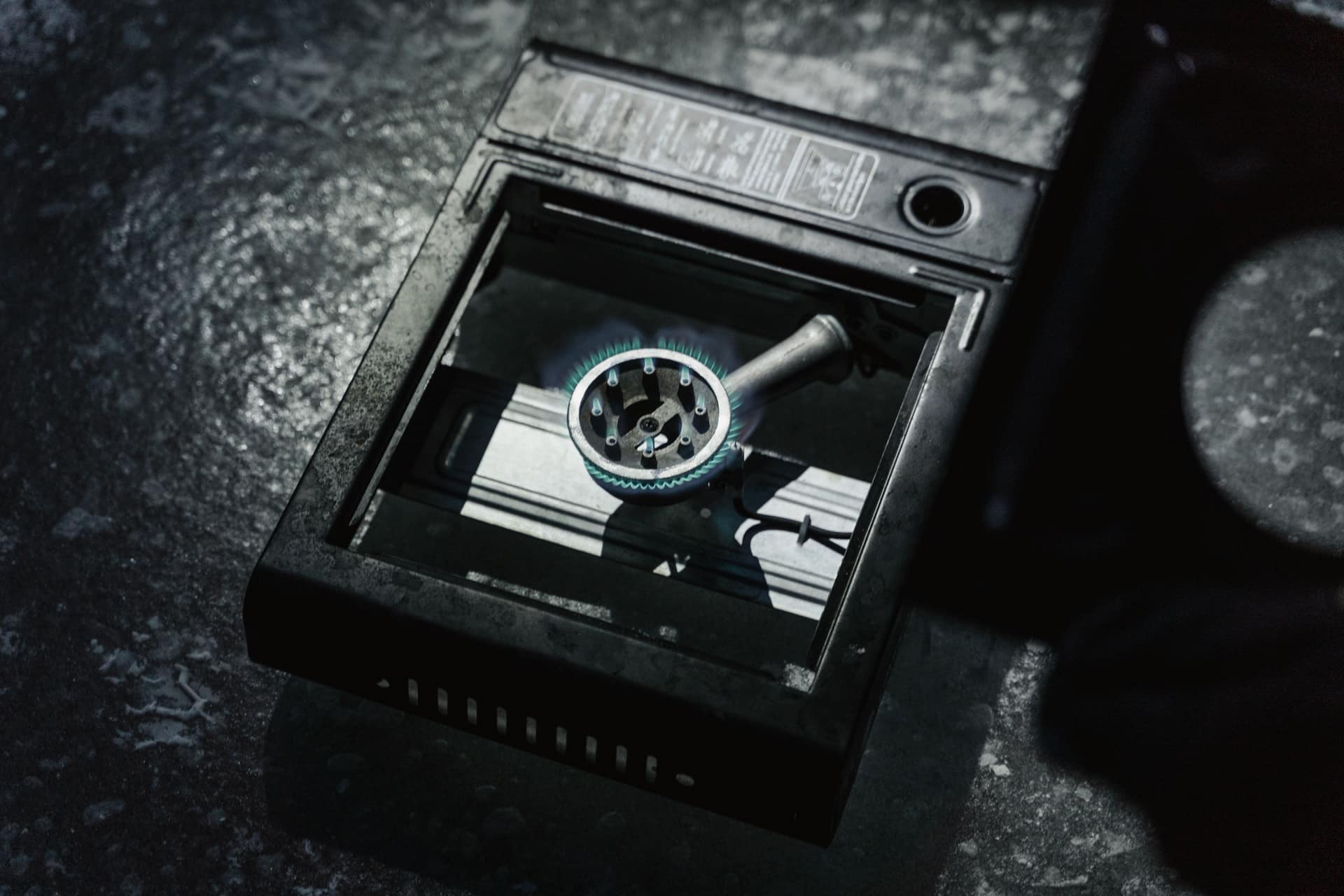
A portable burner for canning must mimic a range burner: no more than 4 inches smaller than the canner, about 1,750 watts for electric, 12,000 BTU or less for gas, and level and sturdy under a full load. Most consumer hot plates fail on wattage and plate size, and most outdoor propane burners exceed the BTU limit.
People look for a portable canning burner for three good reasons: an induction cooktop that will not drive a canner, a glass top the range maker says not to can on, or simply not wanting a canner running for 90 minutes on the only stove in the house during a heat wave. All three are real. The problem is that the burners marketed for the job mostly do not meet the published requirements.
The good news is that you do not have to guess. The National Center for Home Food Preservation publishes six specific guidelines for selecting a portable burner, and they are numbers rather than opinions. Below they are, then what survives them.
The six published rules
These come from the NCHFP by way of Iowa State University Extension, which sets them out plainly. Every product below is screened against them, and nothing is screened against our impressions, because we have not used any of these.
- 1The unit should mimic a range burner as much as possible in size and heat intensity.
- 2The burner must be level, sturdy, and secure. Look for enough height to allow air to flow under the burner.
- 3Look for a burner diameter that is no more than 4 inches smaller than the diameter of your canner.
- 4For electric burners, the wattage should be about equal to that of a typical household range large burner, which is 1750 W.
- 5The BTUs of a gas burner should be 12,000 BTU or less.
- 6The unit housing should hold up to the high heat under the canner for long heating periods.
How we screened these
We took each candidate's manufacturer-published numbers — element diameter, wattage, and any stated load limit — and checked them against the six rules. Where a manufacturer publishes a limit that rules the unit out for a full canner, we say so even though it is the more attractive-looking product. The method is on how we pick.
- Element diameter — measured against rule 3 for a canner of roughly 11 to 12 inches.
- Actual wattage under one pot — not the box's combined figure for two elements.
- Published load limit — the specification most buyers never look for, and the one that decides this category.
- Housing — built for sustained high heat, or built to warm soup.
- Whether the manufacturer mentions canning at all — almost none do, and that matters.
Quick picks
Every pick below is screened against the National Center for Home Food Preservation’s published canner rules first. Tap a row for the full write-up.
| # | Product | Best for | Key spec | Price |
|---|---|---|---|---|
| 1 |  Duxtop 9100MC 1800W Portable Induction CooktopNot a canner, but the way out of the problem. This is the specific portable induction cooktop Presto identified and tested with its induction canner, which is a much stronger claim than the words induction compatible printed on a box. Worth knowing about before you conclude that canning on induction is impossible. | A built-in cooktop that refuses | 1800 W, 5-inch minimum pan | $84.99 · View on Amazon#ad we earn a commission · price as of October 18, 2026 |
| 2 |  Cadco CSR-3T Portable Electric Hot PlateThe commercial hot plate people reach for when the range is unavailable, and the one whose published limits deserve reading before you buy. An 8-inch element at 1500 W is the right shape and close to the right power for canning. Cadco's own max load capacity is 15 pounds, and that is the number that decides it. | Small-batch pints, not a full canner | 15 lb max load | $223.49 · View on Amazon#ad we earn a commission · price as of October 18, 2026 |
| 3 | Consumer countertop hot platesSkipSkip the inexpensive double hot plate for canning. They fail two of the NCHFP's six portable-burner guidelines outright, and they fail them on published numbers rather than on opinion. They are fine for warming a pot of chili and wrong for a canner. | Nothing - skip these for canning | Plate too small, watts too low | Check price on Amazon#ad we earn a commission · live price pending |
| 4 | High-output outdoor propane burnersSkipSkip the turkey-fryer style propane burner. This is the one where more power is actively worse: the NCHFP guideline is 12,000 BTU or less, Presto tells you in writing not to use its canners on outdoor LP burners, and Iowa State Extension notes the heat damages aluminum canners. | Nothing - skip these for canning | Over 12,000 BTU | Check price on Amazon#ad we earn a commission · live price pending |
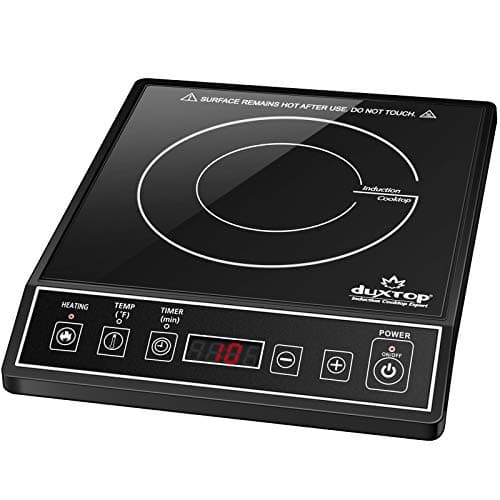
Duxtop 9100MC 1800W Portable Induction Cooktop
Not a canner, but the way out of the problem. This is the specific portable induction cooktop Presto identified and tested with its induction canner, which is a much stronger claim than the words induction compatible printed on a box. Worth knowing about before you conclude that canning on induction is impossible.
Published specs
- Model
- 9100MC / BT-M20B
- Power
- 200 W to 1800 W
- Electrical
- 120 V, 15 amp
- Power levels
- 15 preset
- Temperature settings
- 15 preset, 140 F to 460 F
- Cookware required
- Magnetic bottom, minimum 5-inch diameter
- Safety
- Auto pan detection shuts the unit off after 60 seconds if no cookware, or the wrong cookware, is detected
What works
- 1800 W meets the NCHFP guidance that a portable electric burner should be about equal in wattage to a household range burner, which is roughly 1750 W
- It is the one portable induction unit Presto actually identified and tested with its induction canner, rather than a cooktop that merely says induction on the box
- Auto pan detection gives you an unambiguous answer about whether the cooktop has recognized your canner, instead of a batch that quietly never comes to a boil
What to know first
- It is a second appliance and a second cost stacked on top of the canner. If your built-in cooktop already drives the canner, you do not need this at all
- A portable cooktop has to sit level, sturdy and secure under a fully loaded canner, which the NCHFP calls out specifically and is a real demand on your counter space
- The documented pairing is with the Presto induction canner. Nothing in the published specs promises it will drive another large canner you already own
Specs from Duxtop, 1800W Portable Induction Cooktop 9100MC/BT-M20B, Iowa State University Extension, Exploring Portable Burners and Other Canner Options, NCHFP, Recommended Canners. We have not handled this product — see how we pick.
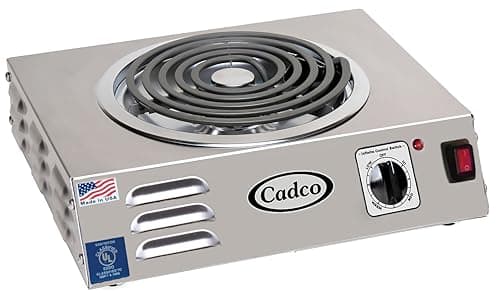
Cadco CSR-3T Portable Electric Hot Plate
The commercial hot plate people reach for when the range is unavailable, and the one whose published limits deserve reading before you buy. An 8-inch element at 1500 W is the right shape and close to the right power for canning. Cadco's own max load capacity is 15 pounds, and that is the number that decides it.
Published specs
- Element
- 8" diameter tubular element
- Power
- 1500 watts
- Electrical
- 120 V, 12.5 amps, NEMA 5-15P
- Dimensions
- 14" W x 4 1/8" H x 12 1/4" D
- Housing
- Stainless steel
- Control
- Variable (infinite) heat control, on/off switch
- Max load
- Cadco publishes a max load capacity of 15 pounds, with a pot no larger than a 1" overhang over the element
- Listings
- UL Safety and Sanitary, C-UL
- Canning
- Not mentioned by Cadco
What works
- An 8-inch element is large enough to satisfy the NCHFP rule that a burner be no more than 4 inches smaller than the canner, for canners up to about 12 inches
- 1500 W on a dedicated 120 V circuit is the wattage Iowa State Extension cites for commercial-grade portable units, rather than the 900 W a consumer double burner gives each side
- Infinite heat control and a stainless housing built for commercial service, which is guideline six — the housing has to survive long periods of high heat under a canner
What to know first
- The published 15-pound max load is the problem. Water alone in a 21.5-quart canner is far past that before a single jar goes in, so this does not honestly clear a full-size water bath load
- Cadco also limits the pot to a 1" overhang over the element, which caps you near a 10-inch base — narrower than most canners
- Cadco does not mention canning anywhere in its documentation, so nothing here is a manufacturer canning endorsement. It is a hot plate whose numbers we are checking against a canning rule
Specs from Cadco, CSR-3T Portable Hot Plate specifications, Iowa State University Extension, Exploring Portable Burners and Other Canner Options, NCHFP, Recommended Canners. We have not handled this product — see how we pick.
Consumer countertop hot plates
Skip the inexpensive double hot plate for canning. They fail two of the NCHFP's six portable-burner guidelines outright, and they fail them on published numbers rather than on opinion. They are fine for warming a pot of chili and wrong for a canner.
Published specs
- Typical plate size
- Around 7.4" and 6.1" on a double unit — smaller than the canner needs
- Typical power split
- 1800 W total often means about 900 W per side, not 1800 W under one canner
- Guideline 3
- Burner no more than 4 inches smaller than the canner — a 7-inch plate caps you at an 11-inch canner
- Guideline 4
- About 1750 W for electric, matching a household range's large burner
What works
- There is no upside for canning. This entry is here so you can read the wattage split on the box before you rely on one
What to know first
- A 1800 W double burner is usually two 900 W elements. Only one of them is under your canner, so you are canning on roughly half the power a range burner gives you
- An undersized plate heats the middle of the canner base and not the outside, which is the exact uneven-heating failure the 4-inch rule exists to prevent
- Long come-up times on an underpowered burner push the whole batch out of the timing the tested recipe assumes
Specs from Iowa State University Extension, Exploring Portable Burners and Other Canner Options, NCHFP, Recommended Canners. We have not handled this product — see how we pick.
High-output outdoor propane burners
Skip the turkey-fryer style propane burner. This is the one where more power is actively worse: the NCHFP guideline is 12,000 BTU or less, Presto tells you in writing not to use its canners on outdoor LP burners, and Iowa State Extension notes the heat damages aluminum canners.
Published specs
- NCHFP guideline
- A gas burner should be 12,000 BTU or less
- Presto's statement
- Do not use on outdoor LP gas burners or gas ranges over 12,000 BTUs
- Why it matters
- Iowa State Extension: high heat can damage pressure canners, especially those made of aluminum
- The other risk
- Excess heat can alter the come-up time the tested process assumes
What works
- There is no upside. A burner that boils water faster is not a burner that processes jars correctly
What to know first
- Most outdoor propane burners are rated far above 12,000 BTU, which puts them outside the guideline before you light them
- Warping an aluminum canner base is permanent, and a warped base is a canner that no longer seats evenly on anything
- A tall propane stand puts a heavy pot of boiling water at an awkward height outdoors, which is a burn risk the kitchen version does not have
Specs from Presto, Canning Heat Source, Iowa State University Extension, Exploring Portable Burners and Other Canner Options, NCHFP, Recommended Canners. We have not handled this product — see how we pick.
The load limit nobody reads
This is the finding that reframes the whole category. Cadco's CSR-3T is a commercial hot plate with an 8-inch element and 1500 watts, which looks like exactly the right answer on rules 3 and 4. Cadco also publishes a max load capacity of 15 pounds, and a limit of no more than a 1-inch overhang of pot over element.
A 21.5-quart canner holds around 20 quarts of water for a full load. Water alone weighs over 40 pounds at that volume, before the canner and seven full quart jars. So a specification that reads as a footnote quietly rules the unit out for a full-size water bath load, and no amount of careful use changes a published limit. It remains genuinely useful for a half-batch of half-pints in a small pot, which is a real use and a much smaller claim than the one usually made for it.
Which leaves induction as the one documented route
Portable induction is the only part of this category where a manufacturer has done the pairing work. Presto identified and tested a specific portable induction cooktop with its induction-compatible canner, which is a much stronger statement than a compatibility claim on a box. The catch is the same one as always on induction: the canner base must be ferrous, and almost no canner is. That whole problem is worked through in canning on an induction cooktop.
What to do instead, if nothing here fits
Three options, in the order we would try them. First, check whether your existing range is actually disqualified — a lot of glass-top worry is about weight and element size rather than an outright prohibition, and will it fit your stove does that arithmetic. Second, match the canner to the heat source you have rather than the reverse, which usually means a smaller canner and more batches. Third, can somewhere else during harvest week; a relative's gas range is not a defeat.
What we would not do is improvise. A loaded canner is 40 pounds of boiling water at counter height, and a burner chosen because it was the closest thing available is the wrong place to find out about rule 2.
Rule 2 deserves more attention than it gets
Level, sturdy and secure, with enough height to allow air to flow under the burner. It reads like boilerplate and it is the rule most likely to hurt somebody. A canner is the heaviest, hottest thing most kitchens ever handle, and a portable burner puts it on a surface that was not designed to carry it.
In practice that means a few concrete things. The burner needs a hard, flat, heat-tolerant surface — not a wooden cutting board, not a laminate edge, not a folding table. It needs clearance underneath, because a housing that cannot shed heat will transfer it into whatever it is standing on. And it needs to be somewhere you can lift a full canner off without twisting, which usually means not at the back of a counter behind other appliances.
The related habit worth adopting: load and unload jars while the canner is already sitting on the burner. Carrying a loaded canner across a kitchen is the single most avoidable risk in the whole process, and it is more avoidable on a portable burner than on a range because you chose where to put it.
Water bath and pressure canning are not equally forgiving here
If you are water bath canning, an underpowered burner shows itself honestly: the water takes a long time to reach a full rolling boil, and you can see whether it is boiling. You start timing when it boils, so a slow burner costs you time rather than safety, provided it can hold a rolling boil for the whole process.
Pressure canning is less forgiving, and this is the distinction to hold on to. The process depends on reaching and holding a specific pressure for a specific time, and a burner that cannot maintain it produces a canner that drifts below pressure mid-process. Iowa State Extension's framing is worth repeating: pressure canning is the only safe method recommended by the USDA for low-acid foods, which means the heat source has to be able to do the whole job, not most of it. If you are pressure canning on a portable burner, being confident it can hold pressure for 90 minutes matters more than anything else on this page.
The decision, in one paragraph
If you are on induction and committed, the documented pairing of a portable induction cooktop with an induction-rated canner is the one route with a manufacturer behind it — that unit is reviewed in Duxtop 9100MC review. If you want a portable electric burner for full-size batches, screen for an element of at least 8 inches, close to 1,750 watts, and — this is the part that matters — a published load capacity that clears a canner full of water. If you cannot find all three, use your range and read best pressure canners or best water bath canners for a canner that fits it.
Next stepCheck your existing range firstCommon questions
Can you use a hot plate for canning?
How many watts do you need for canning?
Can you use a propane burner for canning?
Is a turkey fryer burner safe for a pressure canner?
Will a portable induction burner run a canner?
Do you earn a commission on these?
Sources
- Iowa State University Extension — Exploring Portable Burners and Other Canner Options
- NCHFP — Recommended Canners
- Presto — Canning Heat Source
- Cadco — CSR-3T specifications
- Duxtop — 1800W Portable Induction Cooktop 9100MC
Product specifications are taken from each manufacturer’s own published page, cited on the product. We have not handled these products — how we pick.