Will it fit your stove?
One measurement decides which canners are available to you. Nobody publishes this arithmetic, so we did it.

The National Center for Home Food Preservation states that on an electric range "the canner should be no more than 4 inches wider in diameter than the element on which it is heated." So your maximum canner width is your element diameter plus 4 inches. An 8-inch element caps you at a 12-inch canner.
This is the cheapest, fastest check in the entire buying process and almost nobody does it. It is also the reason a lot of well-reviewed canners end up unused in basements: not because they are bad canners, but because they were always going to overhang the element they were bought for.
Run the numbers
Measure your largest element edge to edge — across the coil, or across the printed ring on a smooth top — and select it below.
A tape measure across the burner or the printed heating ring. Pick the nearest size below.
Your ceiling
12.0″
8″ element 4″ = 12.0″. On an electric range, a canner wider than that heats unevenly, which means the jars at the edge may not reach temperature for the full processing time.
| Canner | Base diameter | On a 8″ element |
|---|---|---|
| Mirro 92122 (22 qt) | 9.45″ | Within the rule |
| Mirro 92116 (16 qt) | 9.45″ | Within the rule |
| All American 921 (21.5 qt) | 15.375″ | Over your ceiling |
| All American 925 (25 qt) | 15.375″ | Over your ceiling |
| Victorio VKP1054 steam canner | 13.25″ | Over your ceiling |
The canners that are not in this table
Presto and Granite Ware do not publish a base diameter for their canners, and we are not going to invent one. If you are looking at either, measure the box in the store or lay a tape across the base before you commit, and compare it to the ceiling above. That gap in the published specs is the whole reason this page exists.
The 4-inch rule and the diameters above are published figures, not ours. Rule: NCHFP, Recommended Canners. Diameters: each manufacturer’s own spec page, cited on the product write-ups.
Why the rule exists
On an electric range, heat transfers into the canner by contact with the base. When the canner is much wider than the element, the center of the base is heated directly and the outer ring is heated only by conduction through the metal. The result is uneven heating.
In a water bath that shows up as a boil you struggle to sustain across the whole surface. In a pressure canner it is more serious: the jars around the outside may not reach or hold the temperature the tested processing time assumes, and the failure is invisible — the jars seal, look normal and go on a shelf.
The other half of the problem: nobody publishes the number
Applying the rule requires a canner's base diameter, and most manufacturers do not publish one. All American publishes a bottom exterior diameter of 15 3/8 inches for the 921. Victorio publishes a 13.25-inch body width for its steam canner. Presto and Granite Ware, between them the two most-recommended brands for beginners, do not publish a base diameter for their canners at all.
We are not going to fill those gaps with a number we estimated, so the table above lists only what is published. For the rest, the practical answer is to measure — lay a tape across the base in a store, or across the box, before you commit.
How to measure your element
- 1Coil element: measure the outer coil, edge to edge, across the widest point.
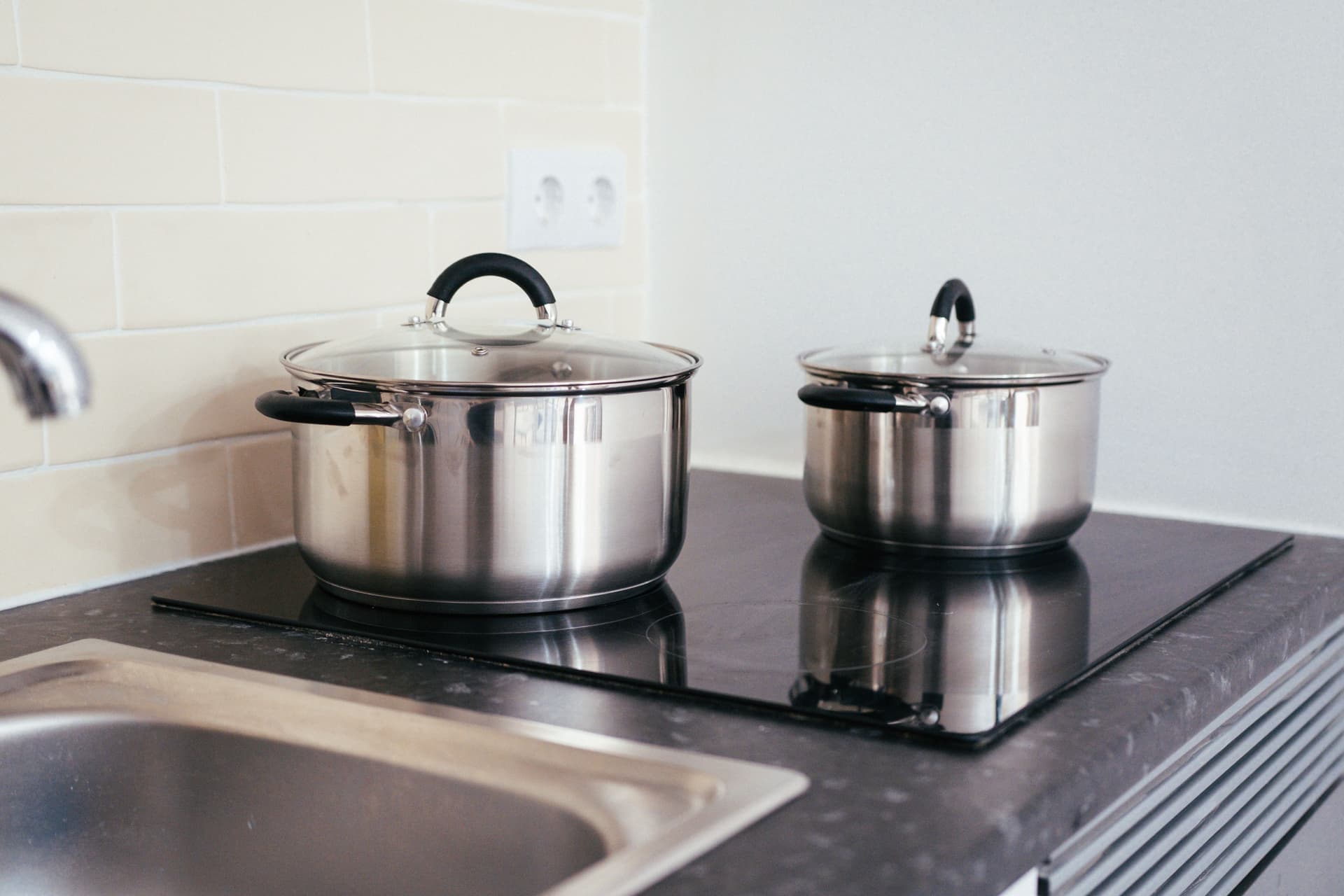
- 2Smooth top: measure across the printed heating ring. If your range has a dual-ring element, use the outer ring only when it is switched on — otherwise measure the inner ring.
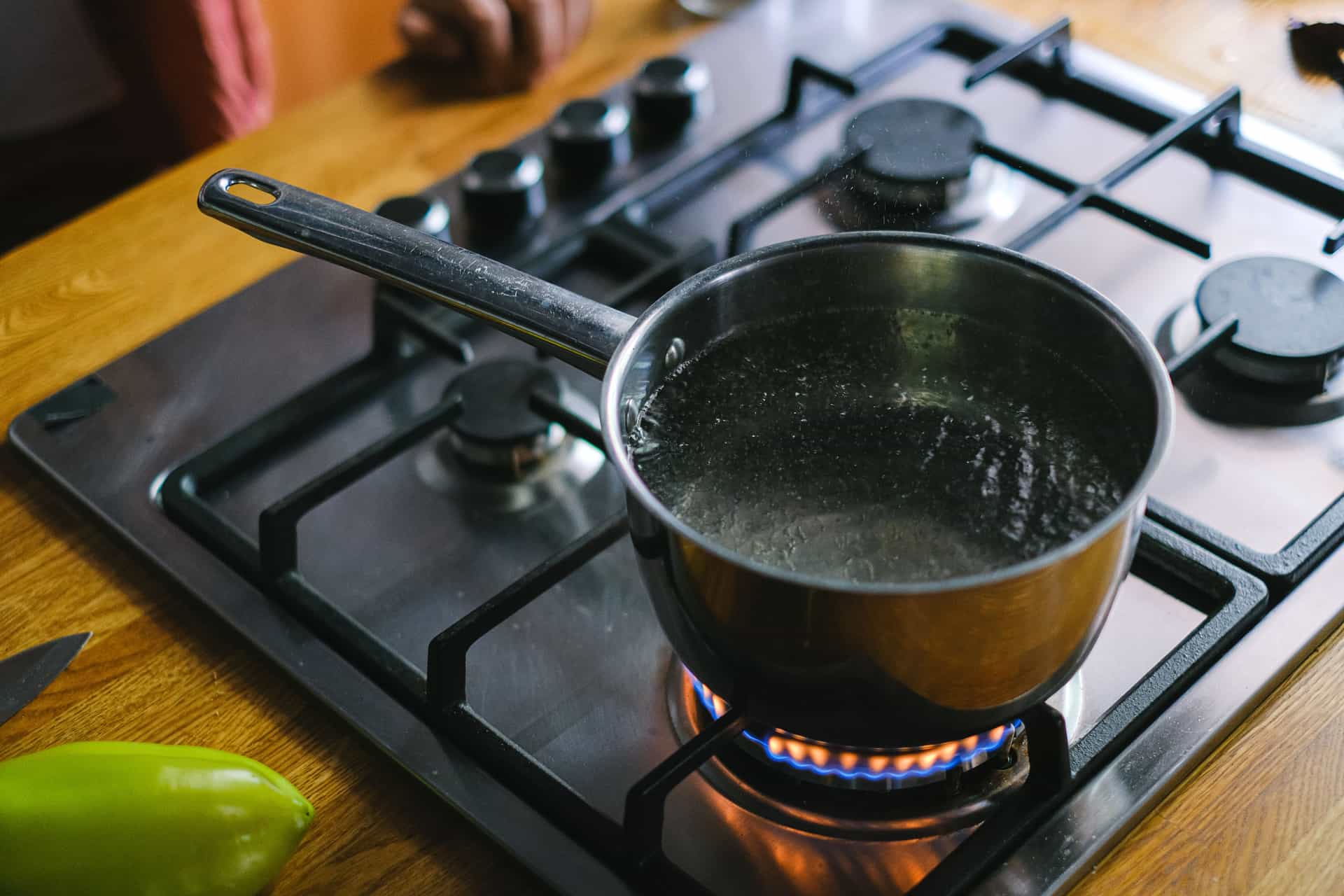
- 3Gas: measure the burner ring. The rule is less binding here, but a canner much wider than the flame ring will still be slow.
- 4Induction: measure the coil marking. The canner must also be magnetic — test with a fridge magnet, and see canning on an induction cooktop for the models that state compatibility.
- 5No usable element at all: a portable burner is a sanctioned alternative, but only if it meets six published rules — see portable burners for canning.
- 6Write it down and take it shopping. This is the number, not the canner's capacity.
What to do if nothing fits
If your largest element is 6 or 7 inches, your ceiling is 10 or 11 inches, and most full-size canners are wider than that. You have three genuine options and none of them is buying anyway and hoping.
- A countertop canner. It does not touch the stove, so the rule does not apply. The Presto Precise digital canner is the one appliance we can point to where the manufacturer states it meets USDA canning guidance — see electric pressure canners.
- Can in smaller jars, in a narrower pot. A pot deep enough for pints and narrow enough for your element is a perfectly legitimate setup. See canning without a canner.
- Use a different heat source. An outdoor propane burner solves it for water bath canning, though note that Presto rates its canners for household burners of 12,000 BTUs or less, so check the canner's own limit before you put it on a high-output burner.
The one-line version
Element diameter plus 4 inches is your maximum canner base. Measure the element, find a published base diameter, compare the two. If the manufacturer will not tell you the base diameter, measure it yourself before you buy — do not assume.
Next stepNow compare the canners that fitCommon questions
How much bigger than the burner can a canner be?
Does the 4-inch rule apply to gas stoves?
What happens if the canner is too wide?
Why is the base diameter so hard to find?
Will an All American 921 fit my stove?
Can I use a canner on an induction cooktop?
Sources
- NCHFP — Recommended Canners
- All American — 921 Pressure Canner
- Victorio — VKP1054 Steam Canner manual
- Presto — 23-Quart Pressure Canner (01781)
Product specifications are taken from each manufacturer’s own published page, cited on the product. We have not handled these products — how we pick.