Altitude adjustment for canning
Water boils cooler as you go up. Above 1,000 feet the numbers in your recipe are not the numbers you should use.
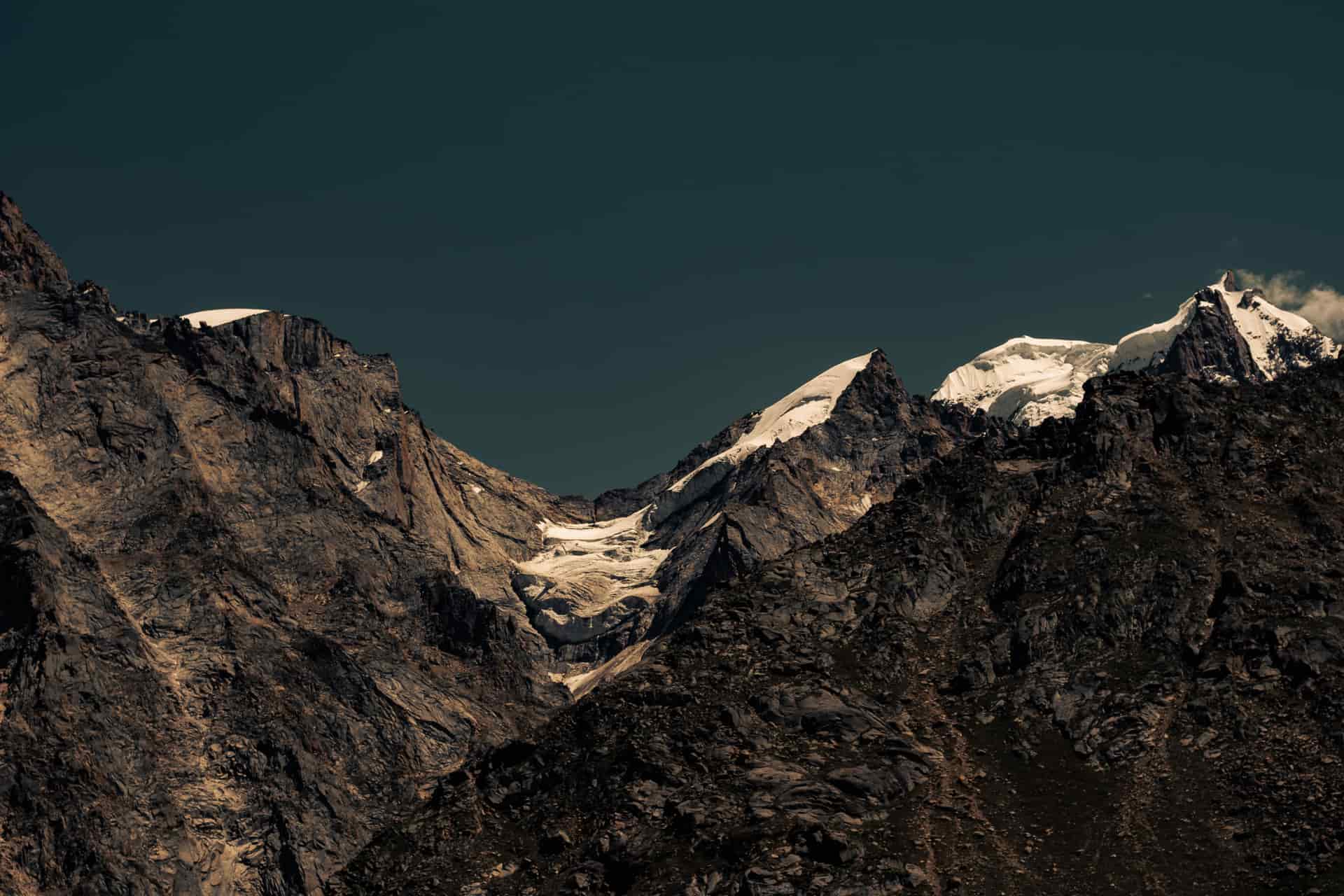
Above 1,000 feet, water boils below 212°F, so canning processing times and pressures must increase. For water bath canning, add time. For pressure canning, increase the pressure. Recipes are written for sea level unless they say otherwise, and the adjustment is part of the tested process rather than an optional refinement.
This is the rule most often skipped, because it is invisible. Nothing about a jar processed without an altitude adjustment looks different, and nothing warns you. If you live above 1,000 feet, this page applies to every batch you have ever made and every batch you will make.
Why altitude changes anything
Water boils when its vapor pressure matches the surrounding air pressure. Higher up, the air pressure is lower, so water reaches that point at a lower temperature. At sea level water boils at 212°F; at 5,000 feet it boils at roughly 203°F.
Your canner is still boiling, and it is still at its maximum temperature — that temperature is simply lower. Since processing times were established for a specific temperature, less heat is reaching the food per minute, so the time has to go up. In a pressure canner the same logic applies to pressure: you need more pressure to reach the same temperature.
Water bath canning: add time
| Altitude | Add to processing time |
|---|---|
| 0 to 1,000 ft | No adjustment |
| 1,001 to 3,000 ft | 5 minutes |
| 3,001 to 6,000 ft | 10 minutes |
| 6,001 to 8,000 ft | 15 minutes |
| 8,001 to 10,000 ft | 20 minutes |
Pressure canning: increase the pressure
| Altitude | Weighted gauge | Dial gauge |
|---|---|---|
| 0 to 1,000 ft | 10 lb | 11 lb |
| 1,001 to 2,000 ft | 15 lb | 11 lb |
| 2,001 to 4,000 ft | 15 lb | 12 lb |
| 4,001 to 6,000 ft | 15 lb | 13 lb |
| 6,001 to 8,000 ft | 15 lb | 14 lb |
| 8,001 to 10,000 ft | 15 lb | 15 lb |
Sterilizing jars also changes
The 10-minute sterilizing boil gets 1 additional minute for every 1,000 feet above sea level. At 3,000 feet that is 13 minutes. See how to sterilize canning jars.
Finding your altitude
- Search your town or county elevation. Most municipal and county sites publish it.
- Your state extension service often lists altitudes by county specifically for canning, which is the most useful form of the number.
- Phone GPS or a mapping app gives an approximate elevation, which is fine — the bands are wide.
- When you are near a boundary, round up. More processing time is a quality cost. Less is a safety one.
Get the number once and write it inside the cover of your canning book. It does not change, and having it there removes the temptation to skip the step.
Common mistakes
| Mistake | Why it happens | What it costs |
|---|---|---|
| Not adjusting at all | The recipe did not mention it and nothing looked wrong | Under-processing, invisible at the time |
| Adding time instead of pressure | Carrying over water bath logic | Still under-processed — the temperature was the problem |
| Using the altitude of a nearby city | Convenience | Can put you in the wrong band. Use your own |
| Adjusting a recipe that already adjusted | Double-counting a recipe's own table | Over-processing. A quality cost, not a safety one |
One number, every batch
Altitude does not change between sessions, so this is a one-time lookup that applies forever in your kitchen. Find it, write it down, apply it every time. It is the cheapest correction in canning and the easiest to forget.
The gear that solves this
Two purchases make altitude adjustment less error-prone: a tested book with its own tables, and a canner that either handles it for you or is easy to read.
Common questions
At what altitude do I need to adjust canning times?
How much time do I add for water bath canning at altitude?
Do I add time or pressure for pressure canning at altitude?
What pressure do I use at 5,000 feet?
What if I am between two altitude bands?
Do electric pressure canners need altitude adjustment?
Sources
- National Center for Home Food Preservation
- NCHFP — Selecting the Correct Processing Time
- NCHFP — Recommended Canners
Product specifications are taken from each manufacturer’s own published page, cited on the product. We have not handled these products — how we pick.