Best pressure canner
The best pressure canners for beginners
Five pressure canners screened against the NCHFP rules, with the dial-vs-weighted decision and the stove numbers.
Top pick
Presto 23-Quart Pressure Canner and Cooker (01781)
Method two
The second purchase, and the only method that makes beans, corn, carrots and meat safe to store on a shelf.
A pressure canner is a sealed pot that traps steam to raise the internal temperature to about 240°F — far above the 212°F a boiling water bath can reach. That temperature is what destroys botulism spores, which is why every low-acid food, without exception, must be pressure canned rather than water bathed.
This is the purchase people put off, and mostly they are right to. A first harvest of fruit and pickles does not need one. The moment it does need one is the moment somebody offers you a bushel of green beans, or you decide to can chicken stock, or you want plain tomatoes without adding lemon juice. Then there is no substitute and no workaround.
It is not a pressure cooker, and the distinction is not pedantry. The NCHFP states plainly that "pressure saucepans with smaller volume capacities are not recommended for use in canning." A canner has to be big enough to hold seven quart jars or eight to nine pints, because tested processing times assume a mass of jars and water that heats and cools at a particular rate. A small pot cools far too fast, and the tested time no longer means what it says.
The same caution applies to electric multi-cookers. A "canning" button on an appliance is a marketing label unless the manufacturer specifically states the model is validated for pressure canning. A small number are — Presto states its Precise digital canner meets USDA guidelines for low-acid foods — and the overwhelming majority are not. We take that apart in electric pressure canners.
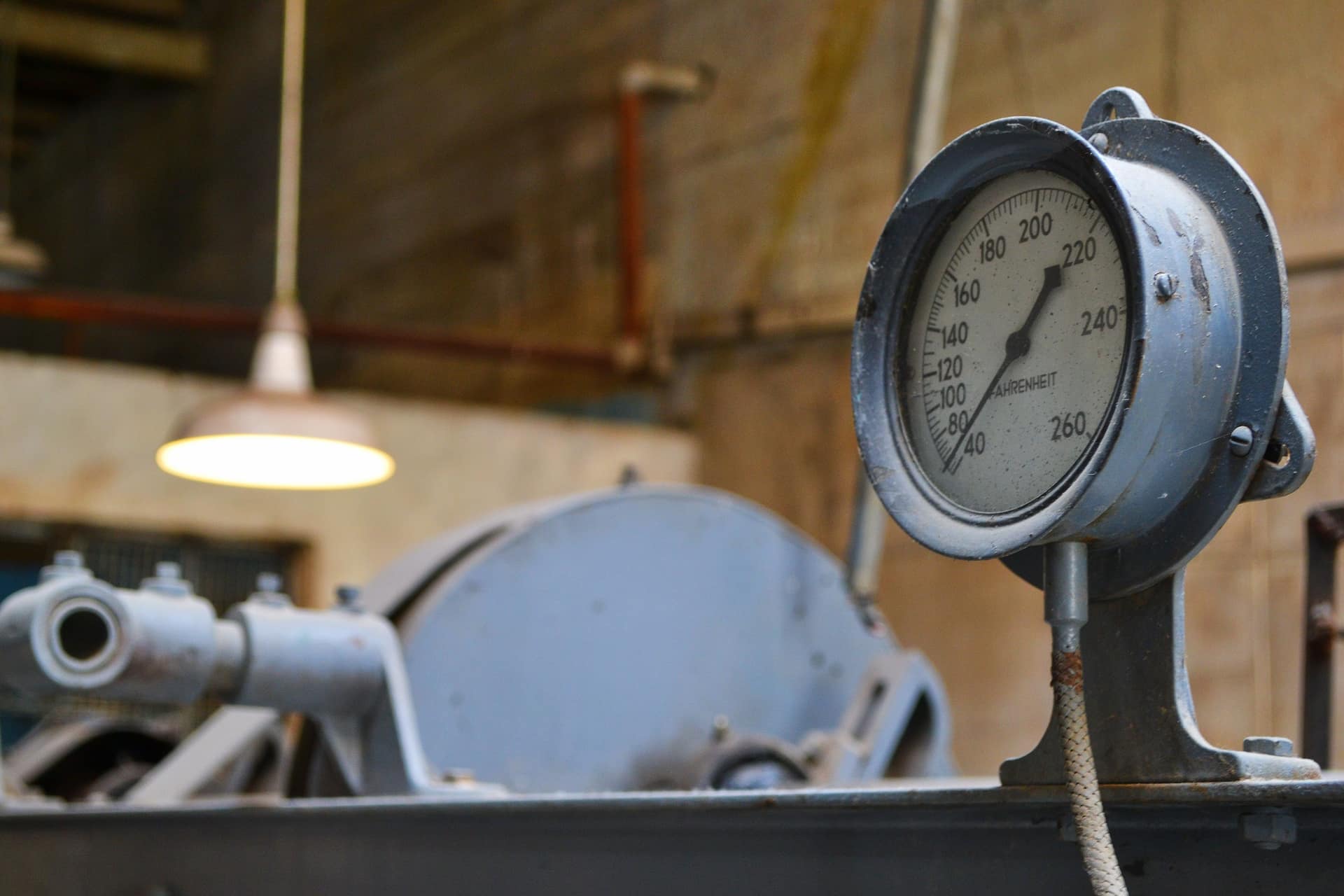
This is the one real fork in the decision. A dial gauge shows you a needle and a number, which lets you hit an exact pressure — useful at altitude, where the required pressure changes. The catch is that dial gauges drift and should be tested for accuracy every year, usually free at a county extension office. Most owners never do it, which turns a precision instrument into a guess.
A weighted gauge has no needle. A machined weight sits on the vent and rocks when the pressure is right, in fixed steps of 5, 10 and 15 psi. There is nothing to calibrate, ever. The trade is that at altitude you round up to the next weight rather than dialing an exact figure, which is slightly less efficient and no less safe. For a first pressure canner with no extension office nearby, weighted is the lower-maintenance answer.
Pressure canners are heavier and often wider than water bath canners, and the cast-aluminum ones are considerably wider. The All American 921 publishes a bottom exterior diameter of 15 3/8 inches, which under the NCHFP's 4-inch rule needs an element of at least 11 3/8 inches — larger than almost any household electric element. That is not a defect in the canner; it is a mismatch with a stove, and it is entirely predictable before you buy. Run your own numbers on will it fit your stove.
Read what foods need pressure canning first, so you know whether you need one at all this year. If you do, best pressure canners is the roundup, and All American vs Presto is the comparison almost everyone ends up making.
Five pressure canners screened against the NCHFP rules, with the dial-vs-weighted decision and the stove numbers.
Top pick
Presto 23-Quart Pressure Canner and Cooker (01781)
The 921 against the 23-quart Presto on published specs: seal, weight, base diameter, gauge and stove fit.
Top pick
Presto 23-Quart Pressure Canner and Cooker (01781)
Most multi-cookers are not safe for canning. Which countertop canners are validated, and how to tell them apart.
Top pick

Presto Precise 12-Quart Digital Pressure Canner (02144)
The full list of foods that require a pressure canner, including the ones that surprise people.
Read the guide
Whether a glass or ceramic cooktop can take a canner, what your range guidance means, and the rule that decides it.
Top pick
Presto 23-Quart Pressure Canner and Cooker (01781)
The full pressure canning kit list, the parts that wear out, and the annual job most owners skip.
Top pick
Presto 23-Quart Pressure Canner and Cooker (01781)
Jar capacity, not liquid quarts, is the number to size on — plus the NCHFP floor below which a pot is not a canner.
Top pick
Presto 23-Quart Pressure Canner and Cooker (01781)
An annual accuracy test against no calibration ever, and the altitude rounding that decides it above 1,000 feet.
Top pick
Presto 16-Quart Pressure Canner (01745)
Identical capacity and gauge; the 01784 adds a stainless steel-clad base for induction. Whether that is worth the difference.
Top pick
Presto 23-Quart Pressure Canner and Cooker (01781)
The 23-quart Presto on published specs: capacity, the annual gauge obligation, stove fit, parts, and who should buy differently.
Top pick
Presto 23-Quart Pressure Canner and Cooker (01781)
Gasket-free build, decades of parts support, and the 15 3/8-inch base that decides whether it fits your stove.
Top pick
All American 921 (21.5 qt)
Canners that suit long full-pressure runs, the jar size that matters for meat, and why no water bath will ever do.
Top pick
Presto 23-Quart Pressure Canner and Cooker (01781)
Why the NCHFP does not support canning in electric multi-cookers, what Utah State's testing found, and what to use instead.
Top pick
Presto Precise 12-Quart Digital Pressure Canner (02144)
Presto's 16-quart canner on published specs: 7 quarts or 10 pints, the annual gauge check, stove fit, and when to size up.
Top pick

Presto 16-Quart Pressure Canner and Cooker (01755)

Presto's 12-quart digital canner on published specs: jar capacity, the quart-jar limit, automatic altitude handling, parts and warranty.
Top pick
Presto Precise 12-Quart Digital Pressure Canner (02144)

Every All American size on the maker's own figures: jar capacity, dimensions, weight, and which ones your stove can actually take.
Top pick
All American 921 (21.5 qt)

The 22-quart Mirro is the only full-size canner here with a published base diameter - 24 cm - so it is the only one you can check against the NCHFP element rule without a tape measure.
Top pick

Mirro 22-Quart Aluminum Pressure Canner (92122)