The best canning jars
The glass outlives everything else you buy. Getting the size and the mouth right the first time saves years of mismatched lids.
Disclosure: we earn a commission on purchases made through links on this page, at no extra cost to you. It does not change what we recommend — see how we pick and our affiliate disclosure.
For a first canning season, buy regular-mouth pint jars. Pints are the size most tested recipes are written for, regular-mouth lids are the cheapest and most widely stocked, and a case of twelve is one comfortable canner load with a couple spare. Add wide-mouth quarts only if you are packing whole fruit or spears.
Jars are the easiest purchase in canning to get right and the easiest to over-think. There is no meaningful quality difference between the major brands, the glass lasts for decades, and the only decision with lasting consequences is which mouth size you commit to — because that decides which lids you buy forever.
How we picked
Dimensions below come from the manufacturers' own published pages, not from another roundup. We have not handled these jars, and we do not need to have: a canning jar is a standardized object and what matters about it is published. What we can add is which one is the right first purchase, and why the obvious upgrade is often the wrong one.
Quick picks
Every pick below is screened against the National Center for Home Food Preservation’s published canner rules first. Tap a row for the full write-up.
| # | Product | Best for | Key spec | Price |
|---|---|---|---|---|
| 1 |  Ball Regular Mouth Pint Jars (16 oz)If you buy one case of jars this season, buy this one. Pints are the size most tested recipes are written for, regular-mouth lids are the cheapest and most available lid on any shelf, and the jars are reusable indefinitely. | The default first case | 70 mm mouth, 16 oz | $36.99 · View on Amazon#ad we earn a commission · price as of October 18, 2026 |
| 2 |  Ball Wide Mouth Quart Jars (32 oz)The jar to buy when you are packing peach halves, pickle spears or anything you have to reach into. The wider 86 mm mouth is easier to fill and far easier to clean, and quarts are the standard size for tomatoes. | Whole fruit and packing by hand | 86 mm mouth, 32 oz | |
| 3 |  Ball Half-Pint Jelly Jars (8 oz)Small jars for the things you eat slowly. A half-pint of jam opens, gets used and gets finished before it goes dull in the fridge, and a full canner load of them processes in a fraction of the time a quart load does. | Jam, jelly and gifts | 8 oz / 1 cup | $45.99 · View on Amazon#ad we earn a commission · price as of October 18, 2026 |
| 4 | Kerr Wide Mouth Pint Jars (16 oz)Kerr and Ball are the same company and the same standard threads. Buy whichever is on the shelf and cheaper; the lids are interchangeable within a mouth size and neither is safer than the other. | When Ball is sold out | Same 86 mm mouth as Ball | Check price on Amazon#ad we earn a commission · live price pending |
| 5 | Reused commercial food jarsSkipSkip pasta sauce, pickle and mayonnaise jars. They are manufactured to be filled once in a factory, not heated and cooled repeatedly, and their rims are not made to the standard a two-piece canning lid seals against. | Nothing - skip these | Not made for canning | Check price on Amazon#ad we earn a commission · live price pending |
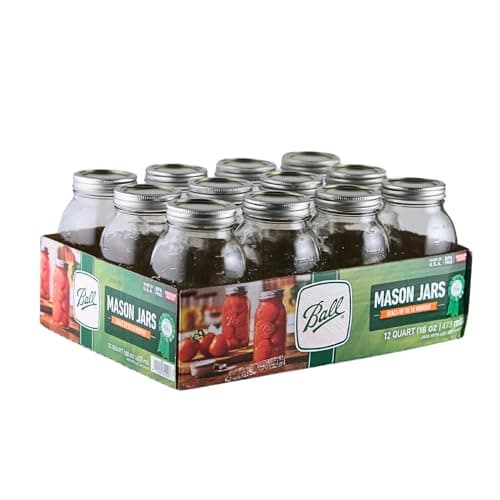
Ball Regular Mouth Pint Jars (16 oz)
If you buy one case of jars this season, buy this one. Pints are the size most tested recipes are written for, regular-mouth lids are the cheapest and most available lid on any shelf, and the jars are reusable indefinitely.
Published specs
- Volume
- 16 oz / 2 cups
- Mouth
- Regular, about 70 mm lid diameter
- Inner mouth diameter
- About 60 mm
- Jar dimensions
- About 5" tall x 2 3/4" wide
- Reuse
- Jars and rings reusable; flat lids are single-use
What works
- Pints fit both a water bath canner and a pressure canner comfortably, so the case is not stranded when you move up to beans
- Regular-mouth lids are the most stocked size in the country, which matters in September when shelves empty out
- The jars outlive everything else in this list. The consumable is the flat lid, not the glass
What to know first
- The narrower 60 mm opening is fiddly for whole peaches or large pickle spears — that is what wide mouth is for
- Regular and wide mouth lids are not interchangeable, so mixing both means stocking two lid sizes
- Glass. Handle the case like glass
Specs from Ball, Mason Jars & Lids, Regular Mouth. We have not handled this product — see how we pick.
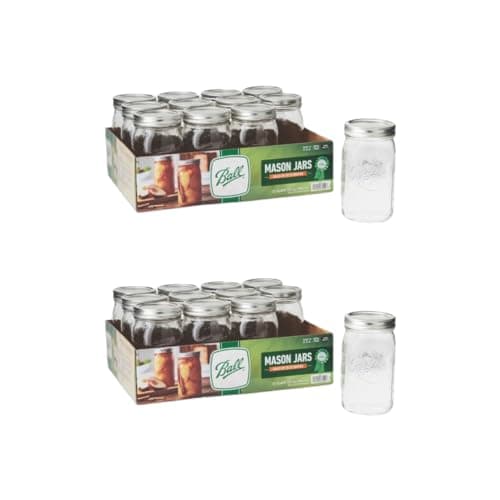
Ball Wide Mouth Quart Jars (32 oz)
The jar to buy when you are packing peach halves, pickle spears or anything you have to reach into. The wider 86 mm mouth is easier to fill and far easier to clean, and quarts are the standard size for tomatoes.
Published specs
- Volume
- 32 oz / 4 cups
- Mouth
- Wide, about 86 mm lid diameter
- Inner mouth diameter
- About 76 mm
- Jar dimensions
- About 6 1/2" tall x 3 1/4" wide
What works
- You can get a hand and a jar funnel into it, which turns packing peaches from a chore into a task
- Quart is the size the tomato and peach processing times in tested recipes are written around
- Much easier to wash by hand than a regular mouth quart
What to know first
- Wide mouth lids cost more than regular mouth and disappear from shelves first in peak season
- Seven quarts is a full canner load, so a quart-jar day is a longer day per jar of finished food
- A quart of anything low-acid still needs a pressure canner, and quarts take the longest processing times
Specs from Ball, Mason Jars & Lids, Wide Mouth. We have not handled this product — see how we pick.
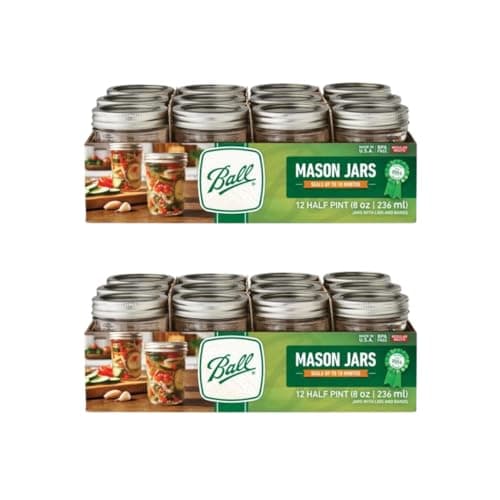
Ball Half-Pint Jelly Jars (8 oz)
Small jars for the things you eat slowly. A half-pint of jam opens, gets used and gets finished before it goes dull in the fridge, and a full canner load of them processes in a fraction of the time a quart load does.
Published specs
- Volume
- 8 oz / 1 cup
- Mouth
- Regular, about 70 mm lid diameter
- Jar dimensions
- About 3 3/4" tall x 2 3/8" wide
- Typical load
- 12 half-pints in a 21.5-quart canner rack
What works
- Short processing times, so a jam day is genuinely a morning rather than a day
- The right size for anything you open and use a spoonful of at a time
- Uses the same regular-mouth lids as pint jars, so no second lid size to stock
What to know first
- Too small to be useful for anything you cook with in volume
- More jars per batch means more lids, and lids are the recurring cost
- Easy to over-buy in a jam-making mood and then not use for a year
Specs from Ball, Mason Jars & Lids, Regular Mouth. We have not handled this product — see how we pick.
Kerr Wide Mouth Pint Jars (16 oz)
Kerr and Ball are the same company and the same standard threads. Buy whichever is on the shelf and cheaper; the lids are interchangeable within a mouth size and neither is safer than the other.
Published specs
- Volume
- 16 oz / 2 cups
- Mouth
- Wide, about 86 mm lid diameter
- Lid compatibility
- Interchangeable with Ball wide mouth
What works
- Identical thread standard to Ball, so your existing lids and rings fit
- Frequently the cheaper of the two on the same shelf, for no functional difference
- Wide mouth in a pint size is the most versatile single jar in the category
What to know first
- No functional advantage over Ball either — this is a price and availability decision, not a quality one
- Same wide-mouth lid premium applies
- Decorative or embossed variants are sometimes priced above plain jars for no canning benefit
Specs from Ball, Mason Jars & Lids, Wide Mouth. We have not handled this product — see how we pick.
Reused commercial food jars
Skip pasta sauce, pickle and mayonnaise jars. They are manufactured to be filled once in a factory, not heated and cooled repeatedly, and their rims are not made to the standard a two-piece canning lid seals against.
Published specs
- Thread standard
- Not guaranteed to match a canning lid
- Glass
- Not specified for repeated thermal cycling
- The alternative
- Jars sold specifically for home canning
What works
- They are free, which is the entire argument for them and it is not enough
What to know first
- A lid that appears to fit may not seal reliably against a rim that was not made for it
- Repeated heating and cooling is exactly the stress these jars were not designed for
- A jar that breaks in a canner is a burn hazard as well as a lost batch
Specs from NCHFP, Recommended Canners. We have not handled this product — see how we pick.
Regular mouth or wide mouth
This is the whole decision. Regular mouth lids are about 70 mm; wide mouth are about 86 mm. They are not interchangeable and there is no adapter, so a mixed inventory means stocking two lid sizes indefinitely. Wide mouth vs regular mouth takes it apart in full.
| Regular mouth | Wide mouth | |
|---|---|---|
| Lid diameter | About 70 mm | About 86 mm |
| Inner opening | About 60 mm | About 76 mm |
| Lid cost | Lower | Higher, every time |
| Availability in peak season | Best. Also sells out first | Harder to find in small stores |
| Best for | Jam, jelly, sauce, salsa, anything pourable | Whole fruit, spears, anything you reach into |
| Washing | Fiddly by hand | Easy |
| Freezing | Shoulders make it riskier when full | Straight-sided versions are the safer choice |
If you want a single answer: regular mouth pints for a first season, and add wide mouth quarts the year you decide to do peaches. Full dimensions for every size are in canning jar sizes.
How many to buy
Buy in canner loads. A standard 21.5-quart canner takes 7 quarts, 9 pints or 12 half-pints, so a case of twelve pints is one comfortable batch with spares. Buying an odd number means processing a half-empty canner, which is the same time and fuel for less food. What size water bath canner do you need works through the capacities, and buying canning jars in bulk covers case quantities.
Buy at least twice as many lids as jars. Jars are reusable indefinitely; the flat lids are single-use, and they are the item that disappears from shelves in September.
What to skip
Skip commercial food jars. Pasta sauce, pickle and mayonnaise jars are made to be filled once in a factory, not heated and cooled repeatedly, and their rims are not manufactured to the standard a two-piece canning lid seals against. They are free, which is the entire argument for them, and it is not enough when the downside is a jar that breaks in a hot canner.
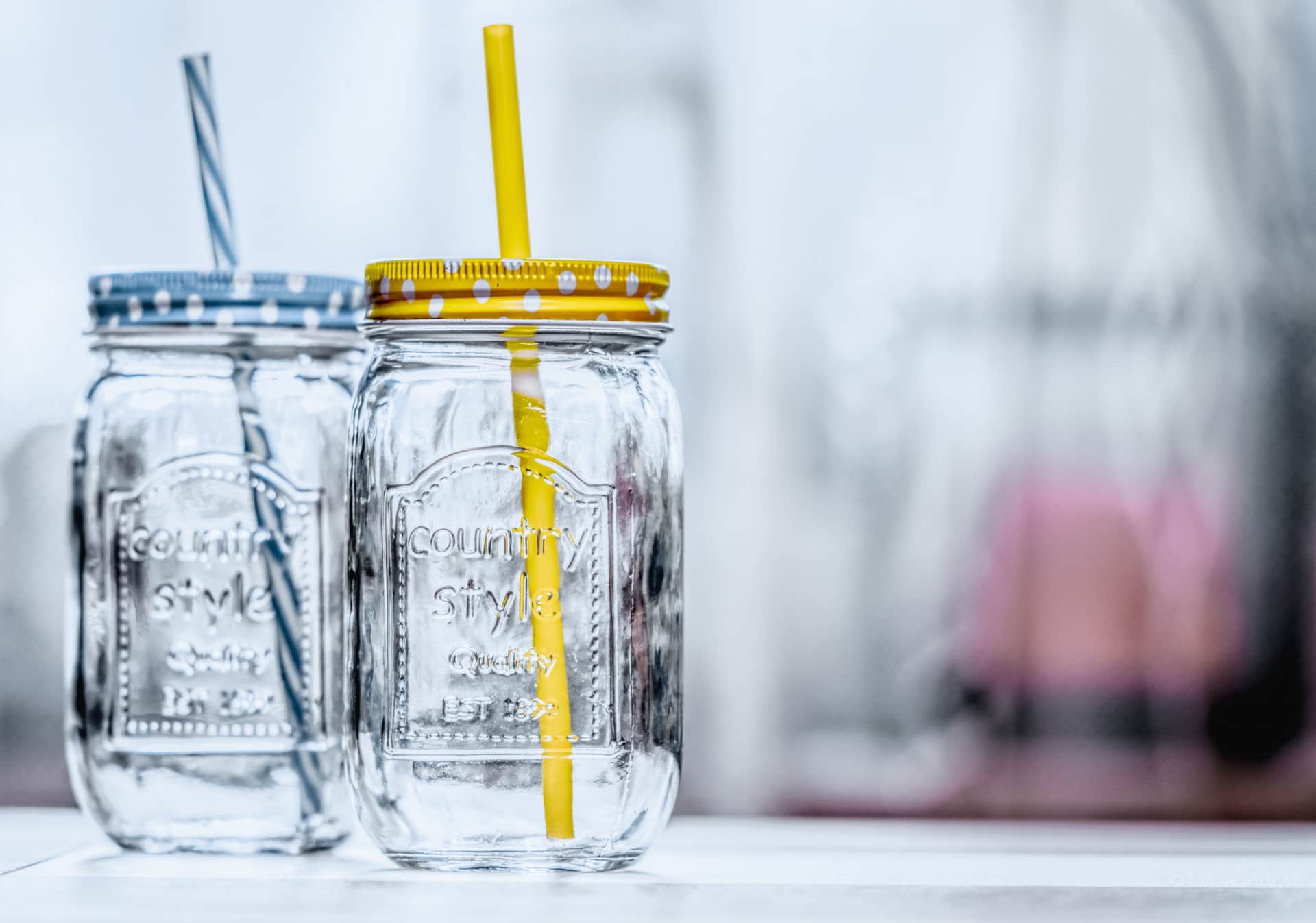
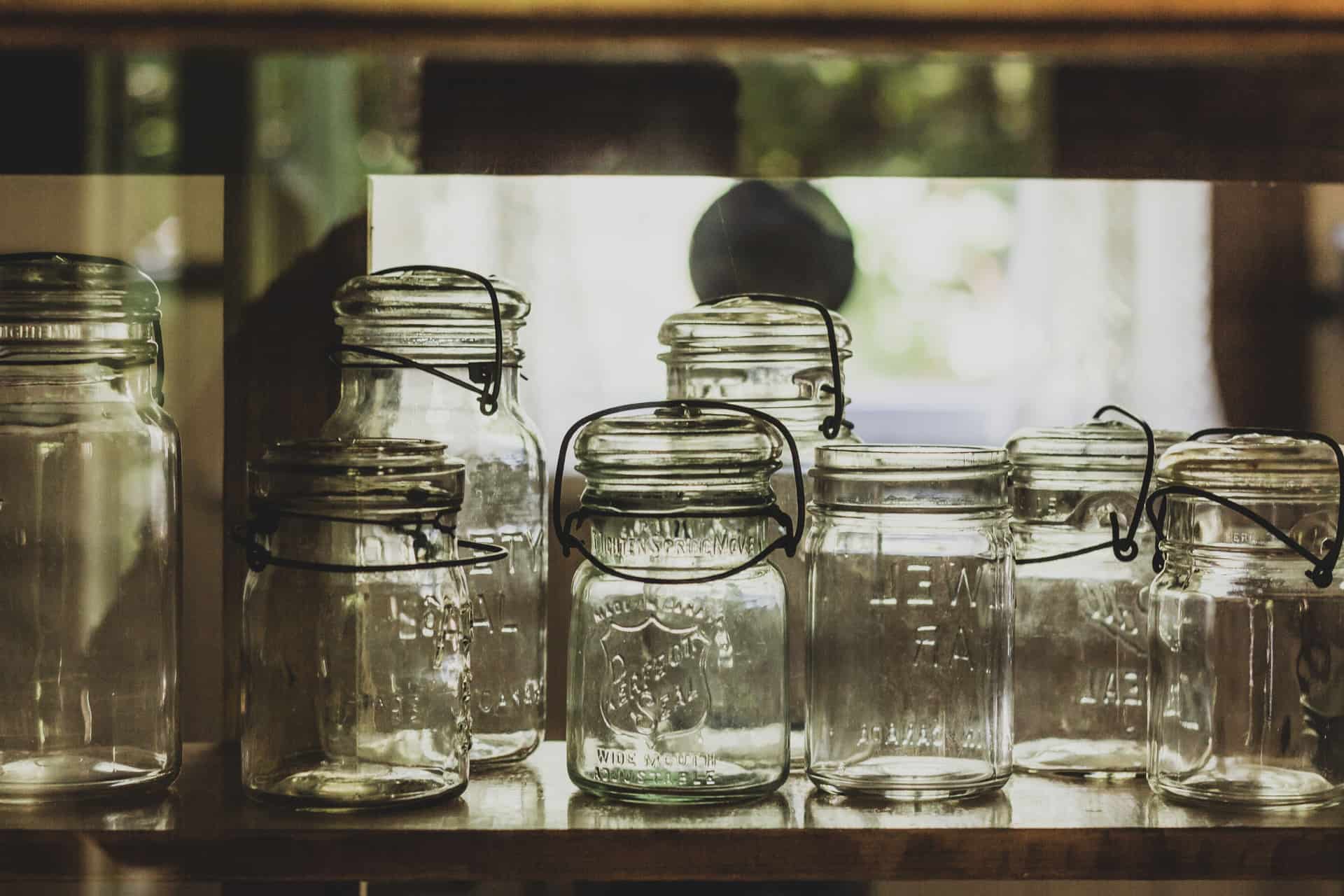
Also skip decorative jars unless you have checked they are canning jars. Embossed, colored and vintage-look jars are often fine — but jars sold purely as drinkware or storage may not be, and the same caution covers European bail-top jars, and the price premium buys nothing you can process in. The same caution applies to glass-lid clamp jars: Weck jars vs Mason jars explains what they are and are not for.
Storing them between seasons
Wash, dry thoroughly, and store without the bands on. Bands trap moisture and rust, and rusted bands mark the jar rims. Boxes upright, not stacked more than two high, somewhere they will not get knocked. Glass survives decades of this; what kills jars is a knock against a hard edge.
Next stepThe lids that go with themCommon questions
What size canning jar should I buy first?
Can I use old jars I inherited?
Are Ball and Kerr jars interchangeable?
Can I can in Weck or clamp-lid jars?
Do canning jars expire?
Can I freeze in canning jars?
Sources
- Ball — Mason Jars & Lids, Regular Mouth
- Ball — Mason Jars & Lids, Wide Mouth
- NCHFP — Recommended Canners
Product specifications are taken from each manufacturer’s own published page, cited on the product. We have not handled these products — how we pick.