Dial gauge vs weighted gauge
One needs an annual accuracy test you will forget. The other cannot fine-tune for altitude. That is the whole trade.
Disclosure: we earn a commission on purchases made through links on this page, at no extra cost to you. It does not change what we recommend — see how we pick and our affiliate disclosure.
The NCHFP says to check dial gauges for accuracy before use each year, while weighted-gauge models control pressure precisely and need neither watching during processing nor checking for accuracy. The trade is altitude: weighted gauges only do 5, 10 and 15 psi, so above 1,000 feet you round up to the next weight.
This is the pressure canner decision that gets least attention and deserves the most, because it is the one that changes what you have to do every year for as long as you own the canner. Capacity is a one-time consideration. A dial gauge is an annual errand.
Both types are fully sanctioned. The NCHFP covers both, tested recipes work with both, and neither is safer in principle. What differs is where the responsibility sits.
What each one actually is
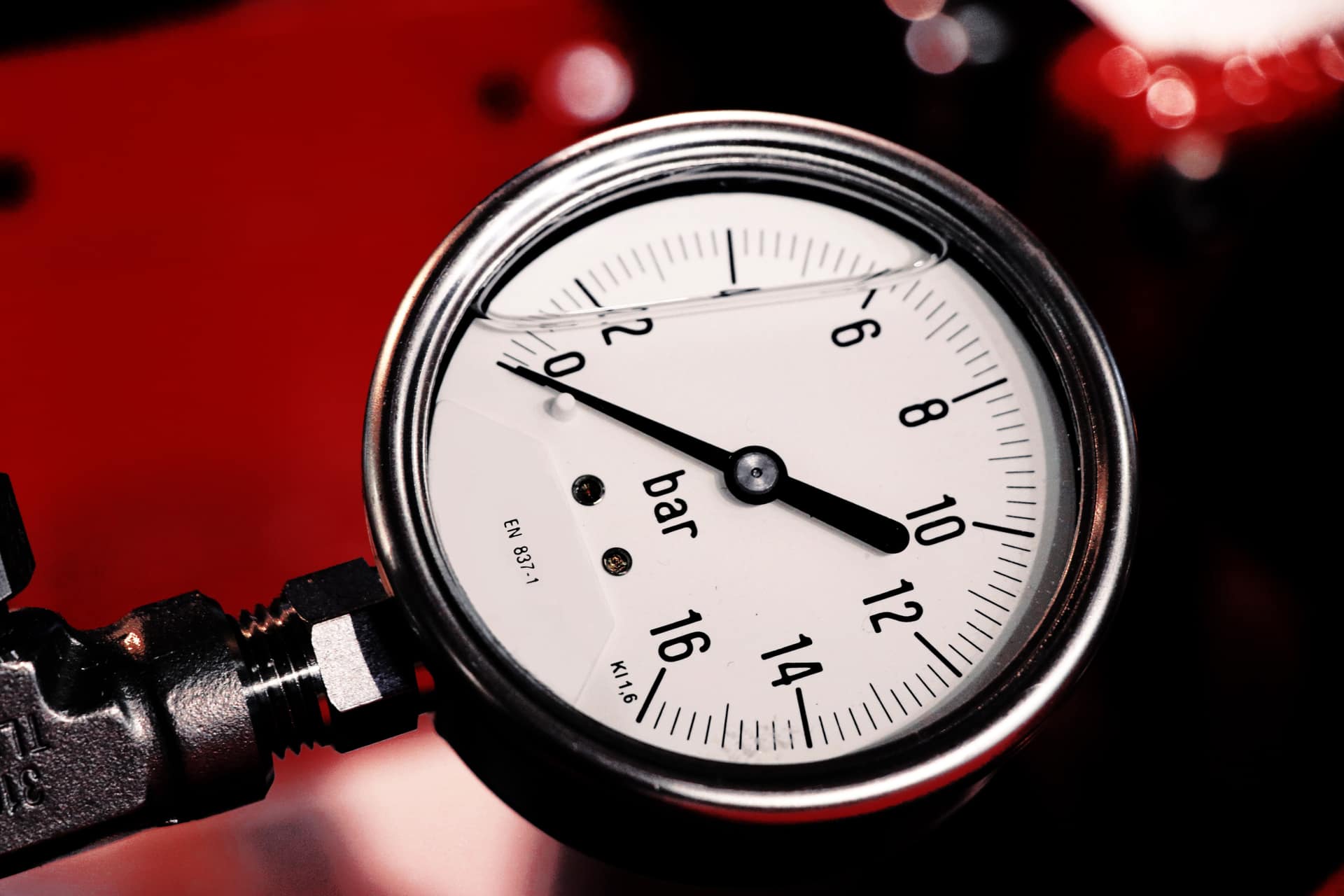
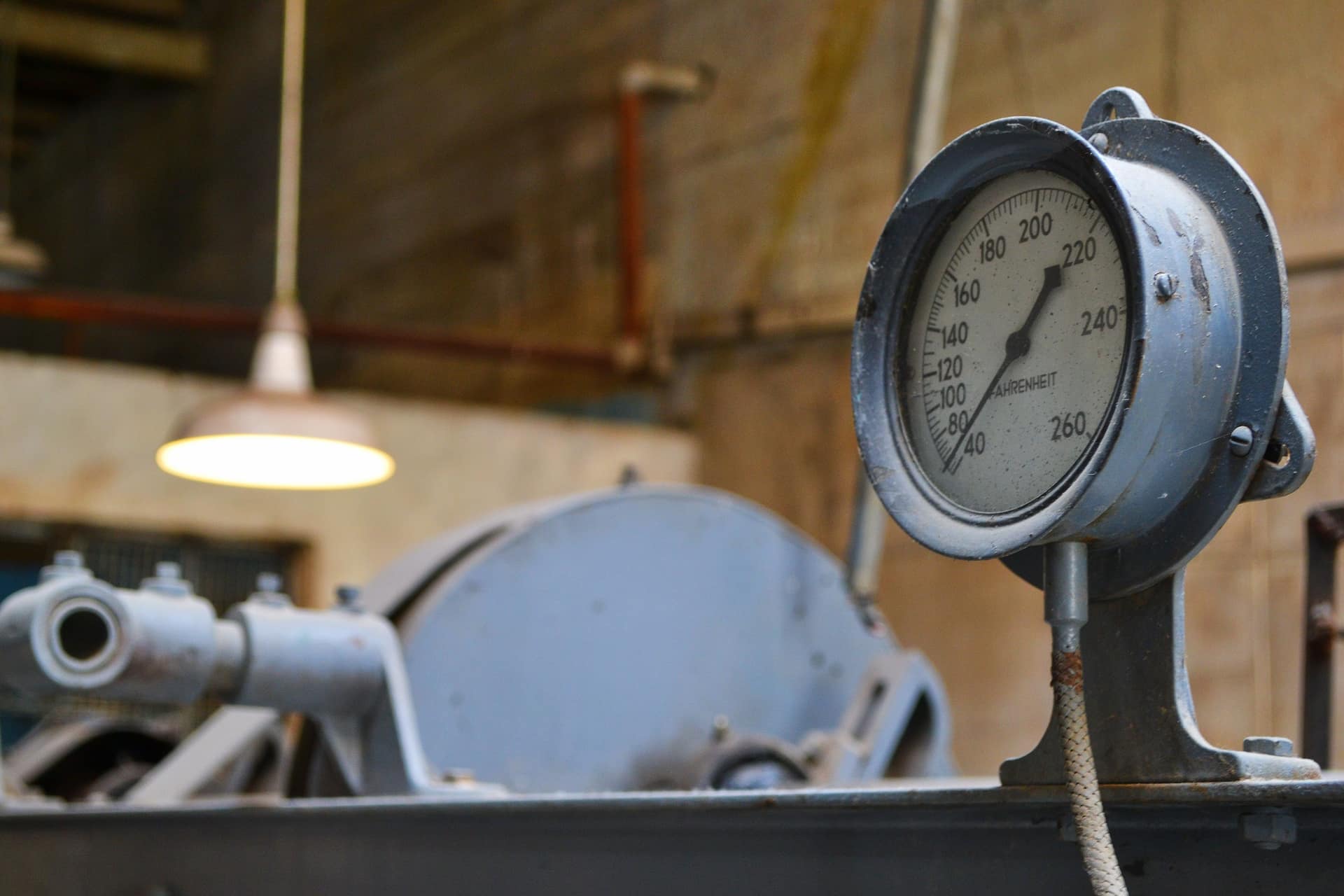
A dial gauge is a needle on a face that reads the pressure inside the canner. You adjust the burner to hold the needle at the pressure your recipe and altitude require, and you watch it for the whole processing time. It can display any pressure, which is its advantage, and it can be wrong without looking wrong, which is its problem.
A weighted gauge is a metal regulator that sits on the vent pipe and physically vents steam once the pressure exceeds its rating. The NCHFP describes it well: weighted-gauge models exhaust tiny amounts of air and steam each time their gauge rocks or jiggles during processing. When it rocks, the pressure is right. That is the entire interface.
| Dial gauge | Weighted gauge | |
|---|---|---|
| Annual accuracy test | Required — NCHFP: check for accuracy before use each year | Never — NCHFP: needs no checking for accuracy |
| Watching during processing | Yes, hold the needle steady | No — NCHFP: needs no watching during processing |
| Available pressures | Any reading on the face | 5, 10 and 15 psi only |
| Altitude precision | Can be set to an exact figure | Round up to the next weight above 1,000 ft |
| Failure mode | Drifts quietly out of calibration | Nothing to drift; it is a weight |
| Feedback | Visual, and you have to be in the room | Audible rocking you can hear from elsewhere |
| Replaceable | Yes — Presto lists stock no. 85772 | Yes — Presto lists stock no. 09978 |
| On our picks | Presto 23-qt, Presto 01784, All American | Presto 16-qt (3-piece regulator) |
The case for weighted: you cannot forget it
The NCHFP's language about weighted gauges is unusually reassuring for a safety document. They control pressure precisely and need neither watching during processing nor checking for accuracy. For a nervous first-timer that is worth a great deal — the canner tells you audibly when it is right, and there is no annual maintenance task to skip.
That last point is the real argument. The annual gauge test is free at many county extension offices and most dial-gauge owners never go. A safety step that depends on an errand is a safety step with a compliance rate, and the honest thing to say is that the compliance rate is not high. A weighted gauge removes the question rather than relying on you.
The case for dial: altitude, and only altitude
Here is the disadvantage the NCHFP names, and it is the only one: the single disadvantage of weighted-gauge canners is that they cannot correct precisely for higher elevations. At elevations above 1,000 feet, they must be operated at canner pressures of 10 instead of 5, or 15 instead of 10, PSI.
In practice that means rounding up. If your altitude calls for 11 or 12 psi, a weighted gauge cannot do it, so you run 15 — which is safe, and which overcooks the food somewhat and puts more stress on jars. A dial gauge can be held at 11 exactly. If you live at meaningful elevation and you care about texture, that is a genuine reason to choose a dial and commit to the test. The figures for your altitude are in altitude adjustment for canning.
Quick picks
Every pick below is screened against the National Center for Home Food Preservation’s published canner rules first. Tap a row for the full write-up.
| # | Product | Best for | Key spec | Price |
|---|---|---|---|---|
| 1 | Presto 16-Quart Pressure Canner (01745)The weighted-gauge alternative: nothing to calibrate, ever, because the regulator rocks when the pressure is right. The trade is height. It is not tall enough to boiling-water can quart jars under the required inch of water, so it is a pints-and-half-pints canner. | Pints only, and a small kitchen | Weighted gauge, no calibration | Check price on Amazon#ad we earn a commission · live price pending |
| 2 |  Presto 23-Quart Pressure Canner and Cooker (01781)The default first pressure canner, and the one most beginners should buy: it takes a full seven-quart load, it doubles as a boiling-water canner for pints and half-pints, and it costs a fraction of a cast-aluminum canner. The dial gauge is the catch, and it is a real one. | A first pressure canner | 7 quarts / 20 pints | |
| 3 | All American 921 (21.5 qt)Cast aluminum with a machined metal-to-metal seal, so there is no gasket to perish, swell or go missing the week you need it. It is also 24 pounds empty and its base is wider than most electric elements, which is a genuine constraint rather than a footnote. | Buying once, for decades | Base 15 3/8", no gasket | Check price on Amazon#ad we earn a commission · live price pending |
| 4 |  Presto Steam Gauge for Pressure Canners (85772)If your extension office tests your dial gauge and it reads more than 2 psi off, this is the fix. It is also the part that makes a dial-gauge canner a lifetime object instead of a disposable one, because the gauge is the only component on it with an opinion about pressure. | A dial that reads wrong | Replaces a failed dial | |
| 5 | Presto Pressure Cooker / Pressure Canner Pressure Regulator (09978)The small metal part that goes missing between seasons. On a Presto canner the regulator sits on the vent pipe and controls the pressure the canner holds, so a missing one is not an inconvenience — it is a canner you cannot use until it is replaced. | A lost or rattling regulator | The part that sets pressure | Check price on Amazon#ad we earn a commission · live price pending |
Presto 16-Quart Pressure Canner (01745)
The weighted-gauge alternative: nothing to calibrate, ever, because the regulator rocks when the pressure is right. The trade is height. It is not tall enough to boiling-water can quart jars under the required inch of water, so it is a pints-and-half-pints canner.
Published specs
- Liquid capacity
- 16 quarts
- Regulator
- 3-piece weighted, 5 / 10 / 15 psi
- Material
- Aluminum
- Calibration
- None required
- Boiling-water use
- Pints and half-pints only — not tall enough for quarts
- Base diameter
- Not published by Presto
What works
- A weighted gauge never needs testing. It rocks when the pressure is correct, and that is the whole interface
- Smaller footprint and lighter than a 23-quart, which matters if you are canning on an apartment range or storing it in a closet
- The audible rocking is easier for a nervous first-timer to read than a needle you are trying to hold at exactly 11 psi
What to know first
- Cannot boiling-water can quart jars — Presto states it is not tall enough to cover them with the required 1 inch of water
- Smaller pressure-canning loads mean more batches on a heavy tomato or bean day
- Weighted gauges only do 5, 10 and 15 psi, so at altitude you round up to the next weight rather than dialing an exact number
Specs from Presto, 16-Quart Pressure Canner (01745), NCHFP, Recommended Canners. We have not handled this product — see how we pick.
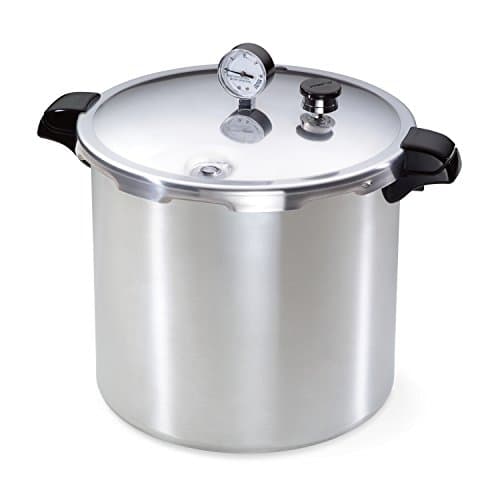
Presto 23-Quart Pressure Canner and Cooker (01781)
The default first pressure canner, and the one most beginners should buy: it takes a full seven-quart load, it doubles as a boiling-water canner for pints and half-pints, and it costs a fraction of a cast-aluminum canner. The dial gauge is the catch, and it is a real one.
Published specs
- Liquid capacity
- 23 quarts (21.8 liters)
- Jar capacity
- 26 half-pints, 20 pints, 7 quarts
- Material
- Warp-resistant aluminum
- Gauge
- Dial gauge
- Ranges
- Regular and smooth-top
- Burner limit
- 12,000 BTUs or less
- Also
- Doubles as a boiling-water canner
- Warranty
- 12-year limited
- Base diameter
- Not published by Presto
What works
- Seven quart jars is the standard batch size every tested NCHFP recipe is written around, so you are never processing a half load
- Doubles as a boiling-water canner for pints and half-pints, which means one pot covers the jam-and-pickles year as well as the beans
- Presto sells a replacement dial gauge and sealing ring separately, so a decade-old canner is a repair rather than a replacement
What to know first
- A dial gauge should be checked for accuracy every year — most extension offices do it free, and most owners never go. A weighted gauge needs no calibration at all
- Presto does not publish a base diameter, so you cannot check it against the NCHFP element rule without measuring the box yourself. See will it fit your stove
- Rated for burners of 12,000 BTUs or less, which rules out most outdoor propane burners and some high-output gas ranges
Specs from Presto, 23-Quart Pressure Canner and Cooker (01781). We have not handled this product — see how we pick.
All American 921 (21.5 qt)
Cast aluminum with a machined metal-to-metal seal, so there is no gasket to perish, swell or go missing the week you need it. It is also 24 pounds empty and its base is wider than most electric elements, which is a genuine constraint rather than a footnote.
Published specs
- Liquid capacity
- 21.5 quarts
- Jar capacity
- 18 pints or 7 quarts
- Seal
- Metal-to-metal, no gasket
- Gauge
- Geared steam gauge
- Regulator
- 5, 10 or 15 psi
- Inside diameter
- 12 1/4 inches
- Inside height
- 10 1/2 inches
- Bottom exterior diameter
- 15 3/8 inches
- Weight (empty)
- 24 pounds
What works
- No gasket means no annual replacement part, and nothing that hardens in a hot attic between seasons
- All American publishes the base diameter, which almost nobody in this category does — you can check it against your element before you buy
- The 921 and its siblings are the canners people hand down. Parts and gauges remain available for very old units
What to know first
- The 15 3/8" base needs an element of at least 11 3/8" to stay inside the NCHFP 4-inch rule, and most household electric elements are 6" to 9". Check your stove first
- 24 pounds empty, and considerably more loaded with jars and water — a real consideration if lifting is difficult
- Several times the price of a Presto, which is money better spent on jars and lids for a first season
Specs from All American, 921 21.5-Quart Pressure Canner, NCHFP, Recommended Canners. We have not handled this product — see how we pick.
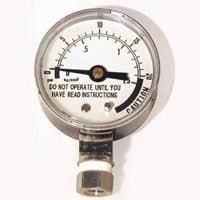
Presto Steam Gauge for Pressure Canners (85772)
If your extension office tests your dial gauge and it reads more than 2 psi off, this is the fix. It is also the part that makes a dial-gauge canner a lifetime object instead of a disposable one, because the gauge is the only component on it with an opinion about pressure.
Published specs
- Presto stock number
- 85772
- Presto's own name
- Steam Gauge for Presto Pressure Canners
- Function
- The dial that registers processing pressure
- When to replace
- NCHFP: check dial gauges for accuracy before use each year
- Listed for
- Presto's parts page for the 23-quart Pressure Canner
What works
- A dial gauge is the one part of a pressure canner that can be quietly wrong, and replacing it is cheaper and faster than replacing the canner
- Genuine Presto part listed on Presto's own parts page against your canner's stock number
- Makes the annual accuracy test actionable — there is no point testing a gauge if a failed test has no remedy
What to know first
- You still need somewhere to test the gauge. Many county extension offices do it free, and you have to actually go
- Replacing the gauge does not remove the annual test from your calendar. A new dial gauge is a dial gauge
- If you resent the whole business, the honest answer is a weighted-gauge canner, which the NCHFP says needs no accuracy checking at all
Specs from Presto, Parts and Accessories for the 23-Quart Pressure Canner, NCHFP, Recommended Canners. We have not handled this product — see how we pick.
Presto Pressure Cooker / Pressure Canner Pressure Regulator (09978)
The small metal part that goes missing between seasons. On a Presto canner the regulator sits on the vent pipe and controls the pressure the canner holds, so a missing one is not an inconvenience — it is a canner you cannot use until it is replaced.
Published specs
- Presto stock number
- 09978
- Presto's own name
- Pressure Cooker/Pressure Canner Pressure Regulator
- Function
- Sits on the vent pipe and regulates processing pressure
- Listed for
- Presto's parts page for the 23-quart Pressure Canner
What works
- Cheap, small, and the single most losable part of the canner — worth owning a spare before harvest week rather than during it
- A genuine Presto part from Presto's own parts list, which matters more here than on most parts because this one sets the pressure
- Rinses clean and has no wear surface, so a spare bought now is still a spare in ten years
What to know first
- Buy by stock number against your model. Presto sells more than one regulator and they are not interchangeable across its range
- A regulator cannot compensate for a blocked vent pipe. If pressure behaves oddly, clean the pipe before blaming the part
- On dial-gauge canners the regulator does not remove the need to watch the dial, which is what a weighted gauge would do
Specs from Presto, Parts and Accessories for the 23-Quart Pressure Canner. We have not handled this product — see how we pick.
What the annual test actually involves
If you own or inherit a dial-gauge canner, this is the routine. It is not onerous; it is just easy to postpone until it is September and too late.
- 1Find your county extension office and ask whether they test dial gauges. Many do, often free, and often only at certain times of year — which is why this is a spring job rather than a harvest-week job.
- 2Take the lid, or the gauge, depending on what they ask for.
- 3Ask for the reading, not just a pass. A gauge that is off by a small amount can often still be used with a stated adjustment; the common replacement threshold is more than 2 psi off.
- 4Replace it if it fails. Presto lists the steam gauge as stock number 85772 against its canner models — see pressure canner replacement parts.
The All American case
All American canners carry a geared steam gauge and a regulator offering 5, 10 or 15 psi, so they are effectively both: a dial to read and weights to set. That is a nice arrangement, and it does not exempt the dial from the annual accuracy check. The rest of the All American trade-off — the gasket-free seal against a base too wide for most electric elements — is in All American vs Presto.
The decision, in one paragraph
If you live below about 1,000 feet, buy weighted and never think about calibration again. If you live at altitude and want to hold an exact pressure rather than rounding up to 15 psi, buy a dial and put the accuracy test in your calendar for spring, every year, permanently. If you are inheriting a dial-gauge canner, get the gauge tested before you use it — an untested gauge on an unknown canner is the one combination we would not run a batch of green beans through.
Next stepFind the pressure for your altitudeCommon questions
Is a weighted gauge better than a dial gauge?
How often does a dial gauge need testing?
What happens if my dial gauge is off?
Do weighted gauges need to be calibrated?
Why can't a weighted gauge adjust for altitude?
Can I add a weighted regulator to a dial-gauge canner?
Do you earn a commission on these?
Sources
- NCHFP — Recommended Canners
- Presto — Parts and Accessories for the 23-Quart Pressure Canner
- Presto — 16-Quart Pressure Canner (01745)
- All American — 921 Pressure Canner
Product specifications are taken from each manufacturer’s own published page, cited on the product. We have not handled these products — how we pick.