The best canning racks
The cheapest required part in canning, and the one people improvise around until a jar cracks.
Disclosure: we earn a commission on purchases made through links on this page, at no extra cost to you. It does not change what we recommend — see how we pick and our affiliate disclosure.

A canning rack holds jars off the canner base so water circulates underneath and hot glass is not in direct contact with the bottom. The NCHFP describes removable perforated racks as standard canner equipment. Buy the rack your canner maker lists by stock number, or a stainless rack narrower than your pot's interior.
The rack is the part of a canner nobody thinks about until theirs rusts through, and then it turns out to be the part that decides whether jars survive. It is also the cheapest thing on this site, which makes the improvising people do instead genuinely odd.
Two jobs, both non-negotiable. Jars must sit off the base so water can circulate underneath them, and they must not be in direct contact with a surface that is hotter than the water — direct contact with a hot bottom is how jars crack. The NCHFP treats removable perforated racks as standard canner equipment for exactly this reason.
How we screened these
We have not handled any of these racks. What we checked is whether the maker states a fit, whether the material survives the way racks actually die, and whether the capacity matches a tested batch. The method is on how we pick.
- Does the manufacturer list it for your canner? For a canner that came with a rack, the maker's own part number is the only guaranteed fit.
- Material. Racks die of rust, and rust starts where a coating chips. Stainless has no coating to chip.
- Capacity against a tested batch — seven quart jars, which is what NCHFP recipes are written around.
- Diameter against your pot's interior, which is the measurement that actually decides fit and the one buyers skip.
- Handles — whether you can lift it as a unit or have to fish jars out individually.
Quick picks
Every pick below is screened against the National Center for Home Food Preservation’s published canner rules first. Tap a row for the full write-up.
| # | Product | Best for | Key spec | Price |
|---|---|---|---|---|
| 1 |  Presto Cooking / Canning Rack for Pressure Canners (85707)The rack is not an accessory. Jars have to sit off the base so water circulates underneath and the glass is not in direct contact with a hot bottom, and a canner whose rack has rusted through is a canner that will crack jars. This is the genuine replacement. | A missing or rusted rack | Keeps jars off the base | |
| 2 |  Concord 12-inch Stainless Steel Canning RackA 12-inch stainless rack stated to hold eight pints or seven quart jars, which is the standard tested batch. If you are replacing a rusted canner rack rather than improvising one for a stockpot, this is the size that matches what a 21.5-quart canner is built around. | A full seven-quart load | 12", 8 pints or 7 quarts | $24.98 · View on Amazon#ad we earn a commission · price as of October 18, 2026 |
| 3 |  Norpro Deluxe Stainless Steel Canning RackThe part that makes an ordinary deep stockpot into a legitimate water bath canner. Jars have to sit off the base so water circulates underneath and the glass is not in direct contact with a hot bottom, and stainless solves the one failure mode the coated racks have. | Turning a stockpot into a canner | Stainless, will not rust | $18.95 · View on Amazon#ad we earn a commission · price as of October 18, 2026 |
| 4 | Shallow pots sold as canning potsSkipSkip any pot that cannot keep an inch of briskly boiling water over the tops of your jars. Plenty of pots are sold with a canning rack and a canning name while being an inch or two too short for quart jars, and that inch is the requirement, not a target. | Nothing - skip these | Too shallow for quarts | Check price on Amazon#ad we earn a commission · live price pending |
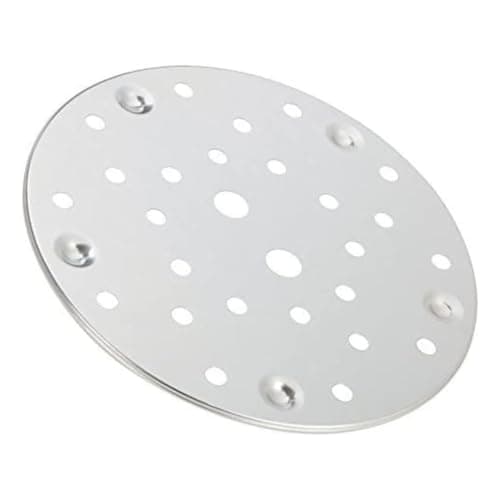
Presto Cooking / Canning Rack for Pressure Canners (85707)
The rack is not an accessory. Jars have to sit off the base so water circulates underneath and the glass is not in direct contact with a hot bottom, and a canner whose rack has rusted through is a canner that will crack jars. This is the genuine replacement.
Published specs
- Presto stock number
- 85707
- Presto's own name
- Cooking/Canning Rack for Presto Pressure Canners
- Function
- Holds jars off the canner base so water circulates
- Listed for
- Presto's parts page for the 23-quart Pressure Canner
- Also used for
- The lower layer when double-stacking pints
What works
- Sized to the canner by Presto rather than guessed at, which the unbranded canning racks sold online are not
- Solves the second-layer problem if you want to double-stack pints, which is where a lot of a 23-quart canner's capacity actually lives
- Cheap enough that replacing a rusted rack is never the reason to replace a canner
What to know first
- Racks rust where the coating is chipped. Dry it properly rather than putting it away damp, or you will buy another
- It is model-specific. A rack for a 23-quart canner is not a rack for a 16-quart one
- It does not turn a stockpot into a canner. Depth is the other requirement, and a rack does not add any
Specs from Presto, Parts and Accessories for the 23-Quart Pressure Canner, NCHFP, Recommended Canners. We have not handled this product — see how we pick.
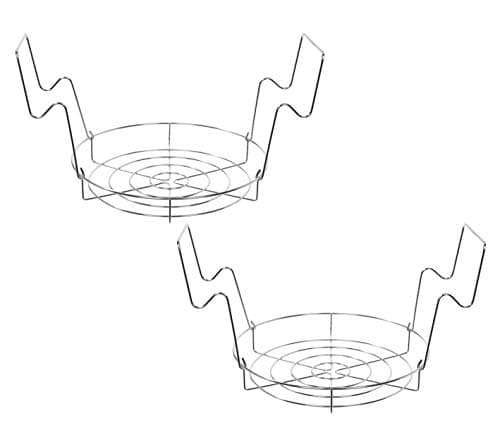
Concord 12-inch Stainless Steel Canning Rack
A 12-inch stainless rack stated to hold eight pints or seven quart jars, which is the standard tested batch. If you are replacing a rusted canner rack rather than improvising one for a stockpot, this is the size that matches what a 21.5-quart canner is built around.
Published specs
- Diameter
- 12 inches
- Stated capacity
- 8 pint or 7 quart jars
- Material
- Stainless steel
- Fits
- Canners and stockpots with an interior wider than 12 inches
What works
- Seven quart jars is the batch size every tested NCHFP recipe is written around, so a rack that takes a full load means you are never processing a part batch for rack reasons
- Stainless, so the rust failure that retires most canner racks does not apply
- Cheap enough that a rusted rack is never the reason to replace a canner
What to know first
- Twelve inches needs a pot wider than twelve inches. Measure your canner's interior first — this is the single most common reason a replacement rack does not fit
- Capacity figures come from the seller's listing rather than a manufacturer spec sheet, so treat the jar counts as a guide and check against your own pot
- We have not handled it, and a rack is a part where build quality varies more than the photographs suggest
Specs from NCHFP, Recommended Canners. We have not handled this product — see how we pick.
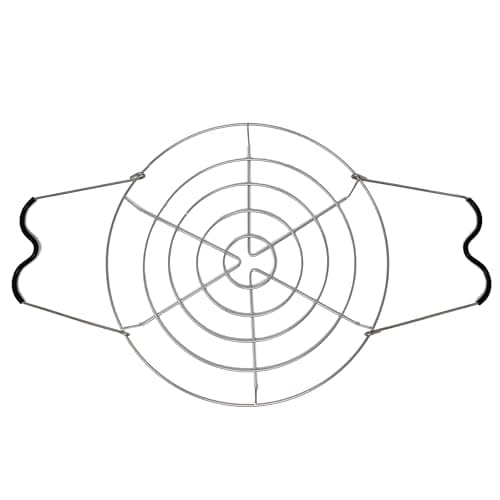
Norpro Deluxe Stainless Steel Canning Rack
The part that makes an ordinary deep stockpot into a legitimate water bath canner. Jars have to sit off the base so water circulates underneath and the glass is not in direct contact with a hot bottom, and stainless solves the one failure mode the coated racks have.
Published specs
- Material
- Stainless steel
- Job
- Holds jars off the canner base so water circulates
- Why stainless
- No coating to chip, so no rust where it chips
- Brand
- Norpro, also the maker of the boxed canning tool set
What works
- Stainless does not rust, which is exactly how coated racks die — a chip in the coating and the next damp storage finishes it
- Converts a stockpot you already own into a canner, which is the cheapest legitimate route into water bath canning
- A rack is a required part rather than an accessory, and replacing a dead one costs a fraction of replacing a canner
What to know first
- We have not handled this rack, and Norpro does not publish a jar-capacity figure for it the way a canner maker does — check it against your pot's interior diameter before you rely on it
- A rack solves the base-contact problem and nothing else. Depth is the other requirement and no rack adds any
- Racks without tall handles have to be fished out of hot water with a lifter rather than lifted as a unit
Specs from NCHFP, Recommended Canners. We have not handled this product — see how we pick.
Shallow pots sold as canning pots
Skip any pot that cannot keep an inch of briskly boiling water over the tops of your jars. Plenty of pots are sold with a canning rack and a canning name while being an inch or two too short for quart jars, and that inch is the requirement, not a target.
Published specs
- NCHFP requirement
- "The canner must be deep enough so that at least 1 inch of briskly boiling water will be over the tops of jars during processing"
- The test
- Jar height + 1 inch of water + room for a rolling boil
- Common shortfall
- Quart jars, which are about 6 1/2 to 6 3/4 inches tall
What works
- There is no upside. This entry is here so you can recognize the problem before it is in your kitchen
What to know first
- Water that stops covering the jars mid-boil means the tops of the jars are processing in air, not water, and the tested time no longer applies
- The shortfall is invisible in a product photo and only shows up when the jars are already in
- Cheap pots in this category often have no rack at all, and a jar sitting on a hot base can crack
Specs from NCHFP, Recommended Canners. We have not handled this product — see how we pick.
Measure the interior, not the canner
This is the mistake that sends most replacement racks back. A canner sold as 21.5 quarts does not tell you its interior diameter, and a 12-inch rack needs a pot wider than 12 inches — not 12 inches exactly, because the rack has to drop past the wall and sit flat on the base.
Take a tape measure across the inside of the pot at the base, not across the rim and not across the handles. Buy a rack at least half an inch narrower than that number. If your canner came with a rack and the maker publishes a part number, use the part number instead and skip the arithmetic entirely — Presto lists racks against each canner's stock number, which is why the genuine part leads the picks above.
Turning a stockpot into a canner
This is the rack's best trick and the cheapest legitimate route into water bath canning. A deep stockpot plus a rack meets both NCHFP requirements, and there is nothing second-class about it — plenty of experienced canners never buy a dedicated water bath canner.
The catch is depth rather than the rack. You need at least 1 inch of briskly boiling water over the jar tops, 2 inches once a process runs past 30 minutes, plus room for a rolling boil that does not empty itself over the side. Stockpots are commonly an inch or two short for quart jars even when they are fine for pints. Canning without a canner works through what qualifies.
What not to improvise
People do improvise racks, and some improvisations are worse than others. The failure mode to avoid is anything that lets a jar touch the base or tips under load.
- A folded towel is the common one, and it is the worst. It blocks water circulation under the jars, it can scorch against the base, and it shifts when the boil starts.
- Extra screw bands wired together works better than a towel and is genuinely used, but it is fiddly, it rusts, and it gives you nothing to lift.
- A trivet or steamer basket can work if it is stainless, sits flat, and is not so small that jars overhang the edge and tip.
- Nothing at all is the one that cracks jars. Direct contact between hot glass and a hotter base is the mechanism, and it does not care how gently you lowered the jar.
Looking after the one you have
Racks die of rust and rust starts with water. Dry the rack completely before it goes away rather than putting it back in the canner damp, and store it somewhere that is not an uninsulated garage. A coated rack with a chip in the coating is already on its way out; a stainless one is not.
If yours has gone, replace it rather than working around it. It is the cheapest part in the entire process, and the thing it prevents — a cracked jar in a canner of boiling water — is both a lost batch and a burn risk while you deal with it.
The three shapes, and which you need
Canning racks look interchangeable in photographs and are not. There are three broad designs and they solve different problems.
- Flat perforated racks sit on the base and do one job: hold jars off the bottom. This is what pressure canners come with, and what you want as a second rack for double-stacking.
- Handled or lift-out racks have tall wire handles that hook over the canner rim so you can load jars at the top and lower the whole set at once. This is the water bath design, and the handles are the difference between lowering seven jars and lowering seven jars one at a time with a lifter.
- Divider racks add upright partitions that keep jars from touching each other. Useful in a wide canner where jars can drift together and knock, which is one of the ways rims get chipped.
Double-stacking, and the second rack
In a large pressure canner, pints can be processed in two layers — which is why a 23-quart canner takes twenty pints against seven quarts. That second layer needs a second flat rack between the tiers so the upper jars sit on something rather than on the shoulders of the jars below.
Two rules worth knowing before you try it. Stagger the upper layer so jars sit over the gaps rather than directly on the lids beneath, and use the processing time for the jar size, not a longer one — double-stacking does not change the time. And do not attempt two layers in a boiling water canner: it is not deep enough to keep an inch of water above the top layer, which is the requirement that makes the process valid at all.
Fitting a rack to a pot you already own
If you are converting a stockpot, the rack has to clear the pot's interior at the base and sit flat once it is down there. Pots with a rounded base corner are the ones that catch people out — a rack that measures right at the widest point can still sit at an angle where the wall curves in.
Drop the rack in empty and look at it before you commit. It should rest flat, not rock, and there should be a finger's width of clearance around it. A rack that wedges halfway down is worse than no rack, because it can drop under the weight of loaded jars mid-process.
The decision, in one paragraph
If your canner's maker lists a rack by part number, buy that one — it is the only guaranteed fit and it is usually cheap. If you are fitting a rack to a stockpot or replacing an unbranded one, measure the interior diameter at the base first and buy stainless a little narrower than that. Do not improvise with a towel, and do not run a batch without a rack at all.
Next stepDoes your stockpot qualify?Common questions
Do I need a rack to can?
What size canning rack do I need?
Can I use a towel instead of a rack?
Can I use a pressure canner rack in a water bath canner?
How do I stop my canning rack rusting?
Can I stack two layers of jars with a second rack?
Do you earn a commission on these?
Sources
- NCHFP — Recommended Canners
- Presto — Parts and Accessories for the 23-Quart Pressure Canner
- National Center for Home Food Preservation
Product specifications are taken from each manufacturer’s own published page, cited on the product. We have not handled these products — how we pick.