Pressure canning on a glass top stove
Usually yes, with two conditions — and the conditions are about the stove, not about the canner.
Disclosure: we earn a commission on purchases made through links on this page, at no extra cost to you. It does not change what we recommend — see how we pick and our affiliate disclosure.
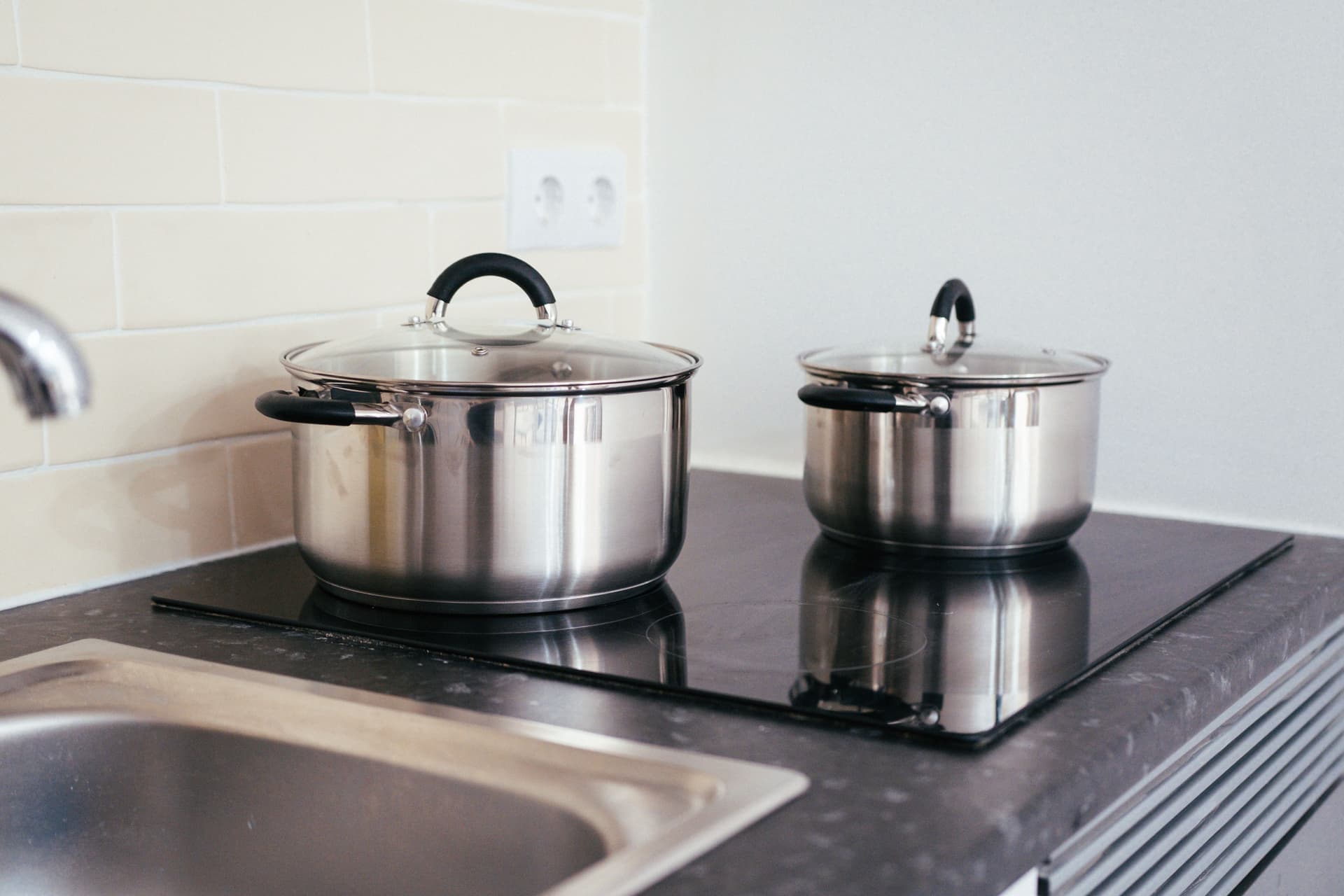
You can usually pressure can on a glass top stove if the canner has a flat bottom, its base is no more than 4 inches wider than the heating element, and your range manufacturer does not prohibit canning. The limits come from the cooktop and the element size, not from the canner being a canner.
This is one of the highest-anxiety questions in the category, partly because the answers online contradict each other and partly because the real answer depends on your specific range. Here is how to resolve it for your kitchen rather than in general.
Step 1: read your range's guidance
Manufacturers differ. Some smooth-top ranges carry explicit guidance about canning, about maximum cookware weight, or about cookware that overhangs the element. That guidance is specific to your appliance and it outranks anything on this page. Find the manual, search it for "canning" and for "cookware", and read what it actually says rather than what a forum says it says.
Step 2: check the canner is flat-bottomed
The NCHFP is direct on this: a canner used on an electric range needs a flat bottom. A warped, ridged or concave base contacts a smooth top unevenly, which means uneven heating and, on a glass surface, hot spots. Aluminum canners can warp over years of heating and cooling, so this is worth checking on a used one.
Step 3: the diameter rule
This is the one that usually decides the answer. The NCHFP states that on an electric range "the canner should be no more than 4 inches wider in diameter than the element on which it is heated." On a smooth top the heating ring is printed on the glass, so it is easy to measure — lay a tape across it.
| Printed element | Maximum canner base | What that rules out |
|---|---|---|
| 6" | 10" | Most full-size canners |
| 7" | 11" | Most cast-aluminum canners |
| 8" | 12" | The All American 921 at 15 3/8 inches |
| 9" | 13" | Still short of the 921 |
| 10" | 14" | Still short of the 921 |
| 12" | 16" | Nothing in common use |
Weight, and the thing people actually worry about
The fear is usually cracking the glass. In practice the risks people report are about weight and impact rather than heat: setting a heavy canner down hard, or sliding it across the surface. Some manufacturers publish a maximum cookware weight for exactly this reason.
- Lift, do not slide. Sliding a loaded canner is what scratches and stresses a glass top.
- Load the canner on the stove, not on the counter, so you are never lifting the full weight onto the glass.
- Consider the total weight. An All American 921 is 24 pounds empty; loaded it is far more, and it is also too wide for most smooth-top elements anyway.
- Do not let it boil dry. An empty pot on a hot element is hard on any surface.
The complication smooth tops add: cycling elements
Many smooth-top ranges regulate temperature by switching the element on and off rather than holding it at a steady output. That is fine for a pan and awkward for canning, because a pressure canner needs steady heat to hold steady pressure, and a water bath needs a continuous rolling boil.
If your range cycles noticeably, you will find yourself nursing the dial. That is the strongest practical argument for a countertop canner, which holds its own temperature and does not touch the stove at all — see electric pressure canners.
The short answer
Measure the printed element. Add 4 inches. If the canner's base is under that number, it has a flat bottom, and your range manual does not prohibit canning, you are fine. If it is over — and for cast-aluminum canners on a household element it usually is — either choose a narrower canner or move to a countertop appliance. Do not buy a canner that overhangs and hope.
Next stepRun the numbers for your elementCommon questions
Is it safe to pressure can on a glass top stove?
Will a canner crack my glass cooktop?
What is the best pressure canner for a glass top stove?
Can I use an All American on a glass top?
Does the 4-inch rule apply to gas stoves?
Sources
- NCHFP — Recommended Canners
- Presto — 23-Quart Pressure Canner (01781)
- All American — 921 Pressure Canner
Product specifications are taken from each manufacturer’s own published page, cited on the product. We have not handled these products — how we pick.