Wide mouth vs regular mouth
The NCHFP recommends both, so nothing here is a safety question. It is about what you are putting in the jar and what the lids cost.
Disclosure: we earn a commission on purchases made through links on this page, at no extra cost to you. It does not change what we recommend — see how we pick and our affiliate disclosure.
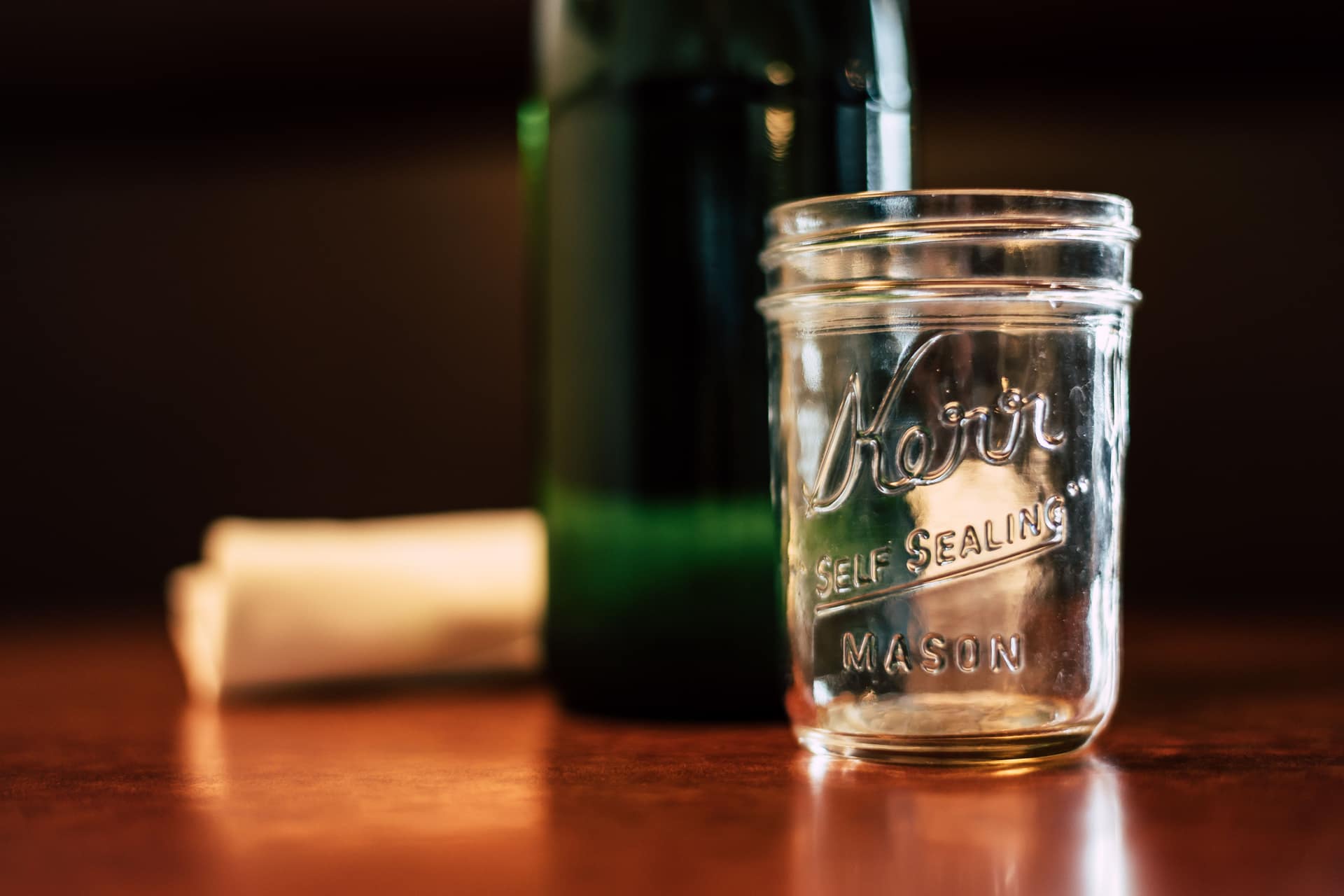
The NCHFP recommends both regular and wide-mouth Mason-type jars, so neither is safer. A standard mouth opening is about 2-3/8 inches and a wide mouth about 3 inches. Wide mouth is easier to pack and clean and suits whole and halved produce; regular mouth is cheaper per jar and per lid and suits jams, jellies and sauces.
This is one of the few decisions in canning where you can relax. The National Center for Home Food Preservation names both in the same breath: regular and wide-mouth Mason-type, threaded, home-canning jars with self-sealing lids are the best choice. There is no processing-time difference, no acidity difference, and no seal-reliability difference to weigh.
What is left is a genuinely practical question, and the practical answer depends almost entirely on what you plan to put in the jar.
The two numbers
The NCHFP publishes them: the standard jar mouth opening is about 2-3/8 inches, and wide-mouth jars have openings of about 3 inches. Five-eighths of an inch does not sound like a decision until you are trying to get a peach half through it.
| Regular mouth | Wide mouth | |
|---|---|---|
| Opening (NCHFP) | About 2-3/8 inches | About 3 inches |
| Best for | Jams, jellies, sauces, juice, salsa, relish | Peach and pear halves, pickle spears, whole tomatoes, beans |
| Cost per jar | Generally the cheaper of the two | Generally the dearer of the two |
| Cost per lid | Generally cheaper, and stocked everywhere | Generally dearer |
| Packing | A funnel helps, and a spoon does not fit well | Easy to pack by hand, easy to get a spatula in |
| Cleaning | A bottle brush is genuinely useful | A hand and a cloth reach the bottom |
| Freezing | Shoulders make it more prone to cracking | Straight sides handle expansion better |
| Availability | The most widely stocked jar in the US | Widely stocked, slightly fewer shapes |
Buy wide mouth if you are canning solids
Anything you have to place in the jar rather than pour into it argues for wide mouth. Peach and pear halves, apricots, pickle spears, whole or quartered tomatoes, green beans stood upright, and anything you are raw-packing all go in faster and with fewer bruised pieces through a 3-inch opening.
There is a second reason that matters more than it sounds. Removing trapped air bubbles and wiping the rim are both required steps, and both are easier in a wide-mouth jar. A rim you can actually see and reach is a rim you clean properly, and a clean rim is the seal.
Buy regular mouth if you are canning liquids
Jam, jelly, marmalade, tomato sauce, juice, salsa and relish all pour, and pouring through 2-3/8 inches with a canning funnel is not the constraint. What you get in exchange is real: the jars cost less, the lids cost less, and the lids are the item you buy every single season.
That last point compounds. Jars are a one-time purchase you will still own in twenty years; flat lids are a consumable. Over a decade of jam-making the lid price difference is the larger number, and it is the reason a lot of long-term canners keep their pint and half-pint stock in regular mouth deliberately.
Quick picks
Every pick below is screened against the National Center for Home Food Preservation’s published canner rules first. Tap a row for the full write-up.
| # | Product | Best for | Key spec | Price |
|---|---|---|---|---|
| 1 |  Ball Wide Mouth Quart Jars (32 oz)The jar to buy when you are packing peach halves, pickle spears or anything you have to reach into. The wider 86 mm mouth is easier to fill and far easier to clean, and quarts are the standard size for tomatoes. | Whole fruit and packing by hand | 86 mm mouth, 32 oz | |
| 2 |  Ball Regular Mouth Pint Jars (16 oz)If you buy one case of jars this season, buy this one. Pints are the size most tested recipes are written for, regular-mouth lids are the cheapest and most available lid on any shelf, and the jars are reusable indefinitely. | The default first case | 70 mm mouth, 16 oz | $36.99 · View on Amazon#ad we earn a commission · price as of October 18, 2026 |
| 3 | Kerr Wide Mouth Pint Jars (16 oz)Kerr and Ball are the same company and the same standard threads. Buy whichever is on the shelf and cheaper; the lids are interchangeable within a mouth size and neither is safer than the other. | When Ball is sold out | Same 86 mm mouth as Ball | Check price on Amazon#ad we earn a commission · live price pending |
| 4 |  Ball Wide Mouth Canning LidsThe same lid in the larger size. Buy it because your jars are wide mouth, not because it is better — it is the identical sealing compound on a bigger disc, at a higher price per lid. | Wide mouth jars | 86 mm, single use | $44.99 · View on Amazon#ad we earn a commission · price as of October 18, 2026 |
| 5 |  Ball Regular Mouth Canning LidsThe lid every tested recipe assumes. Single-use by design — the sealing compound is meant to compress once — and cheap enough that reusing one to save a few cents is a bad trade against losing a jar of food. | The default lid | 70 mm, single use | $22.99 · View on Amazon#ad we earn a commission · price as of October 18, 2026 |
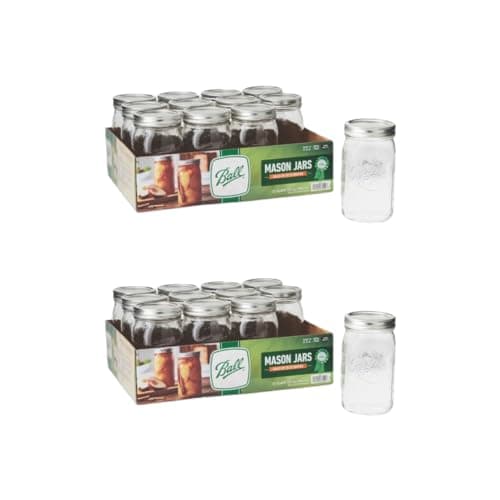
Ball Wide Mouth Quart Jars (32 oz)
The jar to buy when you are packing peach halves, pickle spears or anything you have to reach into. The wider 86 mm mouth is easier to fill and far easier to clean, and quarts are the standard size for tomatoes.
Published specs
- Volume
- 32 oz / 4 cups
- Mouth
- Wide, about 86 mm lid diameter
- Inner mouth diameter
- About 76 mm
- Jar dimensions
- About 6 1/2" tall x 3 1/4" wide
What works
- You can get a hand and a jar funnel into it, which turns packing peaches from a chore into a task
- Quart is the size the tomato and peach processing times in tested recipes are written around
- Much easier to wash by hand than a regular mouth quart
What to know first
- Wide mouth lids cost more than regular mouth and disappear from shelves first in peak season
- Seven quarts is a full canner load, so a quart-jar day is a longer day per jar of finished food
- A quart of anything low-acid still needs a pressure canner, and quarts take the longest processing times
Specs from Ball, Mason Jars & Lids, Wide Mouth. We have not handled this product — see how we pick.
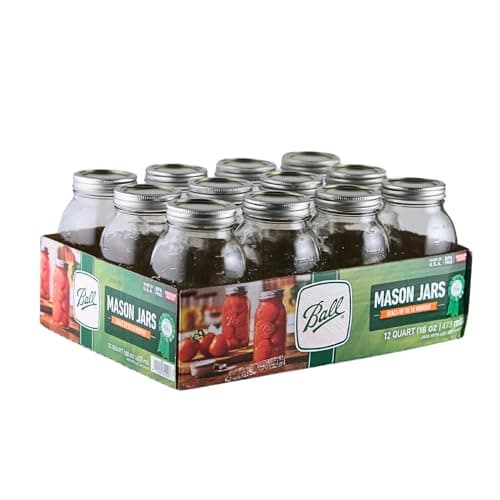
Ball Regular Mouth Pint Jars (16 oz)
If you buy one case of jars this season, buy this one. Pints are the size most tested recipes are written for, regular-mouth lids are the cheapest and most available lid on any shelf, and the jars are reusable indefinitely.
Published specs
- Volume
- 16 oz / 2 cups
- Mouth
- Regular, about 70 mm lid diameter
- Inner mouth diameter
- About 60 mm
- Jar dimensions
- About 5" tall x 2 3/4" wide
- Reuse
- Jars and rings reusable; flat lids are single-use
What works
- Pints fit both a water bath canner and a pressure canner comfortably, so the case is not stranded when you move up to beans
- Regular-mouth lids are the most stocked size in the country, which matters in September when shelves empty out
- The jars outlive everything else in this list. The consumable is the flat lid, not the glass
What to know first
- The narrower 60 mm opening is fiddly for whole peaches or large pickle spears — that is what wide mouth is for
- Regular and wide mouth lids are not interchangeable, so mixing both means stocking two lid sizes
- Glass. Handle the case like glass
Specs from Ball, Mason Jars & Lids, Regular Mouth. We have not handled this product — see how we pick.
Kerr Wide Mouth Pint Jars (16 oz)
Kerr and Ball are the same company and the same standard threads. Buy whichever is on the shelf and cheaper; the lids are interchangeable within a mouth size and neither is safer than the other.
Published specs
- Volume
- 16 oz / 2 cups
- Mouth
- Wide, about 86 mm lid diameter
- Lid compatibility
- Interchangeable with Ball wide mouth
What works
- Identical thread standard to Ball, so your existing lids and rings fit
- Frequently the cheaper of the two on the same shelf, for no functional difference
- Wide mouth in a pint size is the most versatile single jar in the category
What to know first
- No functional advantage over Ball either — this is a price and availability decision, not a quality one
- Same wide-mouth lid premium applies
- Decorative or embossed variants are sometimes priced above plain jars for no canning benefit
Specs from Ball, Mason Jars & Lids, Wide Mouth. We have not handled this product — see how we pick.
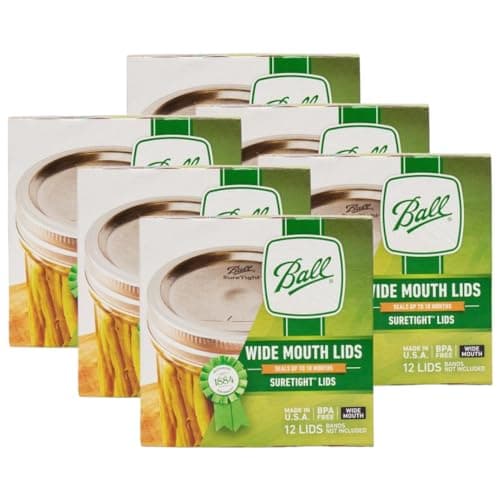
Ball Wide Mouth Canning Lids
The same lid in the larger size. Buy it because your jars are wide mouth, not because it is better — it is the identical sealing compound on a bigger disc, at a higher price per lid.
Published specs
- Size
- Wide mouth, about 86 mm
- Use
- Flat lid single-use; band reusable
- Compatibility
- Ball and Kerr wide mouth jars
What works
- Fits both Ball and Kerr wide mouth jars, so brand does not matter once you have picked a mouth size
- Same proven sealing compound as the regular mouth lid
- Easier to place squarely on a full jar than a regular mouth lid, which is a small real advantage when you are tired
What to know first
- Costs more per lid than regular mouth, every time
- Harder to find in a rural hardware store than the regular size
- Still single-use, so a wide mouth habit is a permanently higher running cost
Specs from Ball, Mason Jars & Lids, Wide Mouth. We have not handled this product — see how we pick.
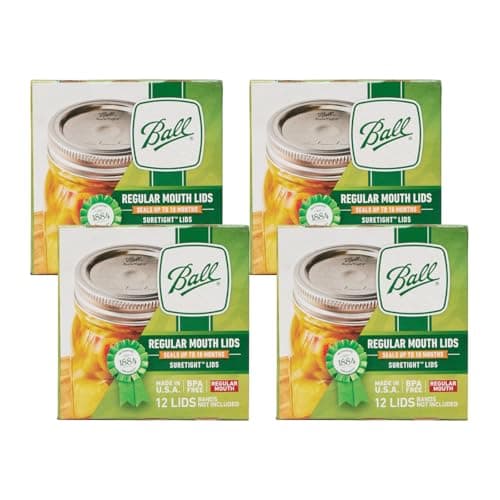
Ball Regular Mouth Canning Lids
The lid every tested recipe assumes. Single-use by design — the sealing compound is meant to compress once — and cheap enough that reusing one to save a few cents is a bad trade against losing a jar of food.
Published specs
- Size
- Regular mouth, about 70 mm
- Use
- Flat lid single-use; band reusable
- Compatibility
- Ball and Kerr regular mouth jars
What works
- The most widely stocked lid in the country, which is the thing that matters in September
- What every NCHFP and Ball tested recipe is written around, so nothing about your process needs adapting
- Bands are reusable indefinitely as long as they are not bent or rusted
What to know first
- Single use. The flat lid goes in the recycling after one seal
- Sells out first in peak season — buy your lids in July, not September
- Does not fit wide mouth jars, and there is no adapter
Specs from Ball, Mason Jars & Lids, Regular Mouth. We have not handled this product — see how we pick.
What most people should actually do
Pick a default by what you make most, then buy the other size only for the specific job that needs it. In practice that usually means one of two shelves:
- Mostly jam, jelly and sauce — regular-mouth half-pints and pints as the default, and a dozen wide-mouth quarts for the years you do peaches.
- Mostly fruit halves, pickles and vegetables — wide-mouth quarts and pints as the default, and accept the lid cost as the price of a jar you can pack by hand.
- Genuinely not sure yet — regular-mouth pints. It is the most widely stocked jar in the country, the lids are always available, and pints suit more first-year recipes than quarts do.
Two things this does not change
Mouth size does not change processing time. A tested recipe's time depends on the jar size and the food, not on the diameter of the opening — so a wide-mouth pint and a regular-mouth pint of the same salsa process identically. Jar size does change it, which is why canning jar sizes exists as a separate page.
It also does not change which method the food needs. Neither mouth makes a low-acid food safe in a water bath. That is set by the food, and it is worked through in what can you water bath can.
Not every size comes in both mouths
The NCHFP lists home canning jars in half-pint, pint, 1½ pint, quart and half-gallon sizes. What it does not say, because it is a supply question rather than a safety one, is that the availability of each size in each mouth is uneven — and the further you get from pints and quarts, the more the choice gets made for you.
Small jelly jars skew regular mouth, which is fine because nothing you put in a 4 oz jar needs a wide opening. The 1½ pint size is uncommon in both. Half-gallon jars are the notable case: they are worth knowing about but narrowly useful, because the NCHFP permits them only for canning very acid juices. That is a real restriction and not a suggestion, so a half-gallon jar is a juice jar rather than a large-batch shortcut.
The peak-season supply problem
One practical argument that only shows up in August. Regular-mouth lids are the most widely stocked canning item in the country, which means they are also the first to sell out when the whole region is canning at once. Wide-mouth lids are stocked in smaller quantities but sell more slowly, so mid-season they are sometimes the ones still on the shelf.
The lesson is not to pick a mouth size for this reason. It is to buy your lids early. Lids are the one true consumable in canning, they store indefinitely if kept dry, and buying a season's worth in spring removes the one shortage that can stop you dead with produce already on the counter. Discard any that are dented, rusted or whose sealing compound looks cracked, and otherwise a box bought in April is as good in September.
Next stepWhich jar size to buyCommon questions
Is wide mouth or regular mouth better for canning?
How big is a wide mouth jar opening?
Do wide mouth jars need different lids?
Does mouth size change the processing time?
Which jars are better for freezing?
Can I use wide mouth jars in a pressure canner?
Do you earn a commission on these?
Sources
- NCHFP — Recommended Jars and Lids
- Ball — Mason Jars & Lids, Regular Mouth
- Ball — Mason Jars & Lids, Wide Mouth
- National Center for Home Food Preservation
Product specifications are taken from each manufacturer’s own published page, cited on the product. We have not handled these products — how we pick.