Are mason jars freezer safe?
Some are, some are not, and the difference is the shape of the shoulder. Headspace does the rest.
Disclosure: we earn a commission on purchases made through links on this page, at no extra cost to you. It does not change what we recommend — see how we pick and our affiliate disclosure.
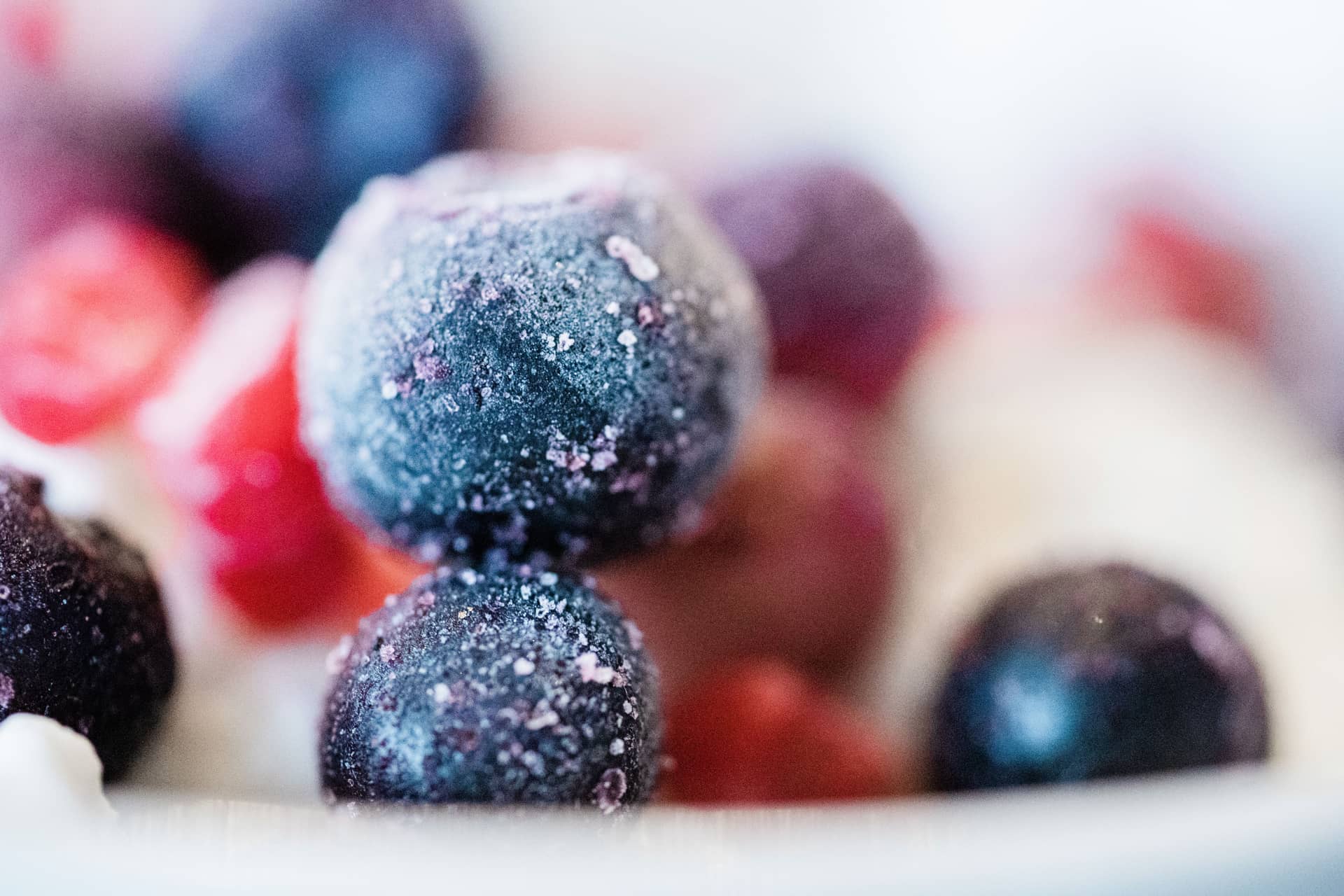
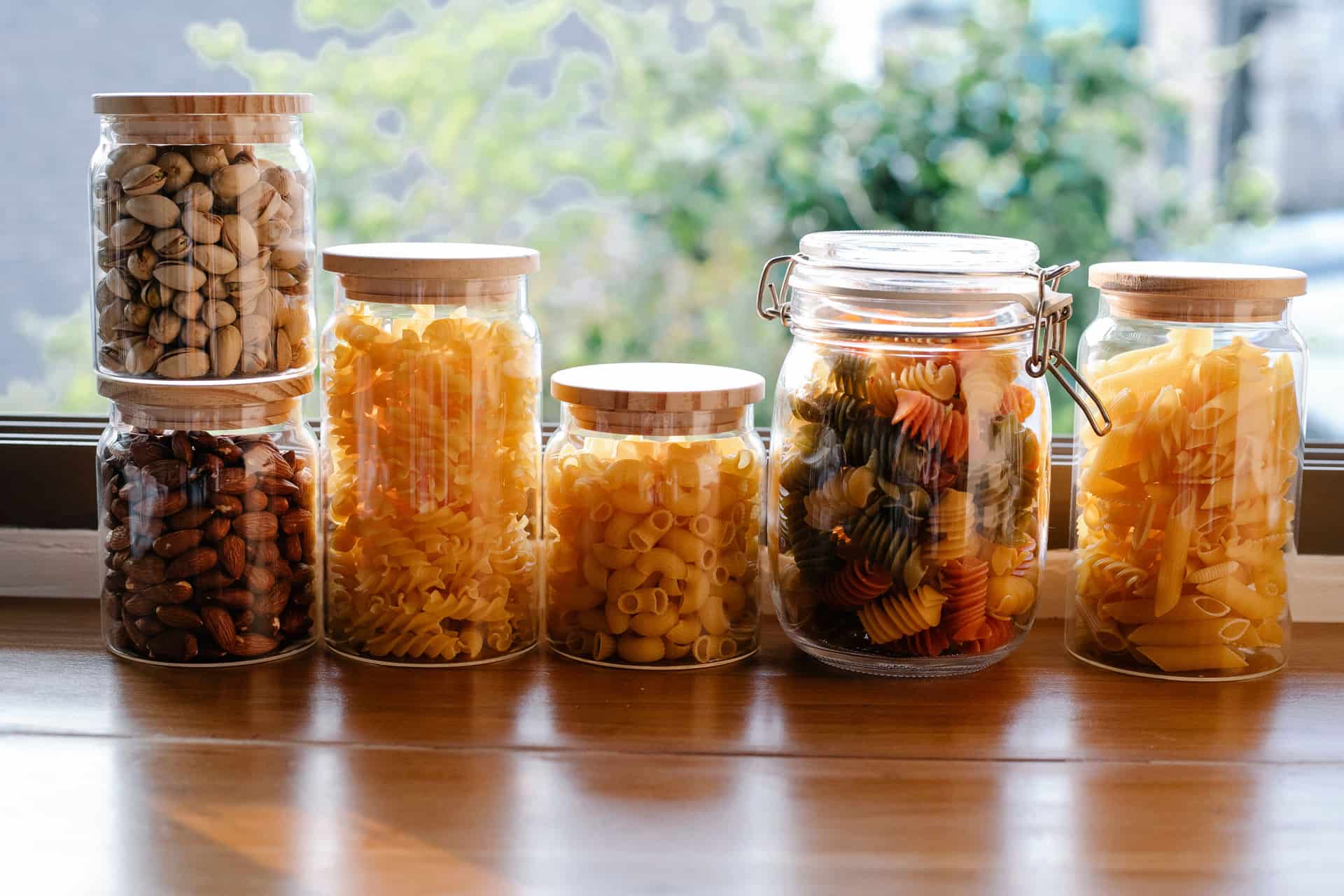
Some are. Ball's rule is the shape: "Jars with tapered sides or straight sides are freezer safe; Shoulder jars are not." Leave 1/2 inch of headspace in a wide-top jar for expansion, more in a narrow-mouth one, and do not freeze in jars Ball does not label freezer safe — its quart and half-gallon jars carry no freezer-safe designation.
Every canner ends up asking this in August, standing over more berries than the canner can take. The answer is genuinely useful because it is specific: it is not about the brand, or the thickness of the glass, or how cold your freezer runs. It is about the shoulder.
Food expands as it freezes. In a straight-sided jar, the expanding contents push upward into the headspace and nothing objects. In a shouldered jar — the classic narrow-necked canning jar shape — the shoulder is in the way, and the pressure goes into the glass instead.
Ball's rule, and what it leaves out
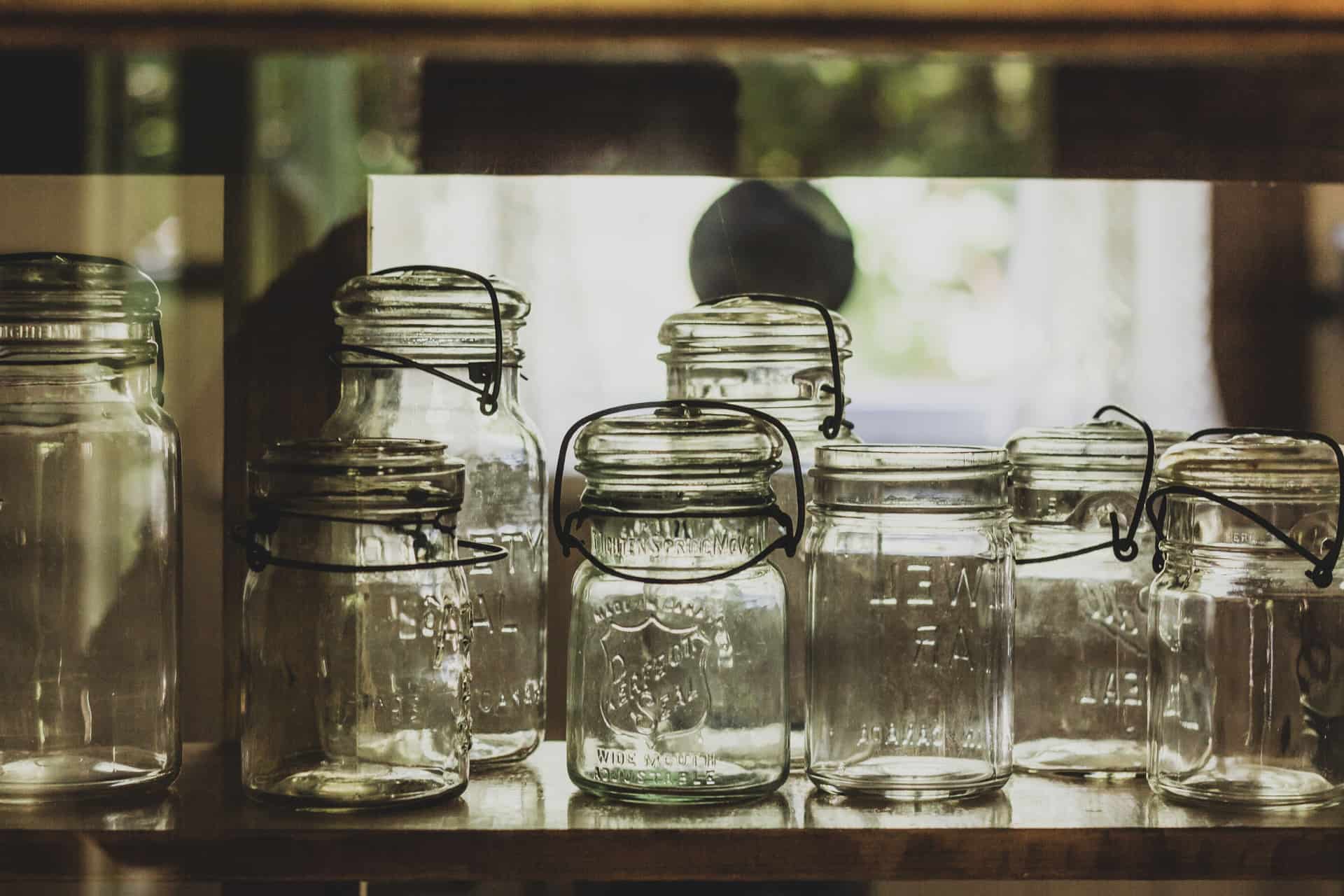
Ball publishes the shape rule in more than one place. Its freezing guide: "It's important to note that not all jars are freezer-safe. Jars with tapered sides or straight sides are freezer safe; Shoulder jars are not." Its care guidance repeats it: "Straight or tapered jars can be used for freezing. Jars with shoulders should not be used for freezing."
The jar-selection chart is where it gets specific, and where a detail hides. Ball marks these sizes "(Freezer Safe)": regular mouth 4 oz, 8 oz and 12 oz, and wide mouth 16 oz and 24 oz. The 32 oz quart and 64 oz half-gallon carry no freezer-safe tag in either mouth size.
The NCHFP's version: use jars made for it
The NCHFP's freezing guidance starts from the same problem and arrives somewhere blunter: "Regular glass jars break easily at freezer temperatures. If using glass jars, choose wide mouth dual purpose jars made for freezing and canning. These jars have been tempered to withstand extremes in temperatures." The wide mouth has a second advantage they note: it "allows easy removal of partially thawed foods."
If you use a narrow-mouth canning jar anyway, the NCHFP gives the mitigation rather than a flat ban: leave extra headspace, because "expansion of the liquid could cause the jars to break at the neck." NDSU Extension puts the hardest line on the same point: "Do not use regular, narrow-mouth canning jars for freezing foods packed in liquid."
Headspace: the numbers that actually prevent breakage
Freezing headspace is not the 1/4 inch you use for jelly in a canner. It is substantially more, and it varies with the pack and the jar opening. These are the NCHFP's figures.
| Pack | Wide top, pint | Wide top, quart | Narrow top, pint | Narrow top, quart |
|---|---|---|---|---|
| Liquid pack (fruit in juice, syrup, water; crushed or pureed) | 1/2 in | 1 in | 3/4 in | 1 1/2 in |
| Dry pack (no added sugar or liquid) | 1/2 in | 1/2 in | 1/2 in | 1/2 in |
| Juice | 1/2 in | 1 in | 1 1/2 in | 1 1/2 in |
Penn State Extension explains why dry packs need so much less: "Fruits and vegetables packed without added sugar or liquid only need ½-inch headspace in either pint or quart containers, regardless of opening size." Loose berries have air around them already; a jar of syrup does not.
Quick picks
Every pick below is screened against the National Center for Home Food Preservation’s published canner rules first. Tap a row for the full write-up.
| # | Product | Best for | Key spec | Price |
|---|---|---|---|---|
| 1 |  Ball Wide Mouth Pint Jars, 16 oz (case of 24)The unit most people should actually be buying. Twenty-four wide-mouth pints is two full canner loads with spares, it is the pack size where the per-jar price starts to make sense, and jars are the one thing in canning you will still own in twenty years. | Buying a season at once | 24 jars per case | $69.99 · View on Amazon#ad we earn a commission · price as of October 18, 2026 |
| 2 |  Ball Plastic Freezer Jars, 16 oz (2-Count)The simplest answer to the freezer-jar problem: do not use glass. These are Ball's own plastic pint jars with leak-resistant lids, made for freezer jam and anything else that goes straight from the counter to 0°F. Nothing about headspace or jar shape can break them. | Freezer jam, without the glass question | Pint, polypropylene | $17.99 · View on Amazon#ad we earn a commission · price as of October 18, 2026 |
| 3 |  Ball Quilted Crystal Jelly Jars, 4 oz (quarter-pint)The smallest jar worth owning, and the one most people underbuy. A quarter-pint holds enough jelly for a household to finish before it dulls in the fridge, it is the right size to give away, and it is what you reach for when a batch makes an awkward extra half jar. | Jelly, gifts and sample batches | 4 oz, regular mouth | |
| 4 | Shouldered jars in the freezerSkipThe jar that breaks in the freezer is almost always a shouldered one. Ball's rule is short: "Jars with tapered sides or straight sides are freezer safe; Shoulder jars are not." As the contents expand, the shoulder gives the ice nowhere to go and the glass fails at the neck. | Nothing - use a straight-sided jar | Ball: shoulder jars are not freezer safe | Check price on Amazon#ad we earn a commission · live price pending |
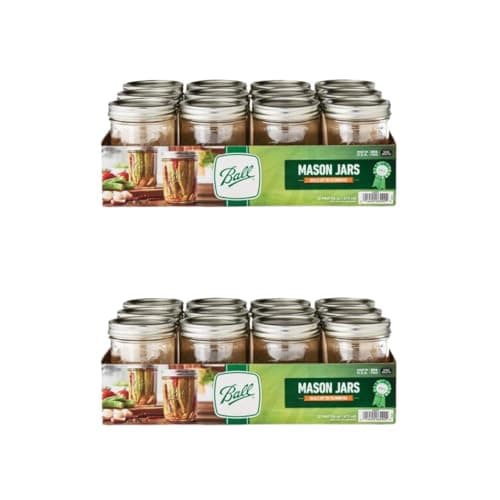
Ball Wide Mouth Pint Jars, 16 oz (case of 24)
The unit most people should actually be buying. Twenty-four wide-mouth pints is two full canner loads with spares, it is the pack size where the per-jar price starts to make sense, and jars are the one thing in canning you will still own in twenty years.
Published specs
- Volume
- 16 oz (pint)
- Mouth
- Wide, about 3 inches
- Pack
- 24 jars with lids and bands
- Canner loads
- About two full 9-pint loads, with spares
- Lids included
- Yes, one flat lid per jar — single use
What works
- Two canner loads in one purchase, so a heavy day does not stop because you ran out of glass at jar nineteen
- Wide mouth packs by hand and wipes clean, which is the difference that matters on a long session
- Per-jar cost falls meaningfully at case quantity, and unlike lids the jars are not consumed
What to know first
- Wide-mouth lids cost more than regular-mouth every single season, and a case of 24 commits you to buying them
- Twenty-four jars is a real amount of cupboard, and empty jars take the same space as full ones
- The included lids are single-use flat lids like any other — the case does not solve your lid supply past the first fill
Specs from NCHFP, Recommended Jars and Lids, Ball, Mason Jars & Lids, Regular Mouth. We have not handled this product — see how we pick.
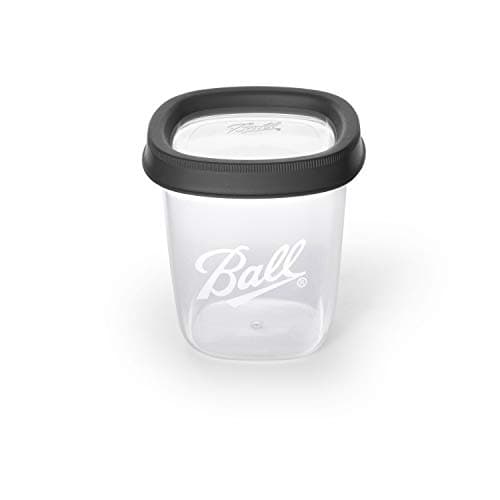
Ball Plastic Freezer Jars, 16 oz (2-Count)
The simplest answer to the freezer-jar problem: do not use glass. These are Ball's own plastic pint jars with leak-resistant lids, made for freezer jam and anything else that goes straight from the counter to 0°F. Nothing about headspace or jar shape can break them.
Published specs
- Size
- 16 oz (pint), 2 per pack
- Material
- Polypropylene (Ball item 1440080103, per distributor listing)
- Lid
- Leak-resistant plastic lid
- Use
- Freezer and refrigerator storage; not for canning
What works
- No thermal shock question at all, which removes the one real risk in freezing glass
- Light and stackable, so a freezer shelf of them is easier to handle than a shelf of jars
- The natural home for freezer jam, which Ball's own freezer-jam method fills with 1/2 inch of headspace
What to know first
- Plastic is not for canning. These jars never see a canner, and using them that way is not a supported option
- Ball does not publish a product page for these — the material and item number come from a distributor listing, not from Ball's own catalog
- Two jars per pack is a thin quantity for a jam day, so the per-jar cost is high
Specs from Ball, Step-by-Step Freezing, NCHFP, Containers for Freezing. We have not handled this product — see how we pick.
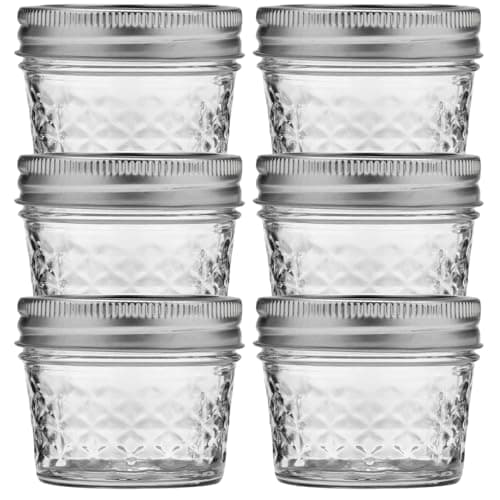
Ball Quilted Crystal Jelly Jars, 4 oz (quarter-pint)
The smallest jar worth owning, and the one most people underbuy. A quarter-pint holds enough jelly for a household to finish before it dulls in the fridge, it is the right size to give away, and it is what you reach for when a batch makes an awkward extra half jar.
Published specs
- Volume
- 4 oz (1/2 cup)
- Mouth
- Regular, about 2-3/8 inches
- Style
- Quilted crystal
- Included
- Jars, lids and bands
- Processing
- Uses the tested time for the recipe, not a shorter one
- NCHFP status
- A recommended Mason-type home canning jar
What works
- The right size for jelly, which dulls and weeps in the fridge long before a pint gets finished in most households
- Takes standard regular-mouth lids, so it does not add a third lid size to your shelf
- Genuinely the best gift jar — a 4 oz jar of something reads as a present in a way a quart does not
What to know first
- More jars means more rims to wipe and more lids to buy per batch, which is real work on a big day
- A 4 oz jar of anything you actually eat regularly is an annoyance rather than a convenience — this is a jelly and gift jar, not a staple jar
- Small jars are easy to overfill. The headspace in a tested recipe is not optional because the jar is little
Specs from NCHFP, Recommended Jars and Lids. We have not handled this product — see how we pick.
Shouldered jars in the freezer
The jar that breaks in the freezer is almost always a shouldered one. Ball's rule is short: "Jars with tapered sides or straight sides are freezer safe; Shoulder jars are not." As the contents expand, the shoulder gives the ice nowhere to go and the glass fails at the neck.
Published specs
- Ball
- "Jars with tapered sides or straight sides are freezer safe; Shoulder jars are not."
- NCHFP
- "Regular glass jars break easily at freezer temperatures" - choose wide mouth dual purpose jars made for freezing and canning
- If you use a narrow-mouth jar anyway
- NCHFP: leave extra headspace - 3/4 inch for pints, 1 1/2 inches for quarts
- Buy instead
- Straight-sided wide mouth jars, or plastic freezer jars
What works
- A shouldered jar is a perfectly good canning jar. Its problem is the freezer, not the jar
What to know first
- Expansion has nowhere to go at the neck, which is exactly where these jars break
- Broken glass in a freezer means discarding everything near it, not just the jar
- Ball does not label quart or half-gallon jars as freezer safe at all, so scaling up compounds the risk
Specs from Ball, How to Choose Mason Jar Sizes, NCHFP, Containers for Freezing. We have not handled this product — see how we pick.
How we screened these
We have not frozen jars until they cracked, which would tell you about our freezer rather than yours. What we checked is which jars their maker actually designates freezer safe, against the NCHFP's requirements for freezing in glass. The method is on how we pick.
- Designated freezer safe by the maker, not assumed from the glass.
- Straight or tapered sides, per Ball's own shape rule.
- Wide mouth where possible, which the NCHFP prefers for removing partially thawed food.
- A size the rules cover. Pints and smaller are designated; quarts are not.
- A plastic option, because the safest glass jar in the freezer is still a glass jar.
Filling and freezing without losing a jar
- Cool food before it goes in. Ball's care guidance warns against putting hot liquids into unheated jars, and against setting hot jars on cold, hard surfaces — the same thermal-shock logic runs in both directions.
- Leave the headspace from the table above, measured, not estimated.
- Freeze upright and in a single layer near the coldest part of the freezer, which is Ball's own instruction, and stack only once the contents are solid.
- Leave bands loose until frozen. Ball's freezer jam method applies bands "loosely", then tightens them to fingertip-tight after the jam has frozen.
- Thaw in the refrigerator, and treat the contents as refrigerated food from that point.
One more thing worth saying plainly: a frozen jar is not a canned jar. Freezing pauses spoilage rather than ending it, and nothing about a freezer-safe jar makes its contents shelf stable. The comparison between the two methods is in canning vs freezing, drying and vacuum sealing.
Freezer jam, the best reason to own these
Freezer jam is the single most common use for a freezer-safe jar, and it is a genuinely good preserve: no processing, a fresher fruit flavor than cooked jam, and a set that comes from pectin rather than long boiling. Ball's own method fills jars with 1/2 inch headspace, freezes them, and gives a shelf life of up to 1 year, with the jam thawed in the refrigerator and used within 3 weeks after that.
Which pectin you use decides the recipe — freezer jam is usually made with a low or no-sugar-needed pectin or an instant one, and the pectin's own directions are the recipe. That is covered in the best pectin for jam and jelly.
Thawing, and what comes out of the jar
The NCHFP flags a practical consequence of freezing in glass that has nothing to do with breakage: "Some foods will need to be thawed completely before removal from the jar." A block of frozen fruit in syrup does not come out of a pint jar in any useful state, and chipping at it with a knife is how jars get damaged and hands get cut.
That is the practical argument for the wide mouth beyond breakage — the NCHFP notes the wide mouth "allows easy removal of partially thawed foods", which is exactly the state a jar of fruit is in an hour after it leaves the freezer. Thaw in the refrigerator, plan for it to take overnight, and treat the contents as refrigerated food from the moment they soften.
Two habits make the difference between a freezer that gets eaten from and one that gets cleared out. Freeze in portions you will actually use at once, because a thawed jar is not going back. And label the jar with contents and date before it goes in, for the same reason canned jars get labeled — see canning labels.
The decision, in one paragraph
For freezing in glass, buy wide-mouth pints — Ball designates the 16 oz wide mouth freezer safe, it is the size most freezer jam recipes fill, and the wide opening lets you get half-thawed fruit out. For small portions, 4 oz jars are on Ball's freezer-safe list too. If you would rather not think about glass in a freezer at all, Ball's plastic freezer jars remove the question entirely. And whatever you fill, leave the headspace: cracked necks are an expansion problem, not a glass-quality one.
Next stepThe lids for jars that are not being cannedCommon questions
Are mason jars freezer safe?
Why do mason jars crack in the freezer?
How much headspace do you leave when freezing in jars?
Can you freeze in quart mason jars?
Can you put a hot jar straight into the freezer?
Do you leave the ring on when freezing a mason jar?
Are plastic freezer jars better than glass?
How long does frozen jam keep?
Can I reuse canning jars for the freezer?
Do you earn a commission on these?
Sources
- Ball — Step-by-Step Freezing
- Ball — How to Choose Mason Jar Sizes
- Ball — Canning Use & Care
- Ball — Mason Jars & Lids, Wide Mouth (16 oz)
- NCHFP — Containers for Freezing
- NCHFP — Headspace to Allow
- Penn State Extension — Why Allow Headspace when Canning and Freezing Food?
- NDSU Extension — Food Freezing Guide
Product specifications are taken from each manufacturer’s own published page, cited on the product. We have not handled these products — how we pick.