Steam canner vs water bath canner
Both reach the same temperature, and one of them has a 45-minute ceiling that decides whether it fits your recipes.
Disclosure: we earn a commission on purchases made through links on this page, at no extra cost to you. It does not change what we recommend — see how we pick and our affiliate disclosure.
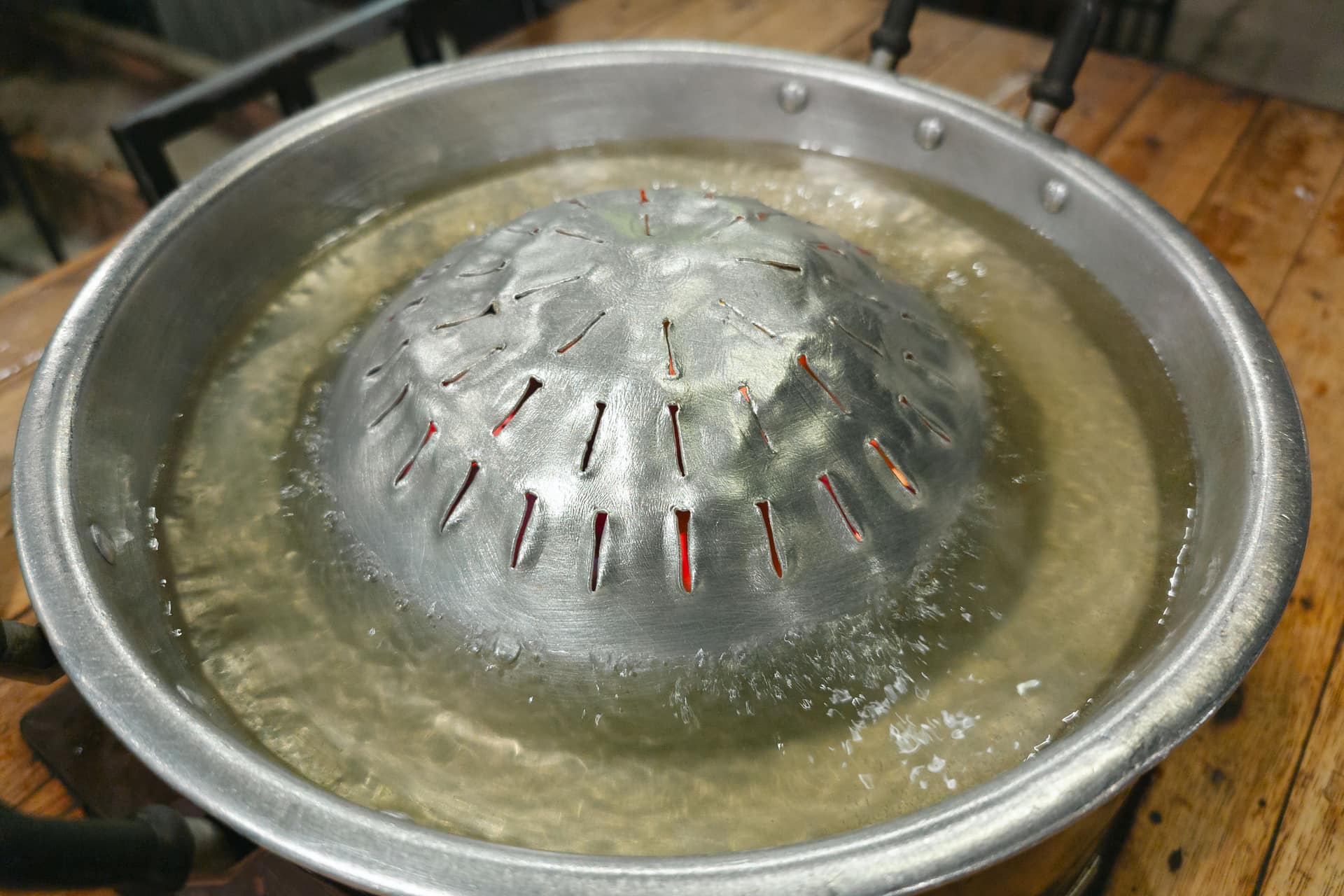
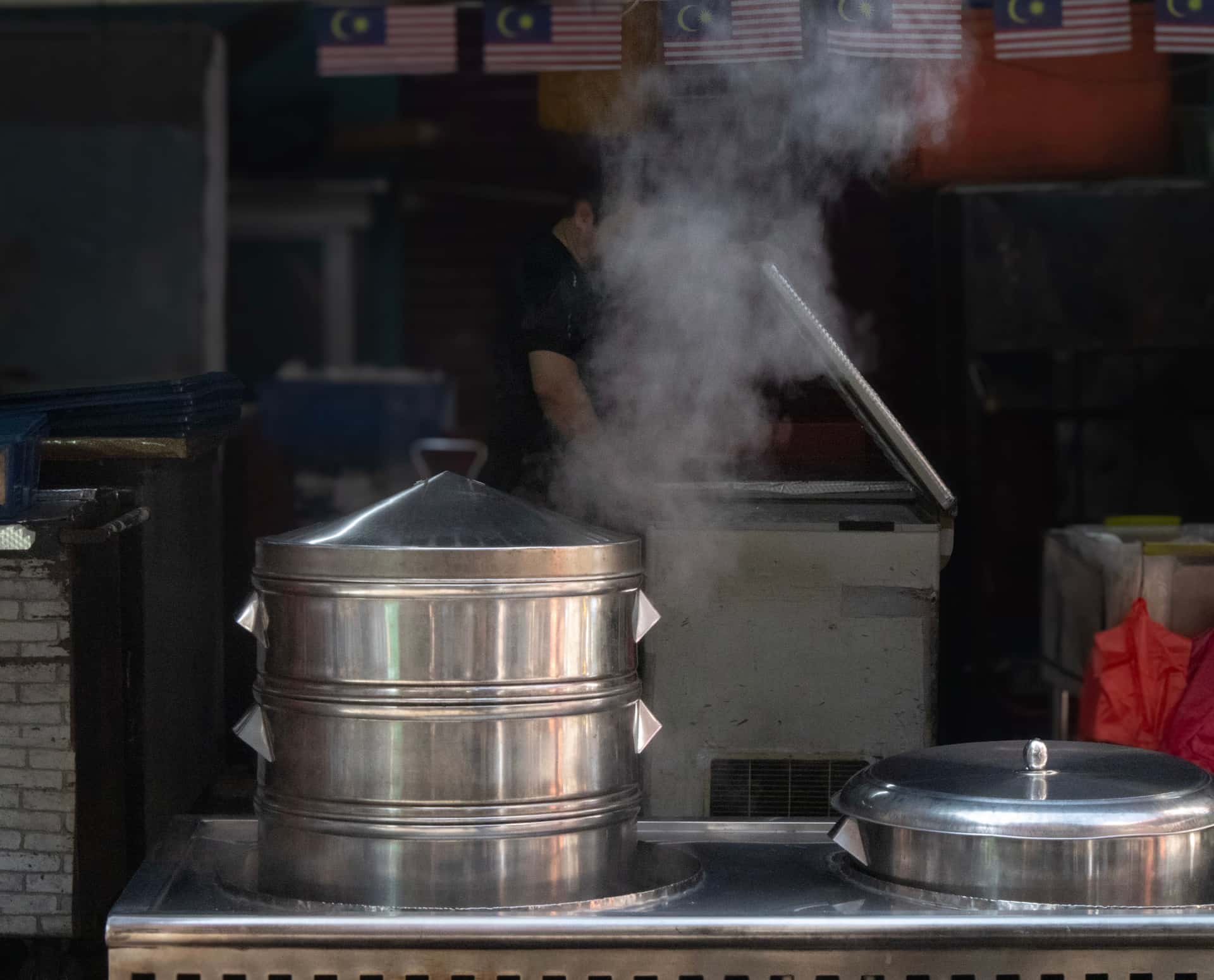
Both an atmospheric steam canner and a boiling water bath process at 212F and both are for high-acid foods only. The steam canner heats about 2.5 quarts of water instead of 20, so it is much faster, but total processing time including altitude adjustment must stay under 45 minutes, which rules out some recipes.
For years the honest advice about steam canners was to avoid them, because they had not been researched. That changed: they are now a sanctioned method for high-acid foods, with conditions. This page is about whether the conditions fit your kitchen, because they genuinely do not fit everyone's.
The one thing to be clear about before anything else: neither of these is a pressure canner. Neither one will ever make green beans, corn, plain vegetables, meat or stock safe. Both are high-acid tools. If your list includes low-acid food, what foods need pressure canning is the page you want.
They do the same thing at the same temperature
This is the part that confuses people, so it is worth stating directly. A steam canner is not a pressure canner and does not get hotter than boiling water. It surrounds the jars with pure steam at atmospheric pressure, which is 212F at sea level — exactly what a rolling water bath delivers. The processing happens at the same temperature by the same mechanism.
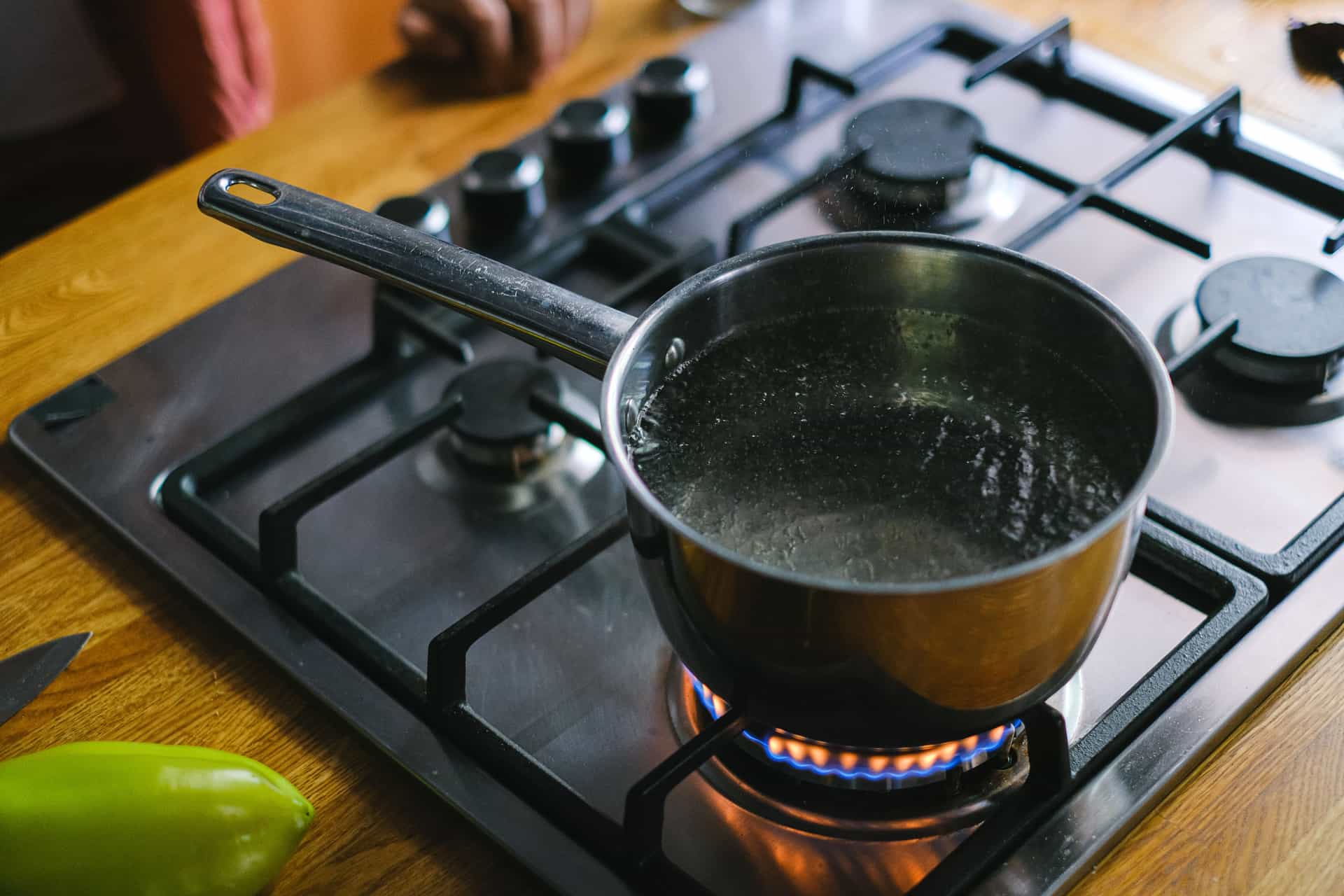
What differs is how much water you heat to get there. A water bath canner needs enough water to cover the jars by an inch, which is around 20 quarts. A steam canner uses about 2.5 quarts. That single difference produces every advantage and every limitation below.
Side by side
| Water bath canner | Atmospheric steam canner | |
|---|---|---|
| Temperature | 212F (boiling) | 212F (steam at atmospheric pressure) |
| Foods | High-acid and properly acidified only | High-acid and properly acidified only |
| Water used | Around 20 quarts | About 2.5 quarts |
| Time to come up to temperature | Long — it is 20 quarts of water | Short — a fraction of the water to heat |
| Processing time limit | None | Total time including altitude adjustment must be under 45 minutes |
| Can you add water mid-process? | Yes | No — and it can boil dry |
| Jar capacity (our picks) | 7 quarts, 9 pints or 12 half-pints | 7 quarts or 8 pints |
| Half-gallon jars | Depends on canner depth | Will not take them |
| Doubles as a stockpot | Yes | No |
| Kitchen heat and humidity | Considerable, for a long time | Noticeably less |
The 45-minute ceiling is the whole decision
Everything else is preference. This is a rule, and it is the reason a steam canner is a second canner for some people and a first canner for others.
The constraint exists because a steam canner cannot be topped up. With only 2.5 quarts of water in it, a long process risks boiling dry, and a canner that boils dry mid-process has stopped processing without telling you. So the total processing time — including whatever you add for altitude — has to stay under 45 minutes.
That comfortably covers a great deal of high-acid canning: most jams and jellies, many pickles, applesauce, fruit in syrup, tomatoes in several forms. It does not cover everything, and the altitude part is easy to overlook. A recipe at 25 minutes at sea level can climb past 45 once you add the adjustment for a mountain town. Work out your own numbers from altitude adjustment for canning before you decide this fits.
How we screened these
We have not used either type, and neither one is being judged on feel. The screen is the published requirements each has to meet and the published specifications of the pots themselves.
- Does it hold the required condition? For a water bath, an inch of briskly boiling water over the jars. For a steam canner, the ability to run the full time without drying out.
- Jar capacity against a tested batch, which is seven quarts.
- Whether it takes the jar sizes you actually use, including half-gallons for very acid juices.
- What else the pot does, because a canner that is also a stockpot is a different value proposition.
- Stove compatibility, which is where the third pick below earns its place.
Quick picks
Every pick below is screened against the National Center for Home Food Preservation’s published canner rules first. Tap a row for the full write-up.
| # | Product | Best for | Key spec | Price |
|---|---|---|---|---|
| 1 |  Granite Ware 21.5-Quart Water Bath Canner with RackThe canner almost everyone starts with, and there is very little wrong with that. Porcelain enamel on steel, a rack that holds a full seven-quart load, light enough to lift full, and cheap enough that it is not the thing standing between you and a first batch. | A first water bath canner | 7 quarts / 9 pints | $79.99 · View on Amazon#ad we earn a commission · price as of October 18, 2026 |
| 2 |  Victorio VKP1054 Steam CannerA researched, sanctioned alternative to a water bath for high-acid foods only, and genuinely faster because it heats two and a half quarts of water instead of twenty. The 45-minute processing ceiling is the rule that decides whether it fits your recipes. | High-acid batches, fast | 2.5 qt water, 45-min cap | $67.99 · View on Amazon#ad we earn a commission · price as of October 18, 2026 |
| 3 |  Prep-N-Cook by McSunley 21.5-Quart Stainless Steel Water Bath CannerA stainless water bath canner with a flat encapsulated base, which is the construction induction actually wants. If jam, pickles, fruit and acidified tomatoes are the whole plan, this does the job for less than the induction pressure canner and it is a much lighter pot to own. | Water bath only, on induction | 7 quarts / 9 pints | $74.99 · View on Amazon#ad we earn a commission · price as of October 18, 2026 |
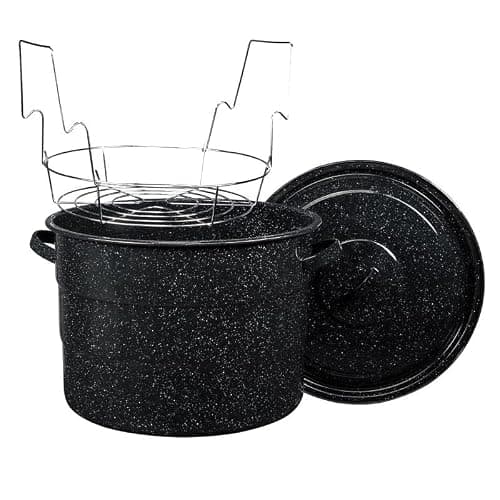
Granite Ware 21.5-Quart Water Bath Canner with Rack
The canner almost everyone starts with, and there is very little wrong with that. Porcelain enamel on steel, a rack that holds a full seven-quart load, light enough to lift full, and cheap enough that it is not the thing standing between you and a first batch.
Published specs
- Capacity
- 21.5 quarts
- Rack capacity
- 7 quart jars, 9 pints, or 12 half-pints
- Material
- Porcelain enamel on steel
- Dimensions
- Height 9.75", depth 16.25", width 14.25"
- Weight
- About 4 lb empty
- Included
- Pot, lid and jar rack
- Base diameter
- Not published by Granite Ware
What works
- Light. Four pounds empty means you can move it full of hot water without a second person
- The enamel surface is non-reactive, so tomatoes and vinegar brines do not pick up a metallic edge
- Deep enough to cover quart jars with the 1 inch of briskly boiling water the NCHFP requires, which a stockpot often is not
What to know first
- Enamel chips if you knock it, and a chipped rim will rust. It is cookware to be careful with, not to stack things on
- The base diameter is not published, so on an electric range you have to measure it against your element yourself
- Thin steel heats fast and loses heat fast — expect to ride the burner a little to hold a steady boil
Specs from NCHFP, Recommended Canners. We have not handled this product — see how we pick.
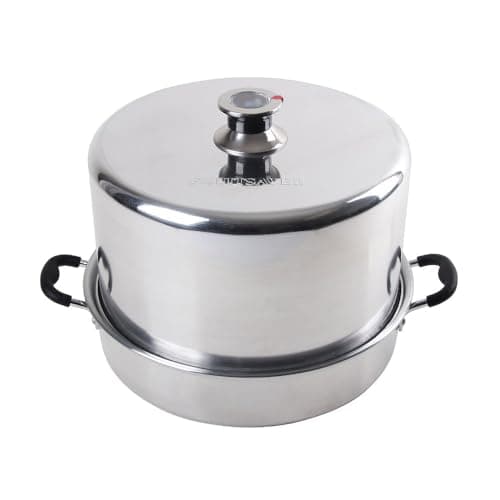
Victorio VKP1054 Steam Canner
A researched, sanctioned alternative to a water bath for high-acid foods only, and genuinely faster because it heats two and a half quarts of water instead of twenty. The 45-minute processing ceiling is the rule that decides whether it fits your recipes.
Published specs
- Jar capacity
- 7 quarts or 8 pints
- Water used
- 2.5 quarts
- Body dimensions
- Depth 13.25", width 13.25"
- Rack diameter
- 11 5/8 inches
- Foods
- Acid and properly acidified foods only
- Processing limit
- Total time including altitude adjustment must be under 45 minutes
- Warranty
- 2 years
What works
- Comes to temperature far faster than a full water bath, because there is a fraction of the water to heat
- Uses much less water and much less energy, which is a real difference over a long harvest week
- The temperature indicator gives you an unambiguous start signal instead of a judgment call about what a rolling boil looks like
What to know first
- High-acid foods only. It cannot pressure can, so beans, corn, meat and plain vegetables are out entirely
- Total processing time including altitude adjustment must stay under 45 minutes, because the canner cannot be opened to add water and can boil dry
- Will not take half-gallon jars
Specs from Victorio, VKP1054 Aluminum Steam Canner instruction manual, NCHFP, Recommended Canners. We have not handled this product — see how we pick.
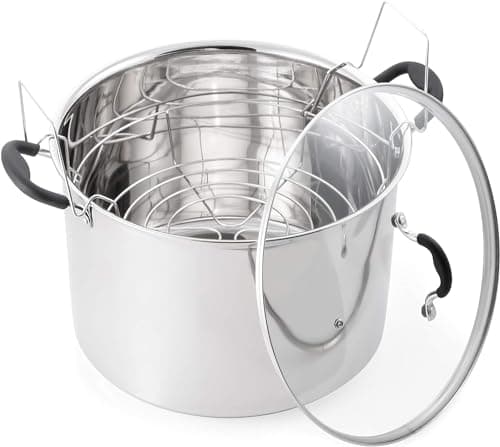
Prep-N-Cook by McSunley 21.5-Quart Stainless Steel Water Bath Canner
A stainless water bath canner with a flat encapsulated base, which is the construction induction actually wants. If jam, pickles, fruit and acidified tomatoes are the whole plan, this does the job for less than the induction pressure canner and it is a much lighter pot to own.
Published specs
- Capacity
- 21.5 quarts
- Rack capacity
- 7 quart, 9 pint or 12 half-pint jars
- Material
- Heavy-duty stainless steel
- Base
- Flat, encapsulated base
- Cooktops
- All cooktops, including induction and glass top
- Dimensions
- 14" x 18" x 11.75" (pot height 9.5")
- Weight
- 8.9 pounds
- Included
- Pot, lid and easy-lift jar rack
- Base diameter
- Not published by McSunley
What works
- The manufacturer states it works on all cooktops including induction, which is a sentence almost no water bath canner comes with
- An encapsulated base is thick where thin enamelware is not, which is what a cooktop's pan detection is looking for and what stops hot spots forming under the rack
- A 9.5-inch pot height clears a quart jar with the inch of briskly boiling water the NCHFP requires, so it is a real canner rather than a tall stockpot
What to know first
- 8.9 pounds empty against about 4 pounds for an enamel canner. Loaded with water and seven quart jars that is a genuinely heavy lift, and it is sitting on a glass surface
- Water bath only. Green beans, corn, meat and plain vegetables still need a pressure canner, and this pot will never do them
- No published base diameter, so you still have to measure it against your cooktop's ring marking yourself
Specs from McSunley, Prep-N-Cook Stainless Steel Water Bath Canner, NCHFP, Recommended Canners. We have not handled this product — see how we pick.
Where the steam canner genuinely wins
Two places, and both are about the long harvest week rather than a single batch.
The first is time. Heating 2.5 quarts instead of 20 is a large difference repeated across every batch, and on a day when you are running four loads of jam it stops being a footnote. The second is the kitchen itself. Twenty quarts of water boiling for 90 minutes in August puts real heat and humidity into a room, and a steam canner does much less of it. Neither of those is a safety argument, and both are the kind of thing that decides whether you keep canning in year two.
Where the water bath wins
No time limit, which means no recipe is ever ruled out and no altitude arithmetic can disqualify a batch. You can add water mid-process if the level drops. It takes half-gallon jars if the pot is deep enough, which matters for the very acid juices those jars are permitted for. And when it is not canning, it is a large stockpot — which is not nothing for a pot that lives in a cupboard eleven months a year.
It is also the cheaper and more available option, and the one every tested high-acid recipe assumes without conditions. For a first canner, that combination is hard to argue with.
The decision, in one paragraph
Buy a water bath canner first. It has no processing ceiling, no altitude trap, no boil-dry failure mode, and it doubles as a stockpot — see best water bath canners. Add a steam canner as a second pot if you make a lot of jam and pickles, your recipes come in under 45 minutes with your altitude adjustment applied, and the speed and the cooler kitchen are worth a dedicated appliance to you. The safety background on the method itself is in are steam canners safe.
Next stepThe safety case for steam canningCommon questions
Is a steam canner as safe as a water bath?
Can you pressure can in a steam canner?
Why is there a 45-minute limit on steam canning?
Does altitude count toward the 45 minutes?
Is a steam canner faster than a water bath?
Can I use a steam canner for quart jars?
Do you earn a commission on these?
Sources
- NCHFP — Burning Issue: Using Atmospheric Steam Canners
- NCHFP — Recommended Canners
- SDSU Extension — Water Bathing vs Pressure Canning
Product specifications are taken from each manufacturer’s own published page, cited on the product. We have not handled these products — how we pick.