Canning mixes, and when a pouch beats a recipe
A packet that fixes the salt, spice and acid ratio for a full canner load. Excellent for a first pickling day, and unforgiving if your harvest is the wrong size.
Disclosure: we earn a commission on purchases made through links on this page, at no extra cost to you. It does not change what we recommend — see how we pick and our affiliate disclosure.
A canning mix is a pre-measured pouch of salt, spice and acid sized to a specific batch — typically 7 quarts of pickles or 5 pints of salsa. You supply the produce and the 5% vinegar. The mix does the ratio arithmetic that makes the batch safe, which is its whole value, and it is also why you cannot use half a pouch or add extra vegetables.
There is a certain snobbery about mixes in canning, and it is mostly misplaced. The part of a tested recipe that keeps a jar safe is a ratio — this much produce, this much acid, this much salt — and a pouch is that ratio, weighed out by someone else, with the processing time printed on the back.
The honest case against them is narrower than the snobbery suggests: they cost more than buying the spices loose, the flavor is fixed, and they are inflexible about batch size in a way that fresh produce rarely cooperates with.
What is actually in the pouch
Not very much, which is the first surprise. Mrs. Wages' Kosher Dill mix lists salt, maltodextrin, dehydrated garlic, spice extractives (including turmeric extract and mustard oil), and citric acid. The salsa mix is dehydrated vegetables (onion, green bell pepper, jalapeno, chili pepper, garlic), salt and spices. You are buying measurement and consistency rather than exotic ingredients.
The dehydrated vegetables in the salsa mix are the interesting part. Fresh onion, peppers and garlic are low-acid produce, and the amount of them in a jar is precisely what decides whether a boiling water process is adequate. Pre-measured and dried, they cannot creep upward the way a handful of extra jalapenos does.
How we screened these
We have not canned with all of these, and the mixes we would be judging are variations on a theme. What we checked is each pouch's published formula against the safety rules the NCHFP and extension services set for pickles and salsa, plus what the pouch actually asks of you on the day. The method is on how we pick.
- A published batch formula. Exactly how much produce, vinegar, water and sugar the pouch expects, in writing.
- A published processing time, with an altitude adjustment rather than a vague "process as usual".
- A named vinegar strength. Every one of these specifies 5% acidity, which is the number that matters.
- A realistic batch size, because a pouch that wants 11 pounds of cucumbers is useless with 4 pounds.
- Ingredients you can read, so that the mix is a convenience rather than a mystery.
The three pouches, side by side
| Kosher Dill | Bread & Butter | Medium Salsa | |
|---|---|---|---|
| Pouch size | 6.5 oz | 5.3 oz | 4 oz |
| Makes | 7 quarts | 7 quarts | 5 pints |
| Produce needed | 9-11 lb cucumbers | 9-11 lb cucumbers | 6 lb tomatoes |
| Vinegar (5%) | 3 1/3 cups | 6 3/4 cups | 1/2 cup |
| Water | 7 1/3 cups | None | None |
| Sugar | None | 7 cups | None |
| Processing | Pints 10 min, quarts 15 min | Pints 10 min, quarts 15 min | 40 min |
Two things jump out of that table. The bread-and-butter formula contains no water at all — the liquid is vinegar and sugar — which is why a handed-down sweet pickle recipe that waters the brine down is such a common way to make something unsafe. And the salsa's half cup of vinegar against six pounds of tomatoes is doing a lot of work for a small volume, which is why the vegetable amounts are not negotiable.
Quick picks
Every pick below is screened against the National Center for Home Food Preservation’s published canner rules first. Tap a row for the full write-up.
| # | Product | Best for | Key spec | Price |
|---|---|---|---|---|
| 1 |  Mrs. Wages Kosher Dill Quick Process Pickle MixOne pouch, one canner load, no measuring of salt or spice. Mrs. Wages publishes what a pouch makes and exactly what you add to it: 9 to 11 pounds of pickling cucumbers, 3 1/3 cups of 5% white vinegar and 7 1/3 cups of water, processed 10 minutes for pints and 15 for quarts. That is a complete tested procedure in a packet, which is why it is the least intimidating way to make your first pickles. | A first pickling day | 6.5 oz pouch, 7 quarts | $19.32 · View on Amazon#ad we earn a commission · price as of October 18, 2026 |
| 2 |  Mrs. Wages Medium Salsa Tomato Seasoning MixSalsa is the tested recipe people most often improvise with, and improvising is exactly what makes it unsafe. This pouch fixes the ratio for you: 6 pounds of tomatoes, half a cup of 5% vinegar, one pouch, a 40-minute boiling water bath, five pints out. The vegetables that dilute acidity — onion, peppers, garlic — are already in the mix, dehydrated and measured. | Canned salsa with the acid settled | 4 oz pouch, 5 pints | $17.97 · View on Amazon#ad we earn a commission · price as of October 18, 2026 |
| 3 |  Mrs. Wages Bread & Butter Quick Process Pickle MixThe sweet-pickle version, and the one where the mix earns the most: bread-and-butter brine is vinegar and sugar with no added water, and Mrs. Wages gives the whole ratio — 6 3/4 cups of 5% vinegar, 7 cups of sugar, one pouch, 9 to 11 pounds of cucumbers. Getting that balance wrong from an old family card is exactly how unsafe sweet pickles happen. | Sweet pickles without a sugar guess | 5.3 oz pouch, 7 quarts | $17.97 · View on Amazon#ad we earn a commission · price as of October 18, 2026 |
| 4 | Splitting a mix pouch across a small batchSkipFour pounds of cucumbers and a pouch meant for ten is the most common way a mix goes wrong. Mrs. Wages will not advise it: the mix cannot be divided so that "each batch contains the right proportion of herbs and spices, not to mention the safety issue if making shelf-stable." Half a pouch is not half a tested recipe. | Nothing - match the batch to the pouch | Not a supported use | Check price on Amazon#ad we earn a commission · live price pending |
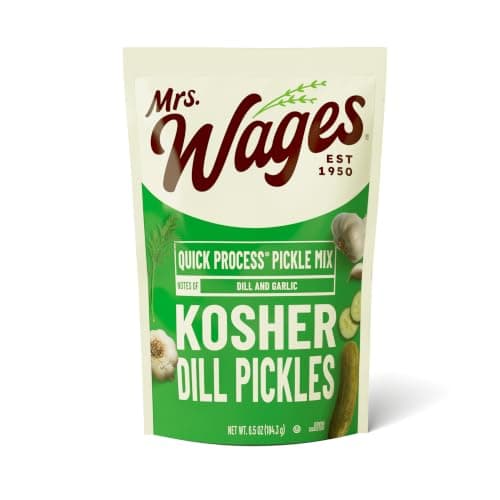
Mrs. Wages Kosher Dill Quick Process Pickle Mix
One pouch, one canner load, no measuring of salt or spice. Mrs. Wages publishes what a pouch makes and exactly what you add to it: 9 to 11 pounds of pickling cucumbers, 3 1/3 cups of 5% white vinegar and 7 1/3 cups of water, processed 10 minutes for pints and 15 for quarts. That is a complete tested procedure in a packet, which is why it is the least intimidating way to make your first pickles.
Published specs
- Size
- 6.5 oz pouch (184.3 g)
- Yield
- 7 quarts (Mrs. Wages)
- You add
- 9-11 lb pickling cucumbers, 3 1/3 cups 5% white distilled vinegar, 7 1/3 cups water
- Ingredients
- Salt, maltodextrin, dehydrated garlic, spice extractives (includes turmeric extract and mustard oil), citric acid (Mrs. Wages)
- Processing
- Pints 10 minutes, quarts 15 minutes (Mrs. Wages)
What works
- The pouch is a full canner load, so there is no scaling arithmetic and no half-used packet
- Spice, salt and acid balance are done for you, which removes the step beginners most often get wrong
- Mrs. Wages names the vinegar strength on the pack — 5% — rather than leaving you to guess
What to know first
- You cannot use half a pouch. Mrs. Wages says so directly, because dividing it splits the spice and salt unevenly
- You still supply 9 to 11 pounds of cucumbers, so a small picking does not fit the format
- Flavor is fixed. If you want more garlic or less turmeric color, a from-scratch tested recipe gives you that latitude and this does not
Specs from Mrs. Wages, Kosher Dill Pickles Quick Process Pickle Mix, Mrs. Wages, Frequently Asked Questions. We have not handled this product — see how we pick.
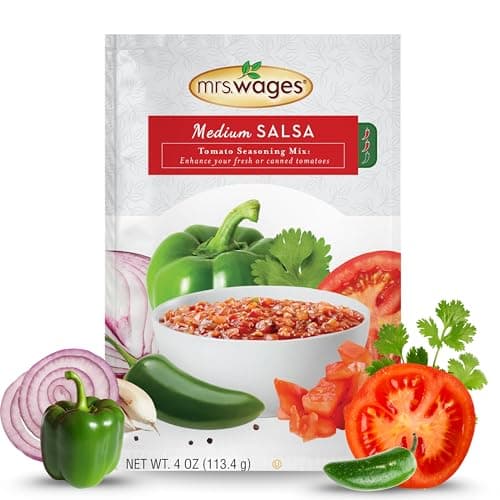
Mrs. Wages Medium Salsa Tomato Seasoning Mix
Salsa is the tested recipe people most often improvise with, and improvising is exactly what makes it unsafe. This pouch fixes the ratio for you: 6 pounds of tomatoes, half a cup of 5% vinegar, one pouch, a 40-minute boiling water bath, five pints out. The vegetables that dilute acidity — onion, peppers, garlic — are already in the mix, dehydrated and measured.
Published specs
- Size
- 4 oz pouch (113.4 g)
- Yield
- Makes 5 pints (Mrs. Wages)
- You add
- 6 lb fresh tomatoes (about 18 medium), 1/2 cup 5% white distilled or cider vinegar
- Ingredients
- Dehydrated vegetables (onion, green bell pepper, jalapeno pepper, chili pepper, garlic), salt, spices (Mrs. Wages)
- Processing
- 40-minute boiling water bath (Mrs. Wages)
What works
- The low-acid vegetables are pre-measured and dehydrated, which is the part of a homemade salsa most likely to push it over pH 4.6
- Mrs. Wages allows either white distilled or cider vinegar at 5%, so you can use what you have
- Tomato quantity is specified in pounds and in cans, so an off-season batch is possible
What to know first
- You cannot add extra onion, peppers or garlic. Mrs. Wages says additional ingredients "could potentially alter this acid balance", and the NCHFP says the same about salsa recipes generally
- Heat level is set by the pouch you buy — mild, medium or hot — not by what you add
- A dehydrated-vegetable salsa tastes like a pantry salsa, not like a fresh one, and no processing time changes that
Specs from Mrs. Wages, Medium Salsa Tomato Seasoning Mix, NCHFP, Ingredients for Salsa Recipes. We have not handled this product — see how we pick.
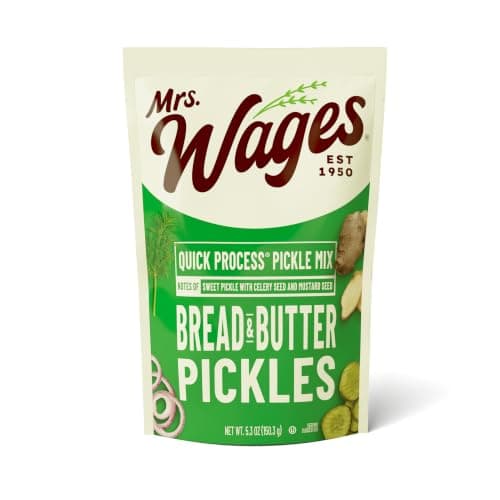
Mrs. Wages Bread & Butter Quick Process Pickle Mix
The sweet-pickle version, and the one where the mix earns the most: bread-and-butter brine is vinegar and sugar with no added water, and Mrs. Wages gives the whole ratio — 6 3/4 cups of 5% vinegar, 7 cups of sugar, one pouch, 9 to 11 pounds of cucumbers. Getting that balance wrong from an old family card is exactly how unsafe sweet pickles happen.
Published specs
- Size
- 5.3 oz pouch (150.3 g)
- Yield
- 7 quarts (Mrs. Wages)
- You add
- 9-11 lb pickling cucumbers, 6 3/4 cups 5% white distilled vinegar, 7 cups sugar (no water)
- Ingredients
- Salt, spice (includes mustard seed and celery seed), maltodextrin, dehydrated onion, spice extractives, citric acid (Mrs. Wages)
- Processing
- Pints 10 minutes, quarts 15 minutes; add 1 minute per 1,000 ft above 1,000 ft (Mrs. Wages)
What works
- No water in the formula, so the acid is not diluted — the sweet-pickle failure mode a handed-down recipe usually hides
- Mrs. Wages publishes the altitude adjustment on the pack, which many mix brands leave out
- Mustard and celery seed are in the mix, so the classic bread-and-butter profile arrives without buying three spices
What to know first
- Seven cups of sugar per batch is not a typo, and it is not adjustable — sugar is doing structural work in this brine
- Same all-or-nothing pouch problem: a partial batch is not a supported use
- Onion is in the mix as a dehydrated ingredient, so adding fresh onion on top changes the acid balance
Specs from Mrs. Wages, Bread & Butter Pickles Quick Process Pickle Mix, Mrs. Wages, Frequently Asked Questions. We have not handled this product — see how we pick.
Splitting a mix pouch across a small batch
Four pounds of cucumbers and a pouch meant for ten is the most common way a mix goes wrong. Mrs. Wages will not advise it: the mix cannot be divided so that "each batch contains the right proportion of herbs and spices, not to mention the safety issue if making shelf-stable." Half a pouch is not half a tested recipe.
Published specs
- The temptation
- Use part of a pouch on whatever produce you actually picked
- Mrs. Wages
- "We cannot advise that you try using only a portion of the Mrs. Wages Quick Process Pickle mix."
- The alternative
- Refrigerator pickles from the same produce, or a from-scratch tested recipe scaled as written
What works
- It uses up the produce you have, which is a real problem worth solving — just not this way
What to know first
- The salt, spice and acid are not evenly distributed through a pouch, so a scoop is not a proportional share
- The published processing times belong to the full formula, not to your improvised fraction of it
- Refrigerator pickles solve the small-batch problem completely and need no processing at all
Specs from Mrs. Wages, Frequently Asked Questions, Penn State Extension, What Can You Change in a Canning Recipe?. We have not handled this product — see how we pick.
The rule you cannot break: no extra vegetables
Every mix comes with a formula, and the formula's low-acid ingredients are capped. Mrs. Wages' own FAQ answers the question people ask most: adding more onions or peppers to their salsa "could potentially alter this acid balance and impact both the processing method and/or time needed to guarantee food safety", and their instruction is to "follow the package directions as they are written."
Extension guidance says the same thing about salsa generally. The NCHFP's own recipe pages state: "Do not alter the proportions of tomatoes, vegetables and acid because that might make the salsa unsafe when this canning process is used," and "Do not increase the total amount of peppers in any recipe. However, you may substitute one type of pepper for another." Penn State adds the one people try hardest: "Do not randomly add corn, black beans, or any other low acid vegetable to a recipe for home canned salsa."
What you still have to get right
A mix removes the ratio arithmetic. It does not remove the canning. You still need the right jars, the right headspace, a working canner and the processing time on the pouch — with the altitude adjustment if you are above 1,000 feet. The method itself is in how to water bath can.
- Buy the vinegar the pouch specifies: 5% acidity, white distilled or cider. Mrs. Wages permits either for salsa, at that strength.
- Weigh the produce. "About 18 medium tomatoes" is a helpful cross-check, not a substitute for six pounds on a scale.
- Use the jar size in the directions. The processing times are written for it.
- Adjust for altitude — one extra minute per 1,000 feet on the pickle mixes, per the pouch. The general rules are in altitude adjustment.
- Do not save a partial pouch for next weekend. Spice and salt are not evenly distributed in a scoop.
Mix versus tested recipe: the honest comparison
A pouch is not more or less safe than an NCHFP recipe followed correctly. Both are tested formulas; the pouch just hands you the measuring. Where the pouch wins is the first season, when you are unsure whether you have measured the salt right and want one fewer thing to be responsible for. Where a tested recipe wins is everything after that: it costs less, it scales to the produce you actually have, and it lets you decide how much garlic goes in.
The awkward middle case is the cook with four pounds of cucumbers and a pouch built for ten. That is not a mix problem, it is a harvest problem, and the answer is a smaller tested recipe or a jar in the refrigerator — not a scooped fraction of the pouch.
The decision, in one paragraph
If this is your first pickling day and you have a bushel of cucumbers, buy the Kosher Dill pouch and follow it exactly — it is the cheapest route to a shelf of jars you can trust. If you grow tomatoes and want salsa without the acid math, buy the Medium Salsa mix and resist every urge to add an onion. If your family recipe is bread-and-butter and you have never checked its vinegar-to-sugar ratio against a tested one, buy the Bread & Butter pouch once and see what a tested version looks like. After a season of any of them, a tested recipe and a jar of pickling spice will cost you less and taste more like yours.
Next stepWhat makes a recipe testedCommon questions
Are Mrs. Wages canning mixes safe?
Can I use half a pouch of pickle mix?
Can I add extra peppers or onions to a salsa mix?
What do I have to add to a canning mix?
How long do you process pickles made from a mix?
Are canning mixes cheaper than making your own?
Can I use apple cider vinegar with a canning mix?
Can I reuse the mix formula with a different vegetable?
Do you earn a commission on these?
Sources
- Mrs. Wages — Kosher Dill Pickles Quick Process Pickle Mix
- Mrs. Wages — Bread & Butter Pickles Quick Process Pickle Mix
- Mrs. Wages — Medium Salsa Tomato Seasoning Mix
- Mrs. Wages — Frequently Asked Questions
- NCHFP — Choice Salsa
- NCHFP — Ingredients for Salsa Recipes
- Penn State Extension — Canning Salsa
- Penn State Extension — What Can You Change in a Canning Recipe?
- Iowa State University Extension — Salsa Questions and Answers
Product specifications are taken from each manufacturer’s own published page, cited on the product. We have not handled these products — how we pick.