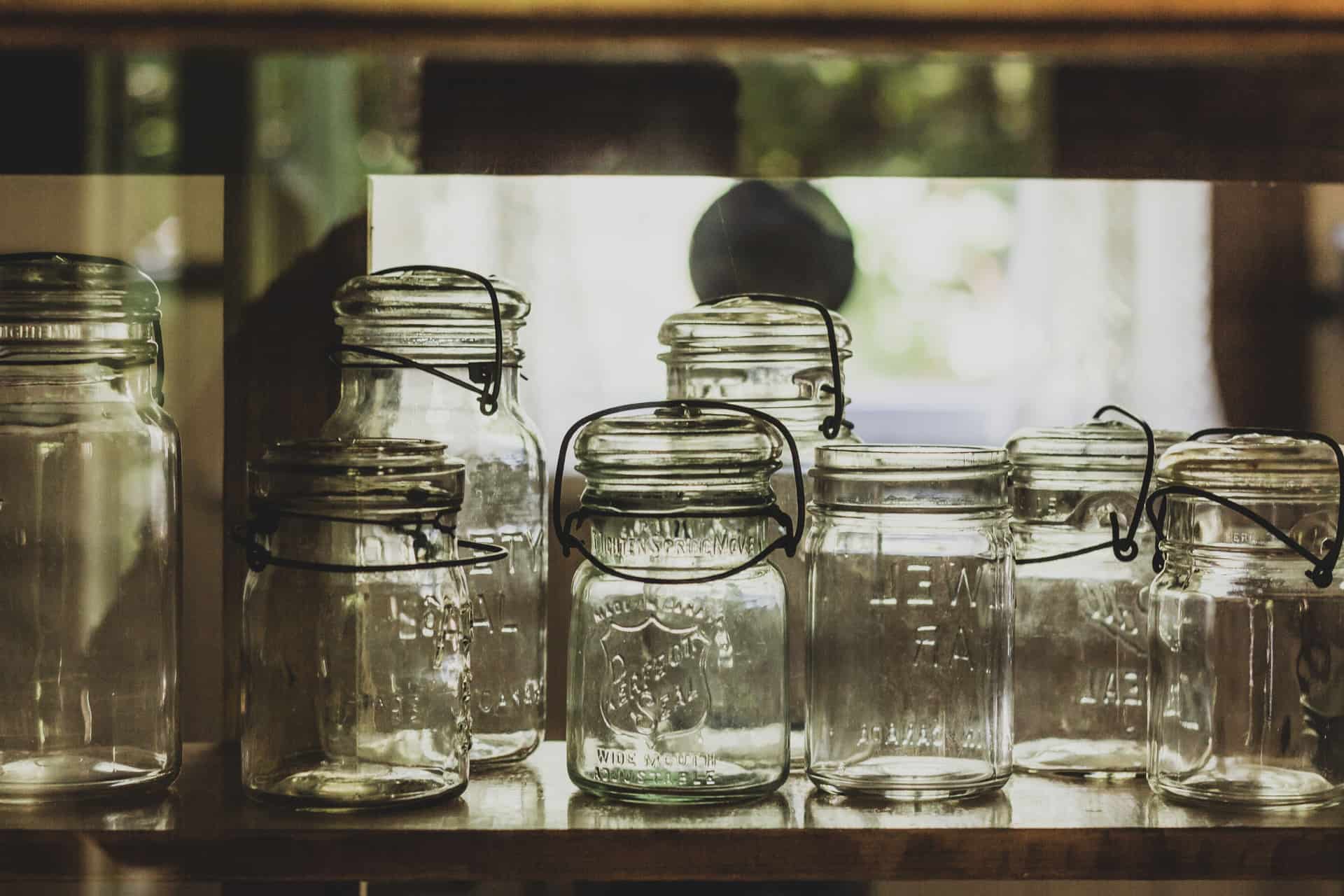
Can you can in old jars with glass lids or zinc caps?
Two different questions get asked as one. The closure decides it first, and the age of the glass decides it second.
Disclosure: we earn a commission on purchases made through links on this page, at no extra cost to you. It does not change what we recommend — see how we pick and our affiliate disclosure.
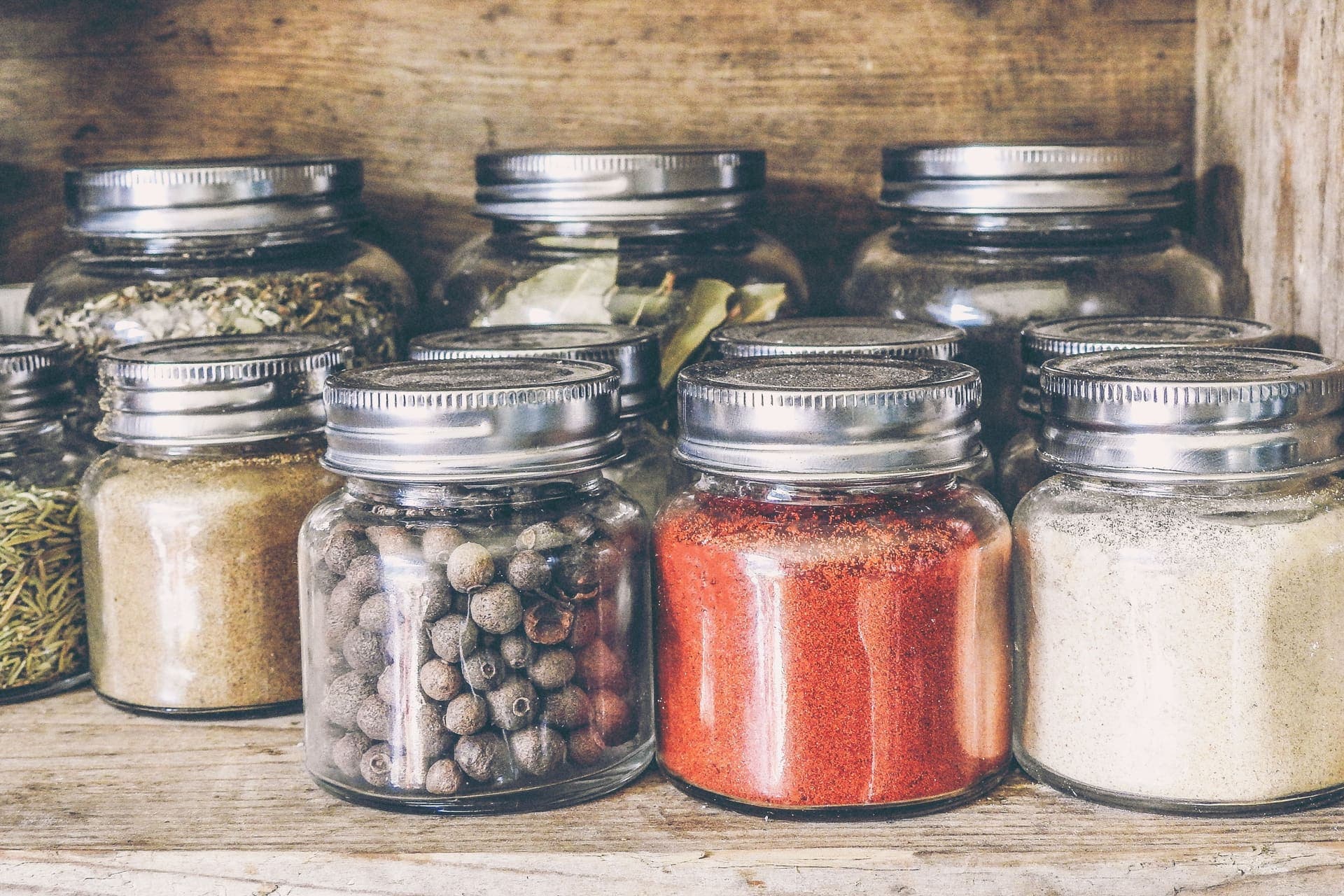
No, if the closure is a zinc cap, a glass lid or a wire bail. NCHFP retired all three: "Neither one-piece zinc porcelain-lined caps nor zinc caps that use flat rubber rings for sealing jars are recommended any longer." Yes, cautiously, if it is a threaded jar that takes a modern two-piece lid and passes inspection - Penn State says carefully handled jars "may still be in good condition and suitable for canning beyond 10 years." Buy a case of Ball regular-mouth pints for anything that matters.
Someone clears out a basement and finds two dozen jars. Some have a metal screw cap with a white liner, some have a glass lid held down by a wire clamp, and some are plain threaded jars that look exactly like the ones in the shop. They are not one category and the answer is not one answer.
The useful way to sort them is by closure first, because that question has a flat yes-or-no answer in the literature, and then by age, because that one is a judgment with a number attached.
Question one: what closes it?
The NCHFP's list of equipment it does not recommend is short and these are on it, in two separate sentences. On zinc: "Neither one-piece zinc porcelain-lined caps nor zinc caps that use flat rubber rings for sealing jars are recommended any longer." On glass caps: "Jars with wire bails and glass caps make attractive antiques or storage containers for dry food ingredients but are not recommended for use in canning."
Extension services say the same in their own words. Penn State: "Jars with wire bales or rubber rings used with glass or zinc lids should be used for storage only." South Dakota State: "jars with wire bales and rubber rings should be used for storage only, not for food preservation." There is no disagreement here to report.
| What you found | Can you can in it? | What it is good for |
|---|---|---|
| Zinc screw cap with a white porcelain liner | No | Dry goods, display |
| Glass lid, rubber ring, wire clamp | No | Dry goods, fermenting, display |
| Wire bail over a glass cap | No | Dry goods, fermenting, display |
| Threaded jar, modern two-piece lid fits | Maybe - inspect it | Canning, if it passes |
| Threaded jar, non-standard thread | No | Refrigerator and dry storage |
| Commercial mayonnaise or dressing jar | Water bath only, with caveats | See the note below |
There is a second, quieter problem with the old closures, and it is about verification rather than sealing. All three of the NCHFP's seal tests - press the center, tap it with a spoon, look across it at eye level - describe a flat metal lid that flexes. A glass lid does not flex and a zinc cap has nothing to press. Even a jar that did seal cannot be checked, which is covered in how to tell if a jar sealed.
Quick picks
Every pick below is screened against the National Center for Home Food Preservation’s published canner rules first. Tap a row for the full write-up.
| # | Product | Best for | Key spec | Price |
|---|---|---|---|---|
| 1 |  Ball Regular Mouth Pint Jars (16 oz)If you buy one case of jars this season, buy this one. Pints are the size most tested recipes are written for, regular-mouth lids are the cheapest and most available lid on any shelf, and the jars are reusable indefinitely. | The default first case | 70 mm mouth, 16 oz | $36.99 · View on Amazon#ad we earn a commission · price as of October 18, 2026 |
| 2 |  Ball Regular Mouth Leakproof Storage LidsThe same lid for the 70 mm jars, which is what most households own the most of. Ball's own framing is the useful part: these "take your mason jars beyond canning" — dry goods, leftovers, drinks, freezer storage — and they are explicitly not a preserving closure. | Regular mouth jars in daily use | Non-canning, leakproof, freezer safe | $21.28 · View on Amazon#ad we earn a commission · price as of October 18, 2026 |
| 3 |  Ball Regular Mouth Canning LidsThe lid every tested recipe assumes. Single-use by design — the sealing compound is meant to compress once — and cheap enough that reusing one to save a few cents is a bad trade against losing a jar of food. | The default lid | 70 mm, single use | $22.99 · View on Amazon#ad we earn a commission · price as of October 18, 2026 |
| 4 | Antique jars with zinc caps or glass lidsSkipTwo separate problems, and the closure is the bigger one. NCHFP retired zinc caps and rubber-ring closures outright, and no US process time or seal test was ever written around a glass lid. Then age: SDSU and Penn State both say antique jars belong on a shelf, not in a canner. | Shelves, vases and dry goods | Closure has no tested process | Check price on Amazon#ad we earn a commission · live price pending |
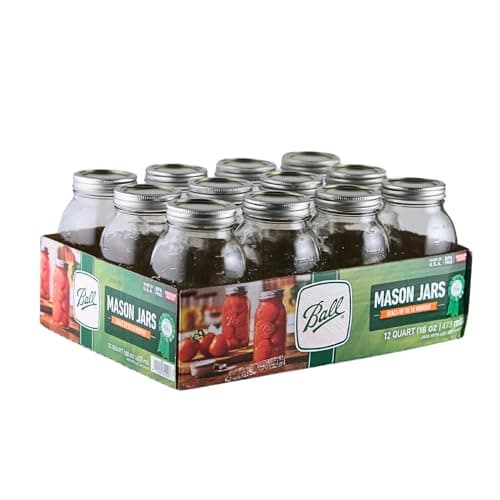
Ball Regular Mouth Pint Jars (16 oz)
If you buy one case of jars this season, buy this one. Pints are the size most tested recipes are written for, regular-mouth lids are the cheapest and most available lid on any shelf, and the jars are reusable indefinitely.
Published specs
- Volume
- 16 oz / 2 cups
- Mouth
- Regular, about 70 mm lid diameter
- Inner mouth diameter
- About 60 mm
- Jar dimensions
- About 5" tall x 2 3/4" wide
- Reuse
- Jars and rings reusable; flat lids are single-use
What works
- Pints fit both a water bath canner and a pressure canner comfortably, so the case is not stranded when you move up to beans
- Regular-mouth lids are the most stocked size in the country, which matters in September when shelves empty out
- The jars outlive everything else in this list. The consumable is the flat lid, not the glass
What to know first
- The narrower 60 mm opening is fiddly for whole peaches or large pickle spears — that is what wide mouth is for
- Regular and wide mouth lids are not interchangeable, so mixing both means stocking two lid sizes
- Glass. Handle the case like glass
Specs from Ball, Mason Jars & Lids, Regular Mouth. We have not handled this product — see how we pick.
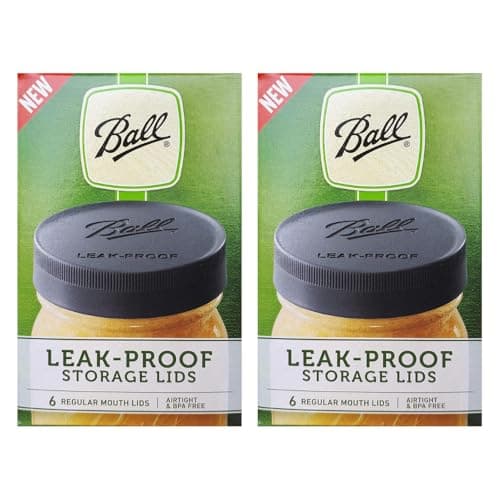
Ball Regular Mouth Leakproof Storage Lids
The same lid for the 70 mm jars, which is what most households own the most of. Ball's own framing is the useful part: these "take your mason jars beyond canning" — dry goods, leftovers, drinks, freezer storage — and they are explicitly not a preserving closure.
Published specs
- Model
- 1440010812 (Ball)
- Fits
- Regular mouth Ball and Kerr jars
- Claims
- Airtight and leakproof, freezer safe, dishwasher safe, BPA-free (Ball)
- Lid type
- Non-canning (Ball)
- Pack
- 6 lids per pack; the listing here is a pack of 2
What works
- Fits the 70 mm jars that dominate most cupboards, including the pint jars jam usually lives in
- Leakproof enough to travel, which is the whole reason to buy a storage lid rather than reuse a band
- Keeps your canning lids in the drawer where they belong, unbent and unused until processing day
What to know first
- Same hard limit: not a canning lid, and not a substitute for one in any process
- The plastic takes on odors from strong food, more noticeably than glass does
- Ball's current catalog sells these in sixes, so outfitting a pantry costs more than the jars did
Specs from Ball, Regular Mouth Leakproof Storage Lids, 6-Pack, Ball, Lids Use & Care. We have not handled this product — see how we pick.
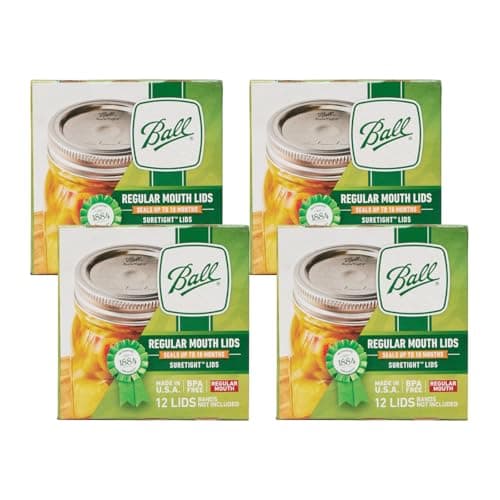
Ball Regular Mouth Canning Lids
The lid every tested recipe assumes. Single-use by design — the sealing compound is meant to compress once — and cheap enough that reusing one to save a few cents is a bad trade against losing a jar of food.
Published specs
- Size
- Regular mouth, about 70 mm
- Use
- Flat lid single-use; band reusable
- Compatibility
- Ball and Kerr regular mouth jars
What works
- The most widely stocked lid in the country, which is the thing that matters in September
- What every NCHFP and Ball tested recipe is written around, so nothing about your process needs adapting
- Bands are reusable indefinitely as long as they are not bent or rusted
What to know first
- Single use. The flat lid goes in the recycling after one seal
- Sells out first in peak season — buy your lids in July, not September
- Does not fit wide mouth jars, and there is no adapter
Specs from Ball, Mason Jars & Lids, Regular Mouth. We have not handled this product — see how we pick.
Antique jars with zinc caps or glass lids
Two separate problems, and the closure is the bigger one. NCHFP retired zinc caps and rubber-ring closures outright, and no US process time or seal test was ever written around a glass lid. Then age: SDSU and Penn State both say antique jars belong on a shelf, not in a canner.
Published specs
- NCHFP, on zinc caps
- "Neither one-piece zinc porcelain-lined caps nor zinc caps that use flat rubber rings for sealing jars are recommended any longer"
- NCHFP, on glass caps
- "Jars with wire bails and glass caps make attractive antiques or storage containers for dry food ingredients but are not recommended for use in canning"
- Penn State
- "Jars with wire bales or rubber rings used with glass or zinc lids should be used for storage only"
- Penn State, on antiques
- "Jars from the earlier period should be considered antiques and used only for decorative purposes"
- SDSU Extension
- "it is not recommended to use vintage or antique canning jars for food preservation"
- Jar life expectancy
- "Canning jars have a life expectancy of 10 to 13 years" (Penn State, SDSU)
- Buy instead
- Regular or wide mouth threaded Mason-type jars with two-piece lids
What works
- As storage jars these are excellent and both extension services say so - Penn State suggests vases and canisters, SDSU says the same. Nothing here says throw them out
What to know first
- No US process time was developed for a zinc cap or a glass lid, and NCHFP's three seal tests all describe a flat metal lid that flexes
- Old glass accumulates hairline stress you cannot see, which is what the 10-to-13-year life expectancy is about
- A replacement rubber ring for a 1940s jar is a guess at a part, not a specified component
- A failed seal on low-acid food is invisible, and the jar it failed in is the one you were sentimental about
Specs from NCHFP, Equipment and Methods Not Recommended, Penn State Extension, Canning Jars and Lids - An Update, SDSU Extension, Canning Jar Update. We have not handled this product — see how we pick.
Question two: how old is the glass?
Suppose the jar is threaded and a modern lid fits. Now age matters, and both extension services that publish a figure publish the same one: "Canning jars have a life expectancy of 10 to 13 years." SDSU adds what happens after that - "you will experience more breakage because of the wear and tear of normal use."
Where the two sources differ slightly is in how hard a line that is. SDSU draws it firmly: "it is not recommended to use vintage or antique canning jars for food preservation. Instead, enjoy those jars as vases, canisters or just a nice touch to your home décor." Penn State leaves a door open: "Mason glass jars are designed to be reused," and "Jars that are handled carefully may still be in good condition and suitable for canning beyond 10 years."
Both then give the same instruction, which is the one to act on: "Examine the jars carefully for any nicks, cracks, or hairline stress," and "Use caution when buying used jars." Hold the jar up to a window and turn it. Run a fingertip around the sealing rim - the top edge the lid's compound has to mould against. A nick there is disqualifying on a brand-new jar, never mind a fifty-year-old one.
What is actually wrong with a zinc cap
We want to be careful here, because this is where the internet fills in blanks. What we can source: NCHFP retired the closure, Penn State and SDSU both say storage only, and the two-piece lid was developed specifically because the old gasket systems sealed unreliably.
What we could not source from any extension service or manufacturer, and therefore will not repeat: any statement about lead in old zinc caps or in old glass. It is widely asserted and we found no primary source for it. If you have been told that, treat it as unverified - the sealing argument is sufficient on its own and does not need help.
There is also a plain parts problem. A replacement rubber ring for a 1940s jar is a guess at a component, not a specified part with a published tolerance. A modern flat lid is a manufactured item with a sealing compound engineered to a jar rim standard, which is why best canning lids can compare brands at all.
The commercial-jar exception, since it comes up here
People sorting old jars usually find supermarket jars in the same box, and NCHFP's position on those is more permissive than most people expect: "Most commercial pint- and quart-size mayonnaise or salad dressing jars may be used," but "you should expect more seal failures and jar breakage," and "Mayonnaise-type jars are not recommended for use with foods to be processed in a pressure canner."
So: water bath only, expect losses, and not for anything low-acid. NCHFP is equally firm about the rest of the box - "Other commercial jars with mouths that cannot be sealed with two-piece canning lids are not recommended" - which retires the tall olive jars and the square ones in one sentence. Which jars to buy instead is in the best canning jars.
What to do with the ones you cannot can in
Keep them, and use them for the jobs both extension services actually recommend. Dry goods - NCHFP itself calls bail jars "storage containers for dry food ingredients." Fermenting, where the gasket venting is a feature rather than a flaw, which is the subject of can you ferment in canning jars. Refrigerator storage. Vases, as Penn State suggests, with no irony.
And for the threaded old jars that passed inspection but that you would rather not risk on a shelf-stable batch: a plastic storage lid turns one into the best refrigerator container in your kitchen. Those are in plastic storage lids for mason jars.
The decision, in one paragraph
Try a modern flat lid and band on the jar. If it does not fit - zinc cap, glass lid, wire bail - the jar is retired from canning and NCHFP, Penn State and SDSU all agree, so put it to work holding rice or fermenting cabbage. If it does fit, hold it to the light, run a finger round the rim, and ask whether this jar is the one you want a year of pressure-canned green beans to depend on. For anything that matters, a case of new Ball regular-mouth pints costs less than the batch inside it.
Next stepThe jars to buy insteadCommon questions
Can you can in jars with glass lids?
Are zinc caps safe for canning?
Can I use my grandmother's Mason jars?
How long do canning jars last?
Is there lead in old canning jars or zinc lids?
Can I put a modern lid on an old jar?
Can I reuse supermarket pasta sauce or mayonnaise jars?
What are the old jars good for?
Do you earn a commission on these?
Sources
- NCHFP — Equipment and Methods Not Recommended
- NCHFP — Recommended Jars and Lids
- Penn State Extension — Canning Jars and Lids, An Update
- SDSU Extension — Canning Jar Update
- UNH Extension — Successful Home Canning Starts with Jars and Lids
- Oregon State Extension (Ask Extension) — bail jars and vacuum seals
- Ball — Use & Care (canning jars, lids and bands)
Product specifications are taken from each manufacturer’s own published page, cited on the product. We have not handled these products — how we pick.