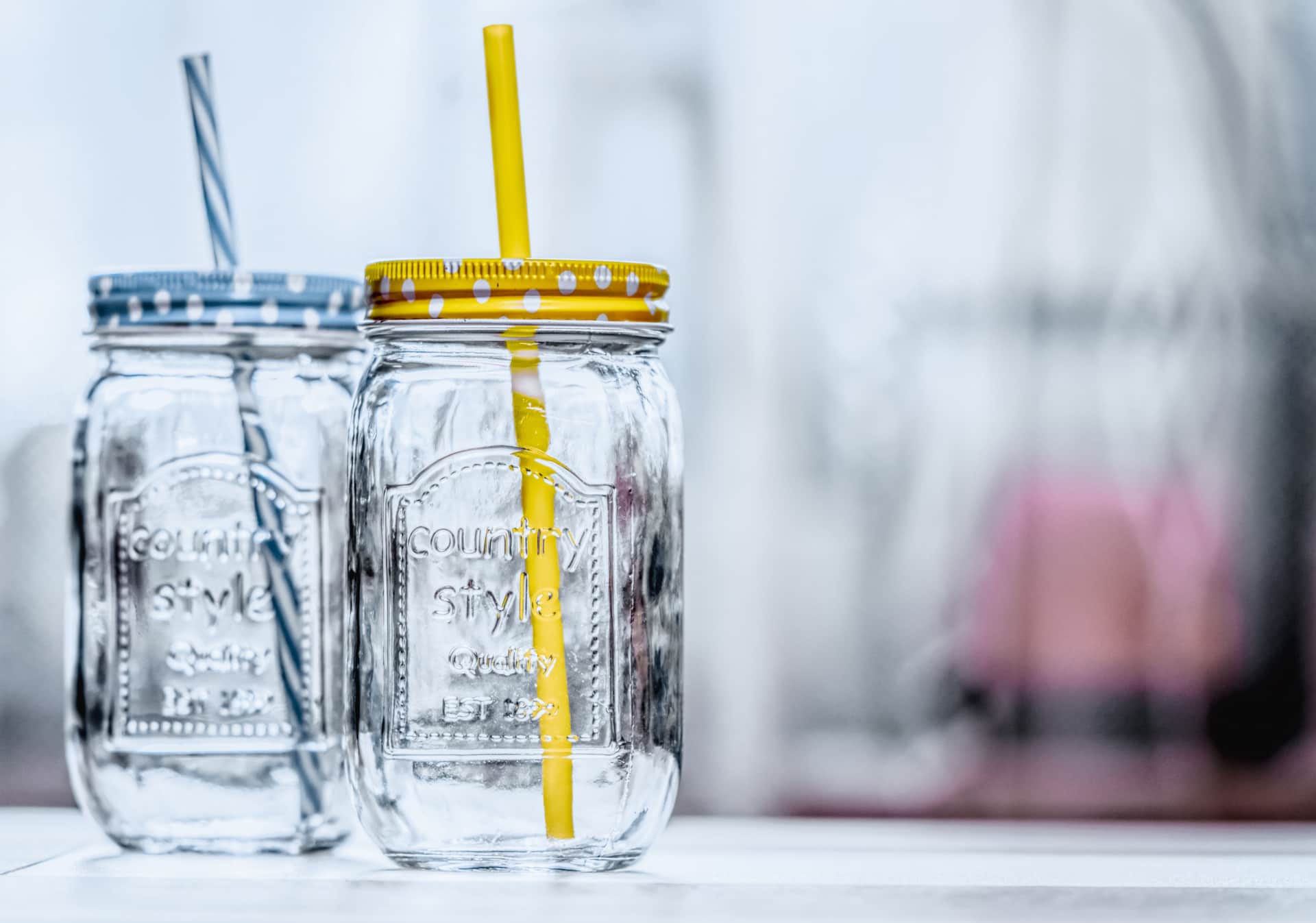
Plastic storage lids for mason jars
The lid for the eleven months a canning jar is not being canned in — and the one thing it must never be used for.
Disclosure: we earn a commission on purchases made through links on this page, at no extra cost to you. It does not change what we recommend — see how we pick and our affiliate disclosure.
Plastic storage lids turn a mason jar into a leakproof container for leftovers, dry goods and the freezer. Ball classifies them as "Lid Type: Non-Canning" and instructs plainly: "Do not use Ball non-canning lids for preserving." They replace the two-piece lid after the jar is opened — never during processing.
Most people who can end up with more mason jars than they can. The jars are excellent containers, the two-piece canning lid is a poor closure for anything that has to travel or live in a refrigerator door, and a plastic lid solves that for a couple of dollars a jar.
The reason this page exists at all is the confusion between the two kinds of lid, which sits in the same aisle, fits the same jars, and has completely different rules.
The distinction that matters
Penn State Extension flags the exact hazard in its guidance on jars and lids: "There are some lids developed only for storage after the jar is opened; do not confuse these with canning lids." Ball says the same thing from the manufacturer's side, listing its plastic lids under a heading of "Ball Non-Canning Lids" with the bullet "Not safe for canning" and the instruction not to use them for preserving.
The physical reason is the sealing compound. A canning lid carries a ring of plastisol that softens with heat, molds to the rim, and sets as the jar cools under vacuum — Penn State describes it as forming "a vacuum seal as the jar cools." A plastic storage lid has a gasket or a threaded fit and no heat-set compound. It keeps soup off your bag. It cannot make a jar shelf stable.
What a storage lid is genuinely good at
- Leftovers and meal prep. Ball rates its leakproof lids for exactly this, and a jar with a real gasket travels in a bag without incident.
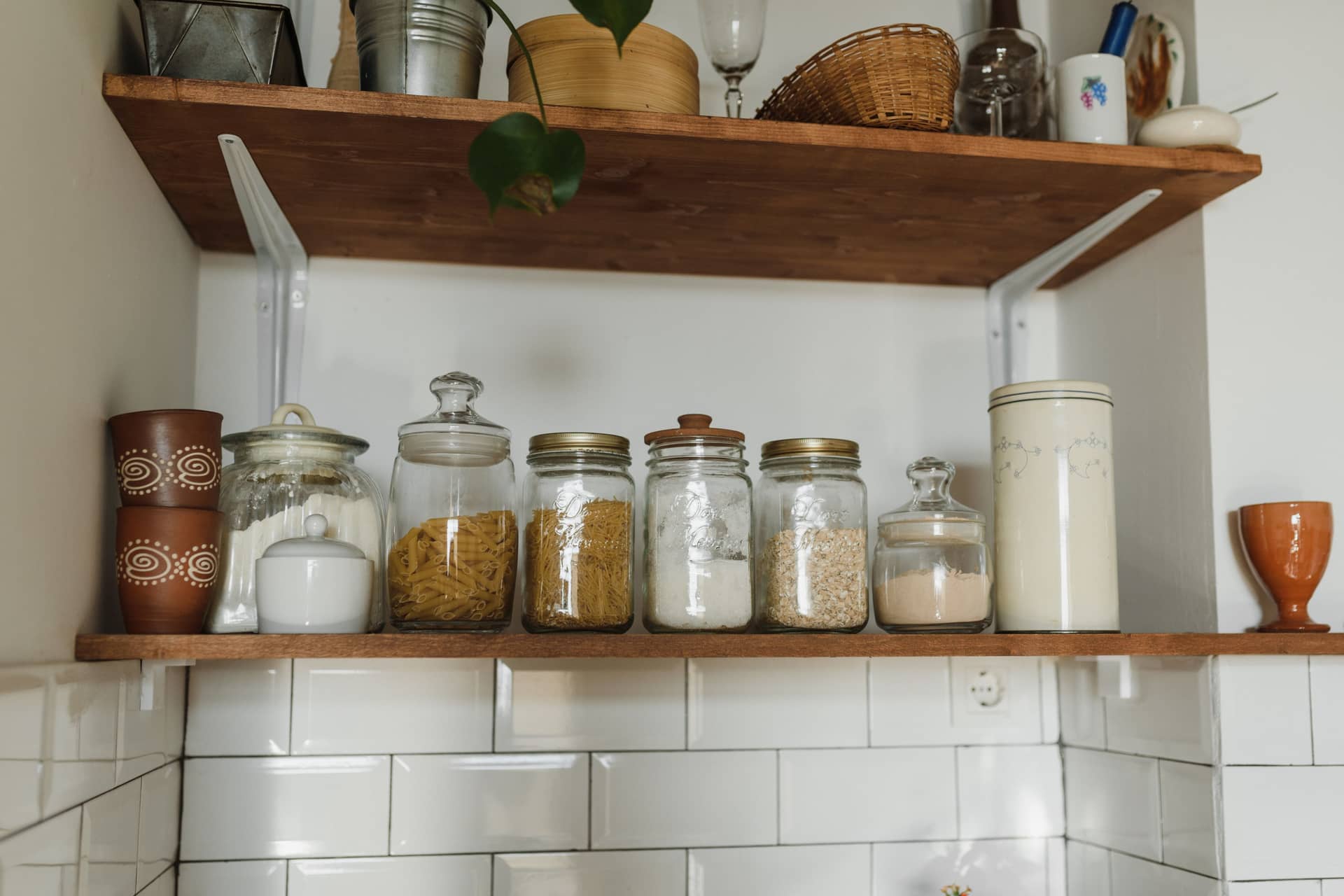
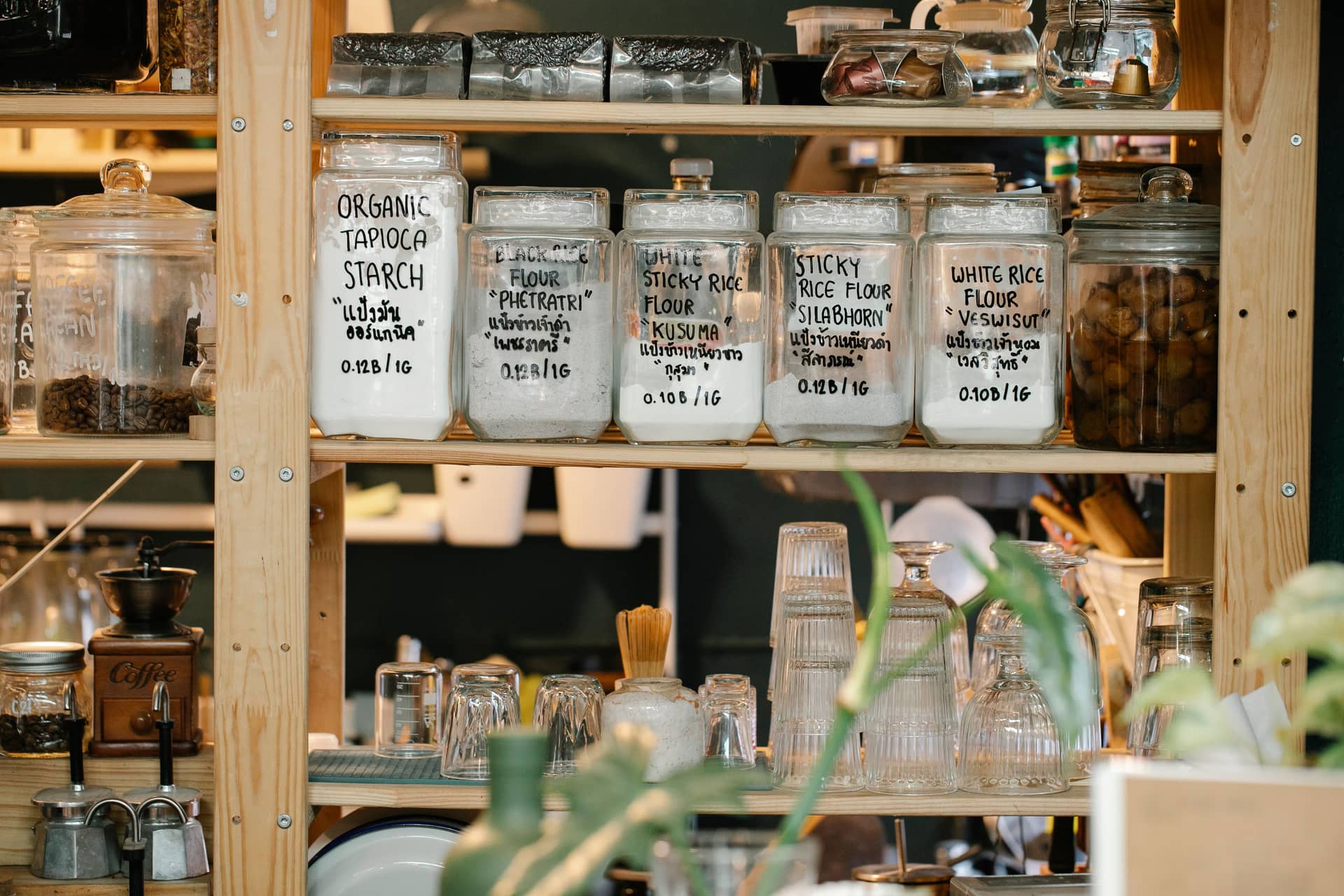
- Dry goods. Rice, beans, pasta, flour: a wide-mouth jar takes a scoop and a plastic lid opens without a band.
- The freezer. Ball lists the leakproof lids as freezer safe — pair them with a jar that is also freezer safe, which is a separate question covered in are mason jars freezer safe.
- Opened jars of your own preserves. Once the seal is broken, the canning lid has done its job and belongs in the recycling; the jar goes in the refrigerator under plastic.
- Drinks. A jar of cold brew with a leakproof lid is the use that sells most of these.
One thing they are not good for is saving money on canning lids. A single-use flat lid costs pennies; a storage lid costs a dollar or more and cannot process. They solve different problems.
How we screened these
We have not run leak tests on a shelf of lids. What we checked is what each maker publishes — material, mouth size, whether they claim leakproof, freezer and dishwasher ratings — and how clearly they distinguish themselves from canning lids, which turns out to vary. The method is on how we pick.
- An explicit non-canning statement. Ball's is unambiguous; reCAP's FAQ says its lids "are not to be used in canning or microwaving". Any lid whose maker is vague about this is a lid we would not feature.
- A published leakproof claim, and honesty about its limits.
- Freezer and dishwasher ratings, because a storage lid lives in both.
- Correct mouth fit. Regular is 70 mm, wide is 86 mm, and a lid that fits "most" jars fits yours or it does not.
- BPA-free plastic, which all of our picks state.
Quick picks
Every pick below is screened against the National Center for Home Food Preservation’s published canner rules first. Tap a row for the full write-up.
| # | Product | Best for | Key spec | Price |
|---|---|---|---|---|
| 1 |  Ball Wide Mouth Leakproof Storage LidsThe lid that turns a canning jar into a lunch container. Ball lists these as leakproof, freezer safe and dishwasher safe, and — importantly — classifies them as "Lid Type: Non-Canning". They are for the eleven months of the year your jars are not in a canner. | Wide mouth jars in daily use | Non-canning, leakproof, freezer safe | $22.99 · View on Amazon#ad we earn a commission · price as of October 18, 2026 |
| 2 |  Ball Regular Mouth Leakproof Storage LidsThe same lid for the 70 mm jars, which is what most households own the most of. Ball's own framing is the useful part: these "take your mason jars beyond canning" — dry goods, leftovers, drinks, freezer storage — and they are explicitly not a preserving closure. | Regular mouth jars in daily use | Non-canning, leakproof, freezer safe | $21.28 · View on Amazon#ad we earn a commission · price as of October 18, 2026 |
| 3 |  Cardboard Canning Jar Storage Boxes with DividersEmpty jars are the storage problem canning actually creates, and divided boxes are the unglamorous answer: jars do not touch, chips do not happen, and a stack goes up a cellar shelf instead of across a counter. These are cardboard boxes with dividers sized for pint jars. | Empty jars between seasons | Divided boxes, pint size | $33.99 · View on Amazon#ad we earn a commission · price as of October 18, 2026 |
| 4 | Storage lids used as canning lidsSkipPlastic storage lids and canning lids sit in the same aisle and look interchangeable. They are not. Penn State Extension flags the confusion directly: "There are some lids developed only for storage after the jar is opened; do not confuse these with canning lids." Ball's own instruction for its plastic lids is the same — do not use them for preserving. | Nothing - keep the two apart | Not approved for processing | Check price on Amazon#ad we earn a commission · live price pending |
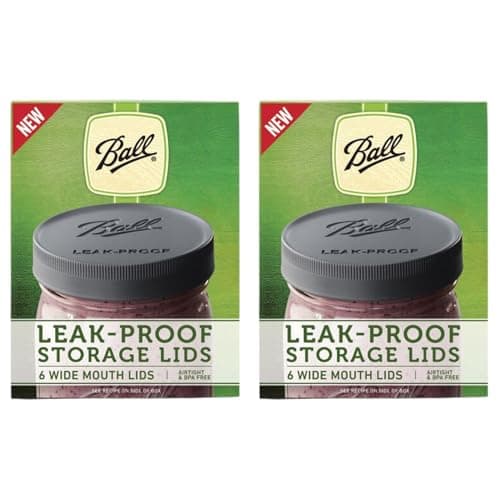
Ball Wide Mouth Leakproof Storage Lids
The lid that turns a canning jar into a lunch container. Ball lists these as leakproof, freezer safe and dishwasher safe, and — importantly — classifies them as "Lid Type: Non-Canning". They are for the eleven months of the year your jars are not in a canner.
Published specs
- Model
- 1440010813 (Ball)
- Fits
- Wide mouth Ball and Kerr jars
- Claims
- Airtight and leakproof, freezer safe, dishwasher safe, BPA-free (Ball)
- Lid type
- Non-canning (Ball)
- Pack
- 6 lids per pack; the listing here is a pack of 2
What works
- A genuine leakproof seal, which a screw band and flat lid never gives you on a jar of soup in a bag
- Ball rates them freezer safe and dishwasher safe, so they handle the whole meal-prep cycle
- One lid replaces a two-piece closure you would rather keep clean and unbent for canning season
What to know first
- Not for canning, and Ball says so outright: "Do not use Ball non-canning lids for preserving."
- Plastic, so it stains with tomato and curry and will eventually warp if you put it through a hot dishwasher cycle enough times
- Pack sizes are small relative to how many jars a canner household owns
Specs from Ball, Wide Mouth Leakproof Storage Lids, 6-Pack, Ball, Lids Use & Care. We have not handled this product — see how we pick.
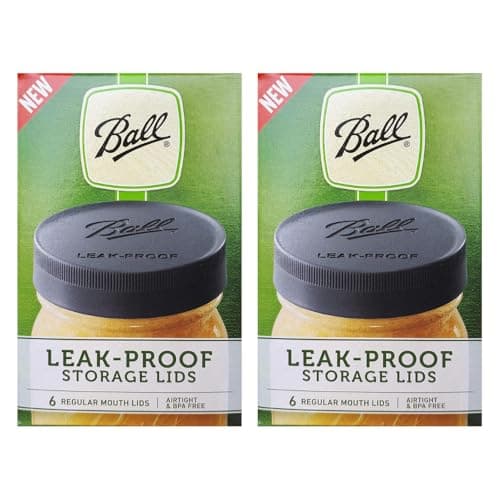
Ball Regular Mouth Leakproof Storage Lids
The same lid for the 70 mm jars, which is what most households own the most of. Ball's own framing is the useful part: these "take your mason jars beyond canning" — dry goods, leftovers, drinks, freezer storage — and they are explicitly not a preserving closure.
Published specs
- Model
- 1440010812 (Ball)
- Fits
- Regular mouth Ball and Kerr jars
- Claims
- Airtight and leakproof, freezer safe, dishwasher safe, BPA-free (Ball)
- Lid type
- Non-canning (Ball)
- Pack
- 6 lids per pack; the listing here is a pack of 2
What works
- Fits the 70 mm jars that dominate most cupboards, including the pint jars jam usually lives in
- Leakproof enough to travel, which is the whole reason to buy a storage lid rather than reuse a band
- Keeps your canning lids in the drawer where they belong, unbent and unused until processing day
What to know first
- Same hard limit: not a canning lid, and not a substitute for one in any process
- The plastic takes on odors from strong food, more noticeably than glass does
- Ball's current catalog sells these in sixes, so outfitting a pantry costs more than the jars did
Specs from Ball, Regular Mouth Leakproof Storage Lids, 6-Pack, Ball, Lids Use & Care. We have not handled this product — see how we pick.
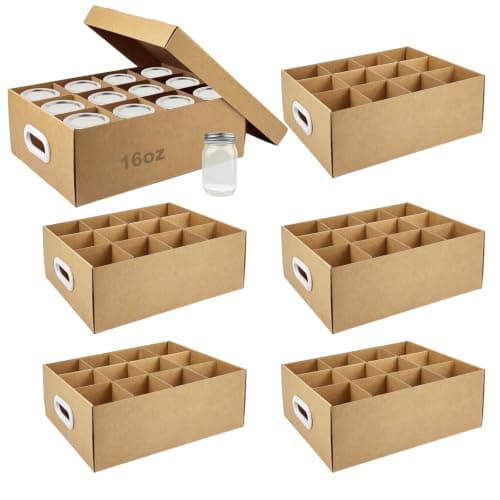
Cardboard Canning Jar Storage Boxes with Dividers
Empty jars are the storage problem canning actually creates, and divided boxes are the unglamorous answer: jars do not touch, chips do not happen, and a stack goes up a cellar shelf instead of across a counter. These are cardboard boxes with dividers sized for pint jars.
Published specs
- Holds
- Pint (16 oz) jars, divided so jars do not touch
- Material
- Cardboard with insert dividers
- Pack
- 6 boxes, per the listing
- Note
- Generic manufacturer; specifications here come from the listing rather than a maker's page
What works
- Dividers stop the rim chipping that quietly ruins jars — a chipped rim will not seal and has to be retired
- Stackable, which turns an awkward crate of loose jars into shelf space you can actually use
- Cheap enough that replacing crushed boxes after a few seasons is not a real cost
What to know first
- Cardboard and damp basements do not mix; in a humid cellar these soften and collapse
- No manufacturer page behind them, so the specifications are the seller's rather than a maker's
- Sized for one jar format, so a mixed collection of half-pints, pints and quarts needs more than one box type
Specs from Penn State Extension, Canning Jars and Lids - An Update, NCHFP, Storing Home Canned Foods. We have not handled this product — see how we pick.
Storage lids used as canning lids
Plastic storage lids and canning lids sit in the same aisle and look interchangeable. They are not. Penn State Extension flags the confusion directly: "There are some lids developed only for storage after the jar is opened; do not confuse these with canning lids." Ball's own instruction for its plastic lids is the same — do not use them for preserving.
Published specs
- Penn State Extension
- "There are some lids developed only for storage after the jar is opened; do not confuse these with canning lids."
- Ball
- "Do not use Ball non-canning lids for preserving."
- NCHFP
- Two-piece Mason-type lids with a flat metal lid and screw band are the recommended closure
- Also not canning lids
- Bail-and-gasket lids, which Penn State describes as decorative or dry-storage closures
What works
- A storage lid is genuinely better than a canning lid for a jar in the refrigerator, which is why both exist
What to know first
- Plastic storage lids cannot form the vacuum seal a two-piece lid makes as the jar cools
- A jar closed with the wrong lid can look sealed without being sealed, which is the worst possible failure mode
- It quietly wastes the processing time: the food was heated correctly and then closed with the wrong thing
Specs from Penn State Extension, Canning Jars and Lids - An Update, Ball, Lids Use & Care. We have not handled this product — see how we pick.
About the word "leakproof"
Ball publishes "Leak Proof: Yes" in the specification table for both of its leakproof lids, which is as firm as a manufacturer claim gets. It is worth knowing that other brands are more careful: reCAP's own FAQ walks its marketing back, noting that its lids "will not be 100% leak-proof on every jar variation."
That is not a knock on reCAP so much as a fact about mason jars: rim height and thread profile vary a little between manufacturers and production runs, and a rigid plastic lid has less tolerance for that than a heat-set compound does. Test any storage lid with water over a sink before you trust it with soup in a bag.
Storing the empty jars
The other half of jar storage is the jars you are not using, which for most canners is most of them for most of the year. The enemy is chipping: a nicked rim will not seal, and a jar that will not seal is no longer a canning jar. Divided boxes stop jars touching, stack on a shelf, and cost less than replacing a case.
- Take the bands off stored full jars. Penn State: "Screw bands can rust if left on the jars in storage, causing the seals to break." That is for sealed jars, and it also keeps bands available.
- Store empties dry and covered. Dust and spiders are the two things that find open jars in a basement.
- Inspect rims when you unpack, not on canning day. "Always inspect for nicks or cracks and wash jars prior to use" is Ball's own instruction.
- Keep cardboard off damp floors. A humid cellar collapses boxes; a shelf or pallet fixes it.
- Sort by size. Mixed boxes of half-pints and quarts waste space and invite chipping.
Which mouth, and how many
Buy lids for the jars you actually own. Most households are regular-mouth heavy because that is what pints and jelly jars come in, while anything you scoop from wants a wide mouth. The difference is covered in wide mouth vs regular mouth.
As for quantity: a storage lid is not a per-jar purchase. Six of each mouth size is enough for most kitchens, because they move from jar to jar as things get eaten, and unlike canning lids they are not consumed by use.
The other closures people mistake for canning lids
Plastic storage lids are not the only jar closure sold beside the canning ones. Two more are worth knowing about, because both look like sealing systems and neither is one for home canning.
- One-piece metal lids. Iowa State Extension: "One-piece, reusable, and previous used lids are not approved for home canning by the USDA as they may allow air to be trapped within the sealed jar permitting bacteria to thrive," adding that where one-piece lids are used in industry it is "where very strict time and temperature controls are in place."
- Bail-and-gasket jars. Penn State: "Bail lids with a rubber gasket are designed for decorative use or dry food storage." The jars themselves can be lovely, and the closure is not a canning closure — the same reasoning runs through Weck jars vs Mason jars.
- Twist-off lids from commercial jars. Penn State again: "Do not reuse twist-off lids that come on pickle jars, spaghetti sauce jars, or others."
The reusable plastic canning lids that genuinely are approved sit apart from all three. NDSU Extension's summary is that research on reusable plastic canning lids "suggests that reusable lids will seal jars safely when used for home canning" — a specific finding about a specific product type, not a general permission for plastic.
The decision, in one paragraph
Buy a six-pack of Ball leakproof lids in whichever mouth size dominates your cupboard — wide if you scoop, regular if your jars are mostly pints — and a second pack of the other size if you are outfitting a pantry. Add divided boxes for the empties if your jars currently live in a crate. And keep the two lid types apart in your head and in the drawer: plastic for the refrigerator and the bag, two-piece metal for the canner.
Next stepThe lids that go in the cannerCommon questions
Can you use plastic lids for canning?
What are plastic mason jar lids for?
Are plastic mason jar lids leakproof?
Do plastic lids fit both regular and wide mouth jars?
Can plastic storage lids go in the freezer?
Are storage lids dishwasher safe?
Can I reuse a canning lid as a storage lid?
How should I store empty canning jars?
Should I leave the bands on stored jars?
Do you earn a commission on these?
Sources
- Ball — Lids Use & Care
- Ball — Wide Mouth Leakproof Storage Lids
- Ball — Regular Mouth Leakproof Storage Lids
- Penn State Extension — Canning Jars and Lids, An Update
- Penn State Extension — Let's Preserve: Basics of Home Canning
- Iowa State University Extension — Are Two-Piece Lids Really Necessary?
- reCAP Mason Jars — FAQ
- NCHFP — Recommended Jars and Lids
- Ball — Canning Use & Care
Product specifications are taken from each manufacturer’s own published page, cited on the product. We have not handled these products — how we pick.