The best pressure canner for meat
Meat is the food that punishes a marginal canner. Long times, full pressure, and no second-best method.
Disclosure: we earn a commission on purchases made through links on this page, at no extra cost to you. It does not change what we recommend — see how we pick and our affiliate disclosure.
Meat is low-acid, so it must be pressure canned — no water bath process makes it safe at any length. The canner needs a full seven-quart capacity, a gauge you trust, and the ability to hold pressure steadily for long runs. Wide-mouth quart jars make packing and emptying meat far easier.
Meat, poultry, fish and stock are the foods that separate a canner you can rely on from one you are managing. The processing times are long, they run at full pressure the whole way, and the consequence of getting it wrong is the worst one in home canning. This is not a category for a marginal pot.
Before anything else: there is no water bath option here. Meat is low-acid, a boiling water bath reaches 212F and cannot exceed it however long it runs, and the temperature that destroys botulism spores is the roughly 240F only a pressure canner reaches. No processing time, no added acid and no family recipe changes that. The reasoning is in botulism and home canning.
How we screened these
We have not canned meat in any of these, and nothing here is ranked on feel. The screen is the NCHFP's published canner requirements plus the specific demands a long full-pressure run makes. The method is on how we pick.
- Capacity for seven quart jars. The NCHFP is explicit that pressure saucepans with smaller volume capacities are not recommended for canning, and meat is where that matters most.
- A gauge you will actually trust for 90 minutes. Long runs are where a drifting dial gauge does the most damage.
- Steady heat holding. A canner that needs constant nursing to hold pressure is a canner you will get wrong on a long process.
- Quart capability. Meat is usually canned in quarts or pints, and quarts need a canner tall enough and a stove that can hold it.
- Parts availability, because a meat canner earns a long life.
Quick picks
Every pick below is screened against the National Center for Home Food Preservation’s published canner rules first. Tap a row for the full write-up.
| # | Product | Best for | Key spec | Price |
|---|---|---|---|---|
| 1 |  Presto 23-Quart Pressure Canner and Cooker (01781)The default first pressure canner, and the one most beginners should buy: it takes a full seven-quart load, it doubles as a boiling-water canner for pints and half-pints, and it costs a fraction of a cast-aluminum canner. The dial gauge is the catch, and it is a real one. | A first pressure canner | 7 quarts / 20 pints | |
| 2 | All American 921 (21.5 qt)Cast aluminum with a machined metal-to-metal seal, so there is no gasket to perish, swell or go missing the week you need it. It is also 24 pounds empty and its base is wider than most electric elements, which is a genuine constraint rather than a footnote. | Buying once, for decades | Base 15 3/8", no gasket | Check price on Amazon#ad we earn a commission · live price pending |
| 3 | Presto 16-Quart Pressure Canner (01745)The weighted-gauge alternative: nothing to calibrate, ever, because the regulator rocks when the pressure is right. The trade is height. It is not tall enough to boiling-water can quart jars under the required inch of water, so it is a pints-and-half-pints canner. | Pints only, and a small kitchen | Weighted gauge, no calibration | Check price on Amazon#ad we earn a commission · live price pending |
| 4 |  Ball Wide Mouth Quart Jars (32 oz)The jar to buy when you are packing peach halves, pickle spears or anything you have to reach into. The wider 86 mm mouth is easier to fill and far easier to clean, and quarts are the standard size for tomatoes. | Whole fruit and packing by hand | 86 mm mouth, 32 oz | |
| 5 | Small pressure cookers and multi-cookers sold as cannersSkipSkip anything under the seven-quart-jar mark, and skip every electric multi-cooker with a canning button that is not specifically specified for pressure canning. The NCHFP is explicit: pressure saucepans with smaller volume capacities are not recommended for canning. | Nothing — skip these | Excluded by NCHFP | Check price on Amazon#ad we earn a commission · live price pending |
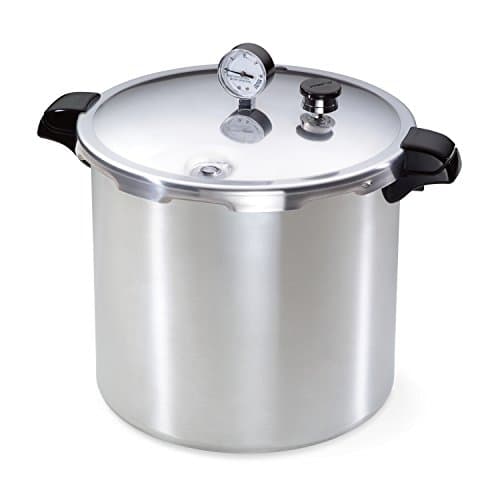
Presto 23-Quart Pressure Canner and Cooker (01781)
The default first pressure canner, and the one most beginners should buy: it takes a full seven-quart load, it doubles as a boiling-water canner for pints and half-pints, and it costs a fraction of a cast-aluminum canner. The dial gauge is the catch, and it is a real one.
Published specs
- Liquid capacity
- 23 quarts (21.8 liters)
- Jar capacity
- 26 half-pints, 20 pints, 7 quarts
- Material
- Warp-resistant aluminum
- Gauge
- Dial gauge
- Ranges
- Regular and smooth-top
- Burner limit
- 12,000 BTUs or less
- Also
- Doubles as a boiling-water canner
- Warranty
- 12-year limited
- Base diameter
- Not published by Presto
What works
- Seven quart jars is the standard batch size every tested NCHFP recipe is written around, so you are never processing a half load
- Doubles as a boiling-water canner for pints and half-pints, which means one pot covers the jam-and-pickles year as well as the beans
- Presto sells a replacement dial gauge and sealing ring separately, so a decade-old canner is a repair rather than a replacement
What to know first
- A dial gauge should be checked for accuracy every year — most extension offices do it free, and most owners never go. A weighted gauge needs no calibration at all
- Presto does not publish a base diameter, so you cannot check it against the NCHFP element rule without measuring the box yourself. See will it fit your stove
- Rated for burners of 12,000 BTUs or less, which rules out most outdoor propane burners and some high-output gas ranges
Specs from Presto, 23-Quart Pressure Canner and Cooker (01781). We have not handled this product — see how we pick.
All American 921 (21.5 qt)
Cast aluminum with a machined metal-to-metal seal, so there is no gasket to perish, swell or go missing the week you need it. It is also 24 pounds empty and its base is wider than most electric elements, which is a genuine constraint rather than a footnote.
Published specs
- Liquid capacity
- 21.5 quarts
- Jar capacity
- 18 pints or 7 quarts
- Seal
- Metal-to-metal, no gasket
- Gauge
- Geared steam gauge
- Regulator
- 5, 10 or 15 psi
- Inside diameter
- 12 1/4 inches
- Inside height
- 10 1/2 inches
- Bottom exterior diameter
- 15 3/8 inches
- Weight (empty)
- 24 pounds
What works
- No gasket means no annual replacement part, and nothing that hardens in a hot attic between seasons
- All American publishes the base diameter, which almost nobody in this category does — you can check it against your element before you buy
- The 921 and its siblings are the canners people hand down. Parts and gauges remain available for very old units
What to know first
- The 15 3/8" base needs an element of at least 11 3/8" to stay inside the NCHFP 4-inch rule, and most household electric elements are 6" to 9". Check your stove first
- 24 pounds empty, and considerably more loaded with jars and water — a real consideration if lifting is difficult
- Several times the price of a Presto, which is money better spent on jars and lids for a first season
Specs from All American, 921 21.5-Quart Pressure Canner, NCHFP, Recommended Canners. We have not handled this product — see how we pick.
Presto 16-Quart Pressure Canner (01745)
The weighted-gauge alternative: nothing to calibrate, ever, because the regulator rocks when the pressure is right. The trade is height. It is not tall enough to boiling-water can quart jars under the required inch of water, so it is a pints-and-half-pints canner.
Published specs
- Liquid capacity
- 16 quarts
- Regulator
- 3-piece weighted, 5 / 10 / 15 psi
- Material
- Aluminum
- Calibration
- None required
- Boiling-water use
- Pints and half-pints only — not tall enough for quarts
- Base diameter
- Not published by Presto
What works
- A weighted gauge never needs testing. It rocks when the pressure is correct, and that is the whole interface
- Smaller footprint and lighter than a 23-quart, which matters if you are canning on an apartment range or storing it in a closet
- The audible rocking is easier for a nervous first-timer to read than a needle you are trying to hold at exactly 11 psi
What to know first
- Cannot boiling-water can quart jars — Presto states it is not tall enough to cover them with the required 1 inch of water
- Smaller pressure-canning loads mean more batches on a heavy tomato or bean day
- Weighted gauges only do 5, 10 and 15 psi, so at altitude you round up to the next weight rather than dialing an exact number
Specs from Presto, 16-Quart Pressure Canner (01745), NCHFP, Recommended Canners. We have not handled this product — see how we pick.
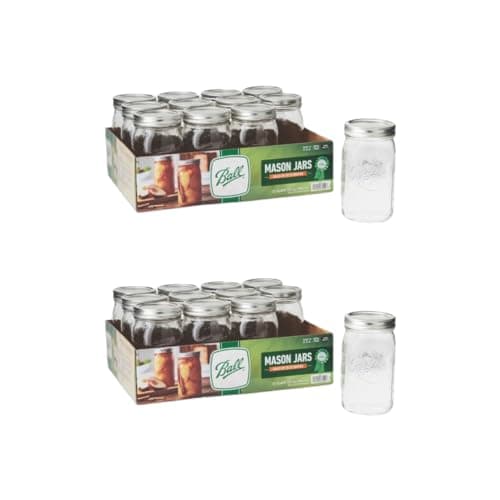
Ball Wide Mouth Quart Jars (32 oz)
The jar to buy when you are packing peach halves, pickle spears or anything you have to reach into. The wider 86 mm mouth is easier to fill and far easier to clean, and quarts are the standard size for tomatoes.
Published specs
- Volume
- 32 oz / 4 cups
- Mouth
- Wide, about 86 mm lid diameter
- Inner mouth diameter
- About 76 mm
- Jar dimensions
- About 6 1/2" tall x 3 1/4" wide
What works
- You can get a hand and a jar funnel into it, which turns packing peaches from a chore into a task
- Quart is the size the tomato and peach processing times in tested recipes are written around
- Much easier to wash by hand than a regular mouth quart
What to know first
- Wide mouth lids cost more than regular mouth and disappear from shelves first in peak season
- Seven quarts is a full canner load, so a quart-jar day is a longer day per jar of finished food
- A quart of anything low-acid still needs a pressure canner, and quarts take the longest processing times
Specs from Ball, Mason Jars & Lids, Wide Mouth. We have not handled this product — see how we pick.
Small pressure cookers and multi-cookers sold as canners
Skip anything under the seven-quart-jar mark, and skip every electric multi-cooker with a canning button that is not specifically specified for pressure canning. The NCHFP is explicit: pressure saucepans with smaller volume capacities are not recommended for canning.
Published specs
- NCHFP position
- "Pressure saucepans with smaller volume capacities are not recommended for use in canning"
- Required capacity
- Enough for seven quart jars or eight to nine pints
- Required approval
- UL approval
What works
- There is no upside worth listing. This entry exists so you can recognize the category and walk past it
What to know first
- Too small to hold heat the way tested processing times assume, so the times on a tested recipe do not transfer
- A "canning" preset on a multi-cooker is a marketing label, not a validation. Only appliances specified for pressure canning, like the Presto Precise, have been through that work
- This is the failure mode with the worst consequences in the whole category — under-processed low-acid food is where botulism comes from
Specs from NCHFP, Recommended Canners. We have not handled this product — see how we pick.
Why the gauge question sharpens here
On a twenty-minute batch of pickled beets, a dial gauge reading slightly low is a small error. On a ninety-minute run of quart-packed meat, it is ninety minutes of under-processing on the food category with the least margin.
The NCHFP's instruction does not change — check dial gauges for accuracy before use each year — but the cost of skipping it does. If meat is a significant part of why you are buying a canner and you know you will not do the annual test, that is a strong argument for a weighted gauge, which the NCHFP says needs neither watching during processing nor checking for accuracy. The full trade is in dial gauge vs weighted gauge.
The jar decision matters more for meat than anything else
Wide mouth, and it is not close. Meat is packed by hand rather than poured, it comes out in pieces rather than pouring, and a 3-inch opening against a 2-3/8-inch one is the difference between packing a jar and fighting it.
The second reason is cleaning. Wiping the rim properly is what makes the seal, and a rim you can see and reach is a rim you clean properly — which matters more with fat and protein on it than with jam. The mouth comparison is in wide mouth vs regular mouth.
On size: quarts suit stews, stock and larger cuts; pints suit portions for one or two and let you double-stack for a bigger load. A standard canner takes seven quarts or twenty pints, and the sizing logic is in what size pressure canner do you need.
What to skip outright
Anything below a full seven-quart capacity, and every electric multi-cooker whose canning claim is a bullet point rather than a manufacturer statement about USDA guidance. The NCHFP excludes small pressure saucepans from canning outright, and meat is the category where that exclusion matters most — small canners heat and cool differently from the ones the processing times were developed on, so the time at temperature does not match the tested process even when the gauge and the clock are both right.
Which countertop appliances actually carry a manufacturer statement, and which just have a preset, is worked through in electric pressure canners.
Raw pack and hot pack are different processes
Meat is canned one of two ways and they are not interchangeable, because they have different processing times in the tested recipes. Raw pack means putting uncooked meat into the jar and processing it. Hot pack means browning or partly cooking the meat first, packing it hot, and covering it with boiling liquid or its own juices.
Use whichever your tested recipe specifies and use that recipe's time. The practical differences are worth knowing: hot pack drives more air out of the meat before the lid goes on, which generally means less shrinkage and less liquid loss in the jar, while raw pack is faster on the day. Neither is safer in itself — what makes a jar safe is following the process that was actually validated for that pack style, that jar size and your altitude.
Stock, broth and soups
These are the other half of why people buy a canner for meat, and they carry one extra rule that catches people out. Stock and broth are straightforward low-acid foods and pressure can normally. Soups and stews are where the restrictions appear.
- No thickeners. Flour, cornstarch, roux and dairy change how heat moves through the jar and are not part of tested processes. Thicken the soup when you open it, not before you can it.
- No rice, pasta or barley in a tested soup process — they swell and turn the pack dense, which slows heat penetration.
- No pureed or mashed vegetables, for the same reason: a dense pack heats differently from a loose one.
- Fill to the recipe's ratio. Tested soup processes generally specify jars no more than half solids, topped with liquid.
The pattern behind all four is the same: tested times assume a pack that heat can move through predictably, and anything that makes the contents denser or more viscous invalidates the time without changing anything you can see.
What canned meat looks like afterward
Worth setting expectations, because a first jar of home-canned meat looks alarming to anyone expecting the supermarket version. Fat rises and sets as a pale layer at the top. The liquid may be cloudy with rendered protein. The meat itself will have shrunk and pulled away from the sides. All three are normal.
What is not normal, and what means discard without tasting: a lid that has unsealed, liquid that is spurting or foaming when opened, an off odor, or any sign of the jar having leaked in storage. Those are covered in botulism and home canning, and the rule there is the important one — you do not taste a suspect jar to decide.
Label every jar with the contents and the date before it goes on the shelf. Meat jars look far more alike than jam jars do, and a year later the difference between beef and venison stock is not something you will reliably identify through glass.
Practical notes for a meat day
- Use a tested recipe for the exact cut and pack. Raw pack and hot pack have different times, and so do strips, cubes and ground meat.
- Do not thicken anything. Flour, cornstarch and dairy change how heat moves through the jar and are not part of tested meat processes.
- Leave the headspace the recipe gives. Fat expands, and an overfilled meat jar contaminates its own rim.
- Expect a long session. Come-up time, ninety-odd minutes at pressure and a natural cool-down is most of an afternoon — plan it as one.
- Let the canner depressurize naturally. Forcing it cools the jars too fast, which is how liquid siphons out and seals fail.
The decision, in one paragraph
For most people canning meat, the 23-quart Presto is still the right buy: a full seven-quart load, a twelve-year warranty and a parts list, with the dial gauge test as the obligation you accept. If you cook on gas or a large element and want a canner with nothing consumable in the seal, the All American 921 is the better object — check its 15 3/8-inch base against your element first. If you will never do the annual gauge test, buy weighted and stop worrying about it. Whatever you buy, buy wide-mouth jars for the meat itself.
Next stepWhich foods require pressure canningCommon questions
Can you water bath can meat?
What size pressure canner do I need for meat?
Should I use pints or quarts for meat?
Are wide mouth jars better for canning meat?
Can I add flour or cornstarch to thicken canned stew?
Can I use an electric multi-cooker to can meat?
Do you earn a commission on these?
Sources
- NCHFP — Recommended Canners
- National Center for Home Food Preservation
- Presto — 23-Quart Pressure Canner (01781)
- All American — 921 Pressure Canner
Product specifications are taken from each manufacturer’s own published page, cited on the product. We have not handled these products — how we pick.