Canning lids not sealing
Nearly every failed seal comes from one of six things, and five of them are free to fix.
Disclosure: we earn a commission on purchases made through links on this page, at no extra cost to you. It does not change what we recommend — see how we pick and our affiliate disclosure.
Most failed seals come from six causes: a reused flat lid, food or grease on the rim, a chipped rim, wrong headspace, a band tightened too hard, or the jar not being processed for the full tested time. Reprocess within 24 hours with a new lid, or refrigerate and eat it.
A jar that has not sealed is not a disaster and it is not a mystery. It is almost always one of a short list of things, and most of them cost nothing to fix. This page is that list, ordered by how often each one is actually the culprit, followed by what to do with the jar in front of you.
First, be sure it has actually failed. A properly sealed lid is concave and does not flex when you press the center, and it stays down with the band removed. The full check is in how to tell if a jar sealed — do that before you do anything else, because a jar that sealed late is common and needs no action at all.
The six causes, in order
1. The lid had been used before
The single most common cause, and the only one on this list that is a purchase rather than a technique. A flat metal lid's sealing compound is designed to compress once against a rim. Used again it often appears to seal and then releases weeks later on a shelf. If you are reusing lids, stop — that is the fix, and it is covered in can you reuse canning lids.
2. Something was on the rim
A smear of jam, a strand of fruit, a film of oil from a brine. The compound has to meet clean, dry glass all the way round, and a gap the width of a fiber is a gap. Wipe every rim with a clean damp cloth after filling and before placing the lid — this is a step, not a courtesy, and it is where a wide-mouth jar earns its money because you can see and reach the rim.
3. The rim is chipped
Run a fingertip right around the rim of every jar before you fill it. A chip you cannot see you can usually feel, and a chipped jar will not seal reliably no matter what you do to it. This is the one failure that retires a jar permanently; everything else about a canning jar lasts decades.
4. The headspace was wrong
Too little and food expands into the sealing surface during processing, which contaminates the rim from the inside. Too much and there may not be enough air driven out to form a strong vacuum as the jar cools. The figure in the recipe is part of the tested process, and it does not scale with how full you would like the jar to look.
5. The band was too tight
Counter-intuitive and very common. Bands go on fingertip tight — snug, not cranked. Air has to be able to escape past the lid during processing, and a band torqued down traps it, which prevents the vacuum from forming. The band's only job is to hold the lid in place until the vacuum takes over, after which it is doing nothing at all.
6. The process was short or interrupted
Timing started before a full rolling boil, water that stopped covering the jars, or a burner that drifted. If the process was not the full tested time at the right temperature, the seal is the least of the problem — the food is not safely processed either. Start timing only at a full rolling boil, and keep an inch of water over the jars (two inches past 30 minutes).
What to do with the unsealed jar
Three options, all legitimate, in the order most people should consider them:
- 1Refrigerate and eat it. The simplest answer. The food is cooked and safe to treat as a refrigerated leftover; eat it within the usual few days to a week depending on what it is.
- 2Reprocess within 24 hours. Remove the lid, check the rim for chips, wipe it clean, fit a new flat lid, and process for the full time the recipe gives again. Expect softer results — it is a second cook.
- 3Freeze it. If the food freezes well and you do not want to reprocess, transfer it to a freezer-safe container leaving headspace.
Which lids remove the problem
Most of this page is technique, and technique is free. The part you can buy your way out of is the first cause: use new flat lids every time, from a brand that makes canning lids rather than an unbranded marketplace lot. If lid supply is what pushed you into reusing them, buy a season ahead — see buying canning jars in bulk.
Quick picks
Every pick below is screened against the National Center for Home Food Preservation’s published canner rules first. Tap a row for the full write-up.
| # | Product | Best for | Key spec | Price |
|---|---|---|---|---|
| 1 |  Ball Regular Mouth Canning LidsThe lid every tested recipe assumes. Single-use by design — the sealing compound is meant to compress once — and cheap enough that reusing one to save a few cents is a bad trade against losing a jar of food. | The default lid | 70 mm, single use | $22.99 · View on Amazon#ad we earn a commission · price as of October 18, 2026 |
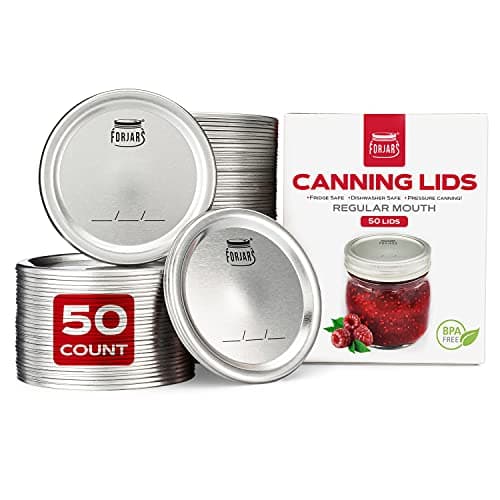
| 2 |  ForJars Canning LidsA widely available alternative for the weeks when the shelf is bare. Same single-use design and same standard sizes; buy it as a hedge against the September shortage rather than as an upgrade. | A stocked backup brand | Single use, 70 or 86 mm | $20.45 · View on Amazon#ad we earn a commission · price as of October 18, 2026 |
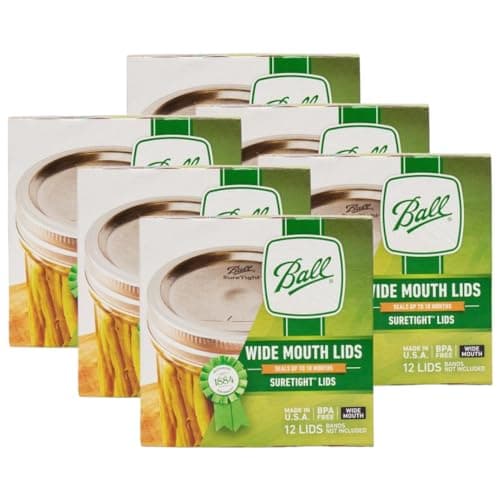
| 3 |  Ball Wide Mouth Canning LidsThe same lid in the larger size. Buy it because your jars are wide mouth, not because it is better — it is the identical sealing compound on a bigger disc, at a higher price per lid. | Wide mouth jars | 86 mm, single use | $44.99 · View on Amazon#ad we earn a commission · price as of October 18, 2026 |
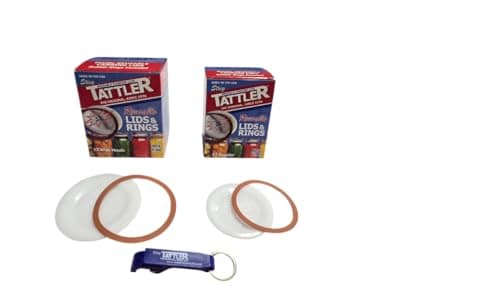
| 4 |  Tattler Reusable Canning LidsA two-piece plastic lid and rubber ring designed to be used again and again, which changes the arithmetic if you can a lot. The technique differs from a metal lid, and getting it wrong shows up as a failed seal — so learn it on a batch you can afford to lose. | Long-run cost, if you commit | Plastic lid + rubber ring | $32.00 · View on Amazon#ad we earn a commission · price as of October 18, 2026 |
| 5 | Flat lids you have already usedSkipThe lid to skip is the one already in your drawer. A flat metal lid's sealing compound is designed to compress once against a jar rim. Used again it often appears to seal, then releases weeks later on a shelf - which is the worst possible time to find out. | Nothing - skip these | Single use by design | Check price on Amazon#ad we earn a commission · live price pending |
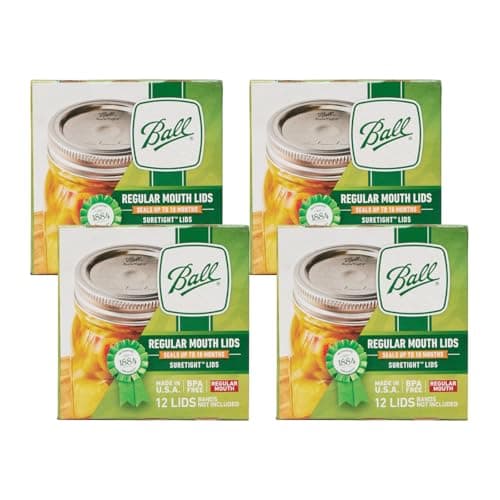
Ball Regular Mouth Canning Lids
The lid every tested recipe assumes. Single-use by design — the sealing compound is meant to compress once — and cheap enough that reusing one to save a few cents is a bad trade against losing a jar of food.
Published specs
- Size
- Regular mouth, about 70 mm
- Use
- Flat lid single-use; band reusable
- Compatibility
- Ball and Kerr regular mouth jars
What works
- The most widely stocked lid in the country, which is the thing that matters in September
- What every NCHFP and Ball tested recipe is written around, so nothing about your process needs adapting
- Bands are reusable indefinitely as long as they are not bent or rusted
What to know first
- Single use. The flat lid goes in the recycling after one seal
- Sells out first in peak season — buy your lids in July, not September
- Does not fit wide mouth jars, and there is no adapter
Specs from Ball, Mason Jars & Lids, Regular Mouth. We have not handled this product — see how we pick.
ForJars Canning Lids
A widely available alternative for the weeks when the shelf is bare. Same single-use design and same standard sizes; buy it as a hedge against the September shortage rather than as an upgrade.
Published specs
- Sizes
- Regular and wide mouth
- Use
- Single-use flat lids
- Compatibility
- Standard Ball and Kerr jar threads
What works
- Available online through the season when the big-box shelves are cleared out
- Standard sizing, so nothing about your process changes
- Usually sold in larger counts, which suits a heavy canning week
What to know first
- No published advantage over the Ball lid — the reason to buy it is availability
- Any lid brand you have not used before deserves a careful check of the seals after 24 hours
- Still a single-use consumable
Specs from NCHFP, Recommended Canners. We have not handled this product — see how we pick.
Ball Wide Mouth Canning Lids
The same lid in the larger size. Buy it because your jars are wide mouth, not because it is better — it is the identical sealing compound on a bigger disc, at a higher price per lid.
Published specs
- Size
- Wide mouth, about 86 mm
- Use
- Flat lid single-use; band reusable
- Compatibility
- Ball and Kerr wide mouth jars
What works
- Fits both Ball and Kerr wide mouth jars, so brand does not matter once you have picked a mouth size
- Same proven sealing compound as the regular mouth lid
- Easier to place squarely on a full jar than a regular mouth lid, which is a small real advantage when you are tired
What to know first
- Costs more per lid than regular mouth, every time
- Harder to find in a rural hardware store than the regular size
- Still single-use, so a wide mouth habit is a permanently higher running cost
Specs from Ball, Mason Jars & Lids, Wide Mouth. We have not handled this product — see how we pick.
Tattler Reusable Canning Lids
A two-piece plastic lid and rubber ring designed to be used again and again, which changes the arithmetic if you can a lot. The technique differs from a metal lid, and getting it wrong shows up as a failed seal — so learn it on a batch you can afford to lose.
Published specs
- Design
- Plastic lid plus a separate rubber sealing ring
- Reuse
- Designed for repeated use
- Sizes
- Regular and wide mouth
- Technique
- Band tightening differs from a metal lid — follow the maker's instructions
What works
- Genuinely reusable, so the per-jar cost falls sharply once you are canning a lot every year
- No metal disc to dispose of after every batch
- Available in both mouth sizes, so they can replace your whole lid habit rather than half of it
What to know first
- The tightening technique is different and unforgiving, and a first batch with them commonly produces failed seals
- Higher up-front cost, which only pays back over several seasons
- Rings perish eventually and are a consumable of their own
Specs from NCHFP, Recommended Canners. We have not handled this product — see how we pick.
Flat lids you have already used
The lid to skip is the one already in your drawer. A flat metal lid's sealing compound is designed to compress once against a jar rim. Used again it often appears to seal, then releases weeks later on a shelf - which is the worst possible time to find out.
Published specs
- Design life
- One seal
- Reusable parts
- The jar and the screw band, indefinitely
- Cost of the mistake
- A jar of food, and the doubt about the rest of the batch
What works
- Saves a few cents per jar, which is the whole case and it does not survive contact with the cost of losing a jar
What to know first
- A false seal is invisible. The lid can be concave and firm and still fail later
- One failure casts doubt over the whole batch, because you cannot tell which other lids were reused
- Lids are the cheapest item in the entire process. This is not where the savings are
Specs from NCHFP, Recommended Canners. We have not handled this product — see how we pick.
When failures cluster
One failed jar in a batch is ordinary. Several is a signal, and the signal is usually the batch rather than the jars — the process was short, the water dropped below the jars, or the same rim-wiping step got skipped down the line under time pressure.
If a whole batch fails, do not reprocess it on autopilot. Work back through the process against how to water bath can and find the step that moved, because reprocessing with the same error produces the same result and a second cook on the food.
Siphoning, which looks like a different problem
If liquid has escaped the jar during processing and the level is visibly low afterward, that is siphoning rather than a sealing fault — though it frequently causes one, because liquid crossing the rim takes food residue with it and contaminates the sealing surface on the way out.
The cause is almost always a pressure or temperature change that was too fast. In a pressure canner that means forcing the cool-down instead of letting it depressurize naturally, or lifting the lid the moment it unlocks. In a water bath it means pulling jars straight from a hard boil into cool air. The fix in both cases is patience: turn the heat off and let things settle before you move anything, then let the jars stand undisturbed.
A jar that siphoned but still sealed is safe to keep — the food above the liquid may discolor over time, which is a quality issue rather than a safety one. A jar that siphoned and did not seal goes in the refrigerator.
Seals that fail later
The unnerving one. A lid that went concave, passed every check at 24 hours, and then popped up three weeks into storage was a weak seal from the start rather than a good seal that failed — the vacuum was marginal and eventually lost.
Discard the contents of any jar that unsealed on the shelf. Do not taste it to decide, and do not judge it by smell or appearance — the entire reason the seal matters is that the failure you care about is not visible. Then treat the rest of that batch as suspect: check every lid in it, and if more than one has gone, work out which step produced a batch of marginal seals rather than reprocessing the survivors.
The most common cause of a batch of marginal seals is reused lids, followed by rims that were wiped in a hurry. Both are covered above, and both are free to fix next time.
Next stepCheck the seal properly firstCommon questions
Why are my canning lids not sealing?
Can I reprocess a jar that did not seal?
How tight should the band be?
Can I just put the unsealed jar in the fridge?
Should I turn the jar upside down to make it seal?
Do I need to heat the lids first?
My lid sealed and then popped later. What happened?
Do you earn a commission on these?
Sources
- NCHFP — Recommended Jars and Lids
- National Center for Home Food Preservation
- NCHFP — Recommended Canners
Product specifications are taken from each manufacturer’s own published page, cited on the product. We have not handled these products — how we pick.