Weck jars vs Mason jars
Lovely glassware, and not what the tested processes were written around. The honest split between what each one is for.
Disclosure: we earn a commission on purchases made through links on this page, at no extra cost to you. It does not change what we recommend — see how we pick and our affiliate disclosure.
The NCHFP names regular and wide-mouth threaded Mason-type jars with self-sealing lids as the best choice for home canning. Weck's own product pages make no canning claim for its glass-lid, rubber-ring and clamp jars. Weck jars are excellent for refrigerator storage, dry goods and gifting, and Mason jars are what tested processes assume.
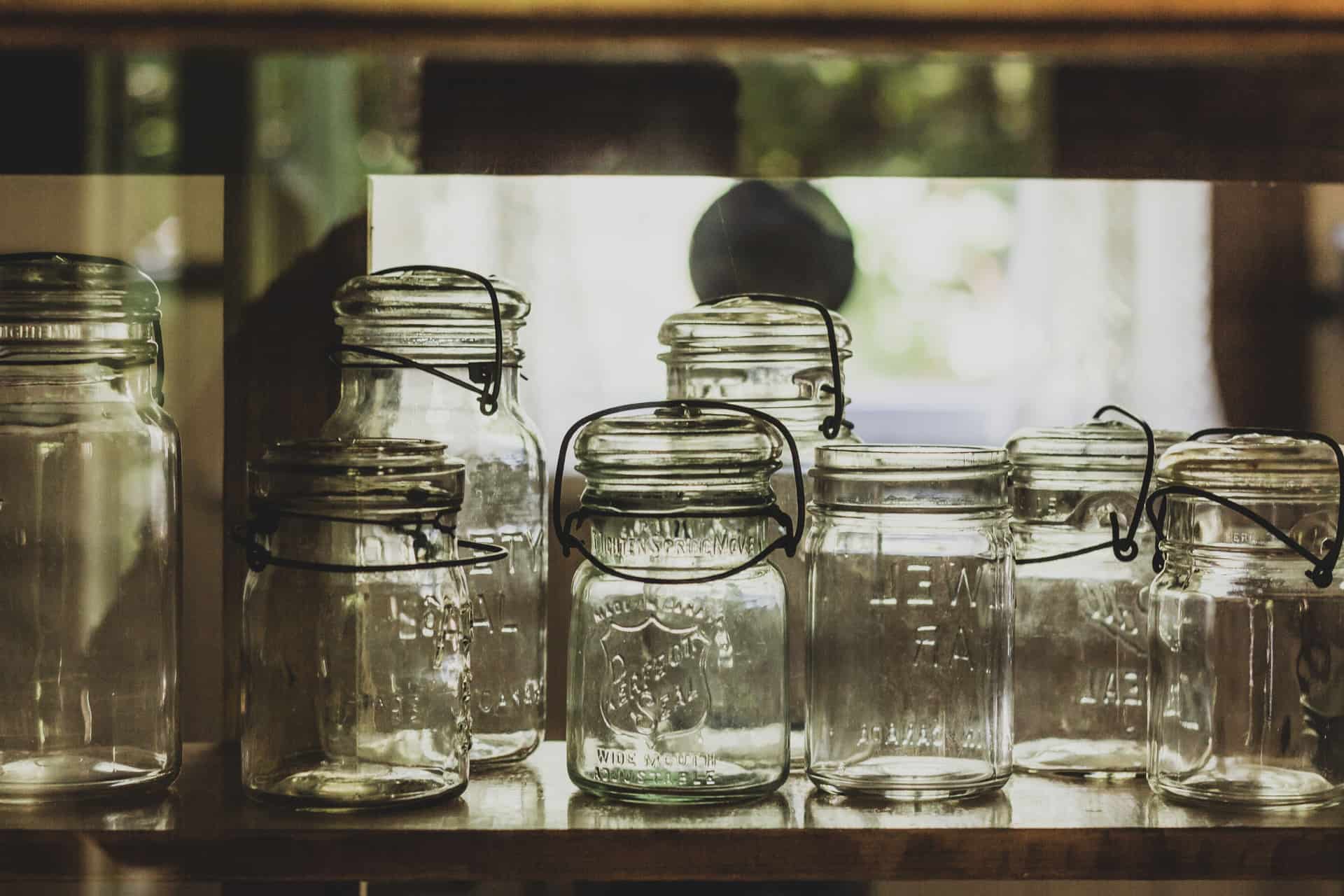
Weck jars are genuinely nice objects. The glass is good, the straight-sided mold shapes empty cleanly, and a shelf of them looks like the kind of pantry people photograph. The same is true of the bail-top jars from Kilner, Le Parfait and Bormioli, which reach the same conclusion by the same route. It is entirely reasonable to want to use them, and this page is not here to talk you out of owning them.
It is here to be straight about one thing: we could not find a canning claim from Weck for these jars, and the tested processes this site is built on assume a different closure. Those two facts decide where they belong.
The closure is the whole difference
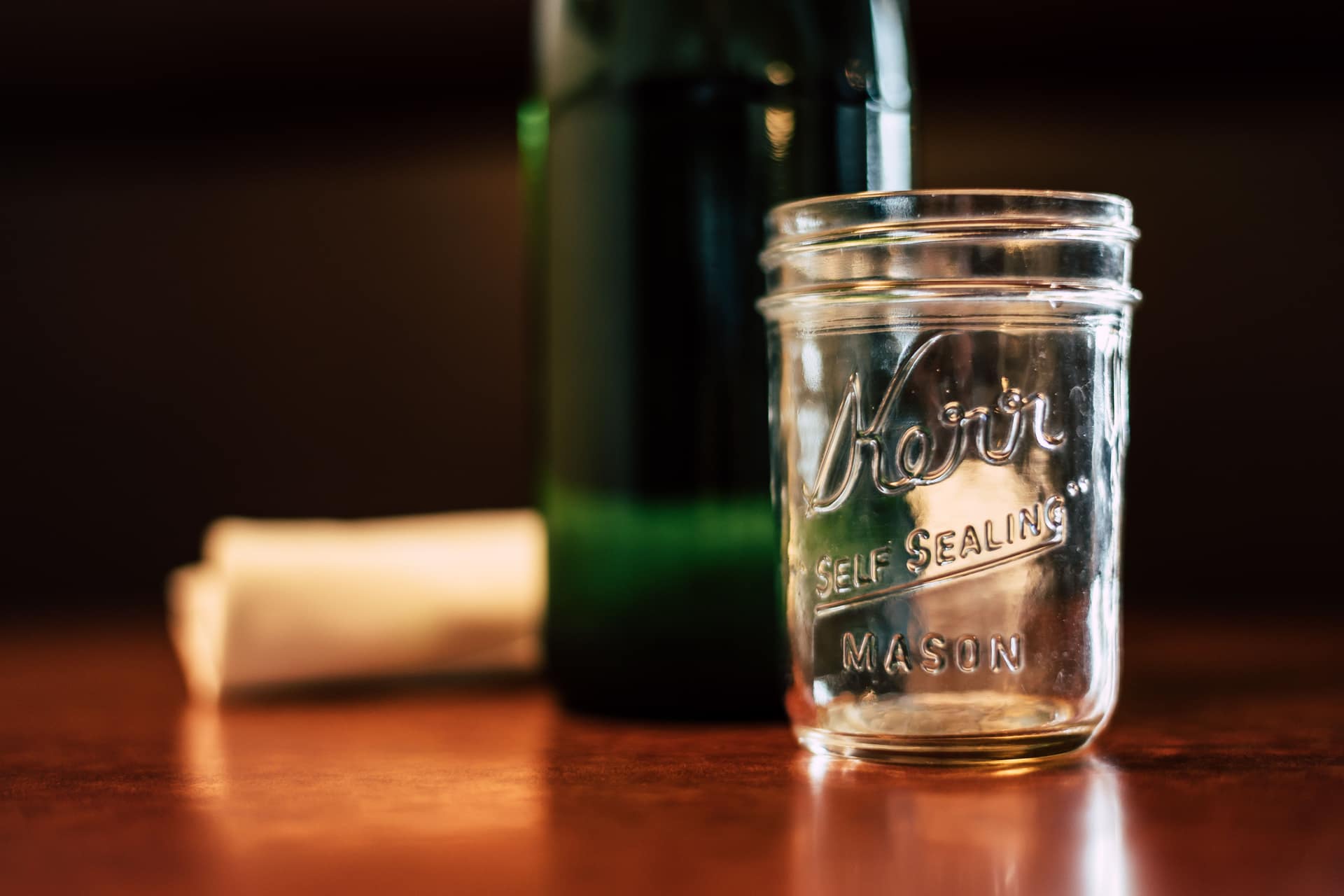
A Mason jar seals with a two-piece lid: a flat metal disc with a sealing compound, held by a screw band during processing. As the jar cools, the contents contract and pull the disc down, and the disc stays down on its own. That is why you can remove the band, why the lid goes concave, and why pressing the center is a meaningful test.
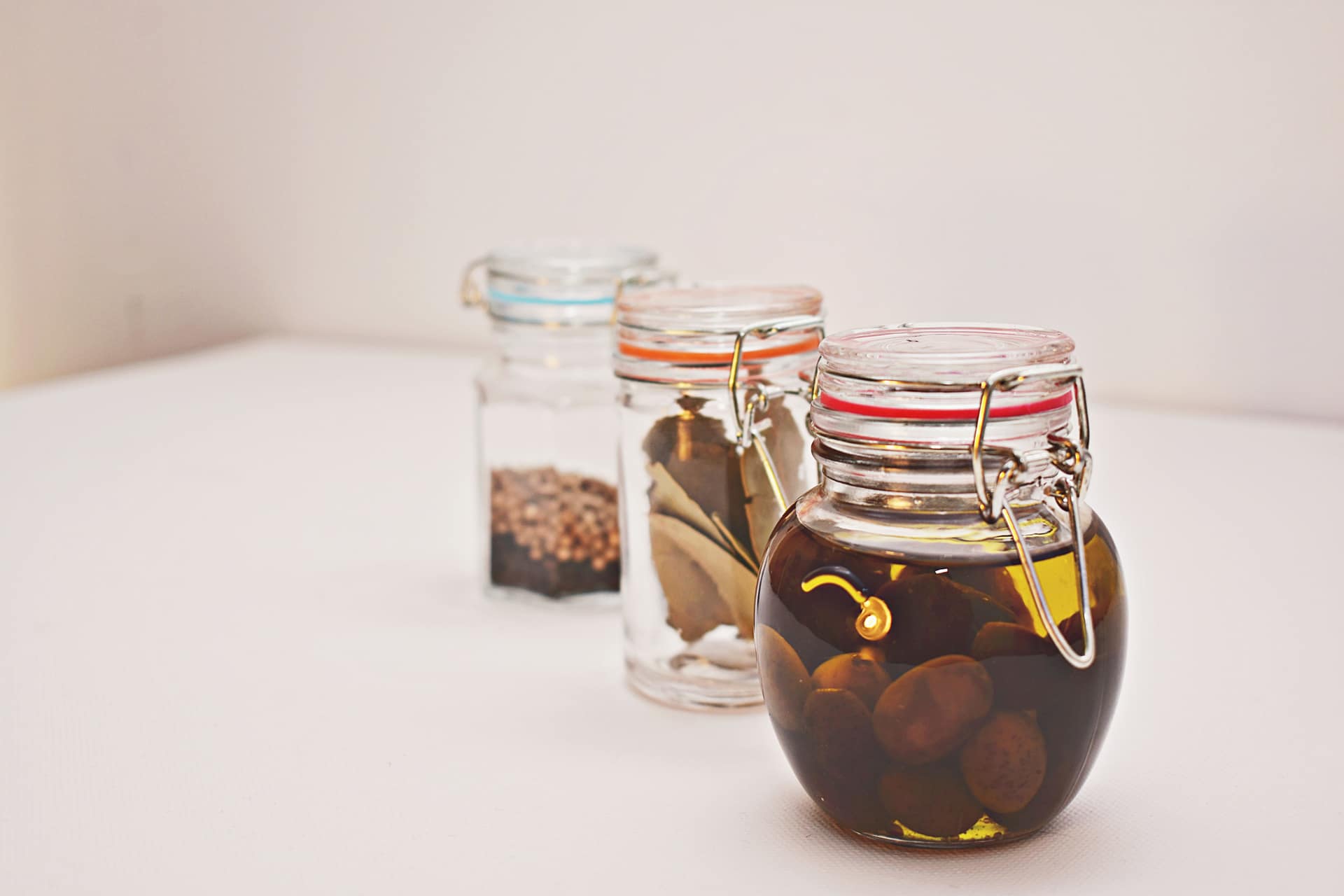
A Weck jar seals with a glass lid, a rubber ring and two steel clamps. Weck's own set for the 743 is six jars, six glass lids, six rings and twelve clamps. The seal check is different too: the rubber tab points down when the seal has formed, rather than a metal disc going concave. Neither is exotic — it is the European standard and has been for a century — but it is not what the USDA-tested times, the headspace figures or the seal-check instructions were validated against.
| Mason-type jar | Weck jar | |
|---|---|---|
| Closure | Two-piece: flat metal lid plus screw band | Glass lid, rubber ring, two steel clamps |
| NCHFP status | Named as the best choice | Not named; no Weck canning claim published |
| Seal check | Lid is concave and does not flex | Rubber tab points down |
| Consumable part | The flat lid, replaced every use | The rubber ring, reusable and sold as a spare |
| Opening (743) | About 2-3/8 in regular, 3 in wide | 3 7/8 inches |
| Capacity (743) | Half-pint to half-gallon range | 28.7 fl. oz. (3/4 L) |
| Made in | United States, for Ball and Kerr | Germany |
| Lid interchangeability | Standard across US brands by mouth size | Weck sizes only; Mason lids do not fit |
Quick picks
Every pick below is screened against the National Center for Home Food Preservation’s published canner rules first. Tap a row for the full write-up.
| # | Product | Best for | Key spec | Price |
|---|---|---|---|---|
| 1 |  Ball Regular Mouth Pint Jars (16 oz)If you buy one case of jars this season, buy this one. Pints are the size most tested recipes are written for, regular-mouth lids are the cheapest and most available lid on any shelf, and the jars are reusable indefinitely. | The default first case | 70 mm mouth, 16 oz | $36.99 · View on Amazon#ad we earn a commission · price as of October 18, 2026 |
| 2 |  Ball Wide Mouth Quart Jars (32 oz)The jar to buy when you are packing peach halves, pickle spears or anything you have to reach into. The wider 86 mm mouth is easier to fill and far easier to clean, and quarts are the standard size for tomatoes. | Whole fruit and packing by hand | 86 mm mouth, 32 oz | |
| 3 |  Weck 743 Mold Jar (3/4 L)Beautiful, genuinely well made, and not what the USDA processes were written for. Weck's own product page does not make a canning claim, and NCHFP names threaded Mason-type jars with two-piece self-sealing lids as the best choice. Buy these because you like them, not to replace your Mason jars. | Fridge, gifts and dry storage | No published canning claim | $21.99 · View on Amazon#ad we earn a commission · price as of October 18, 2026 |
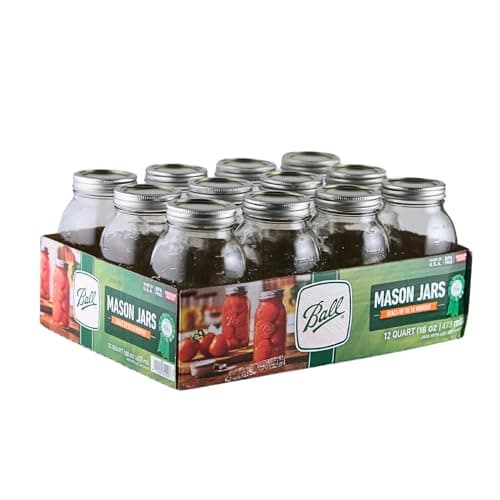
Ball Regular Mouth Pint Jars (16 oz)
If you buy one case of jars this season, buy this one. Pints are the size most tested recipes are written for, regular-mouth lids are the cheapest and most available lid on any shelf, and the jars are reusable indefinitely.
Published specs
- Volume
- 16 oz / 2 cups
- Mouth
- Regular, about 70 mm lid diameter
- Inner mouth diameter
- About 60 mm
- Jar dimensions
- About 5" tall x 2 3/4" wide
- Reuse
- Jars and rings reusable; flat lids are single-use
What works
- Pints fit both a water bath canner and a pressure canner comfortably, so the case is not stranded when you move up to beans
- Regular-mouth lids are the most stocked size in the country, which matters in September when shelves empty out
- The jars outlive everything else in this list. The consumable is the flat lid, not the glass
What to know first
- The narrower 60 mm opening is fiddly for whole peaches or large pickle spears — that is what wide mouth is for
- Regular and wide mouth lids are not interchangeable, so mixing both means stocking two lid sizes
- Glass. Handle the case like glass
Specs from Ball, Mason Jars & Lids, Regular Mouth. We have not handled this product — see how we pick.
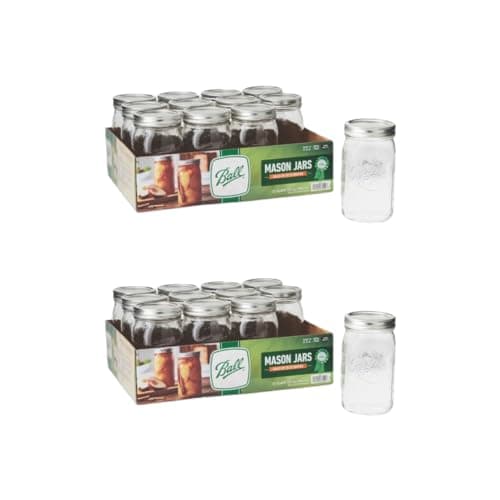
Ball Wide Mouth Quart Jars (32 oz)
The jar to buy when you are packing peach halves, pickle spears or anything you have to reach into. The wider 86 mm mouth is easier to fill and far easier to clean, and quarts are the standard size for tomatoes.
Published specs
- Volume
- 32 oz / 4 cups
- Mouth
- Wide, about 86 mm lid diameter
- Inner mouth diameter
- About 76 mm
- Jar dimensions
- About 6 1/2" tall x 3 1/4" wide
What works
- You can get a hand and a jar funnel into it, which turns packing peaches from a chore into a task
- Quart is the size the tomato and peach processing times in tested recipes are written around
- Much easier to wash by hand than a regular mouth quart
What to know first
- Wide mouth lids cost more than regular mouth and disappear from shelves first in peak season
- Seven quarts is a full canner load, so a quart-jar day is a longer day per jar of finished food
- A quart of anything low-acid still needs a pressure canner, and quarts take the longest processing times
Specs from Ball, Mason Jars & Lids, Wide Mouth. We have not handled this product — see how we pick.
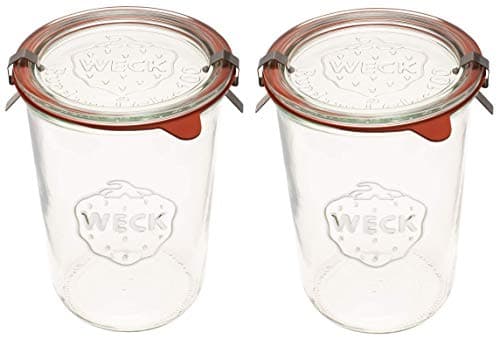
Weck 743 Mold Jar (3/4 L)
Beautiful, genuinely well made, and not what the USDA processes were written for. Weck's own product page does not make a canning claim, and NCHFP names threaded Mason-type jars with two-piece self-sealing lids as the best choice. Buy these because you like them, not to replace your Mason jars.
Published specs
- Capacity
- 28.7 fl. oz. (3/4 L)
- Dimensions
- Height 5 3/4", opening 3 7/8"
- Set contents
- 6 jars, 6 glass lids, 6 rings and 12 clamps
- Lid size
- Large (glass)
- Closure
- Glass lid, rubber ring and two steel clamps
- Made in
- Germany
- Dishwasher / microwave
- Weck states both are safe
- Canning claim
- Not published by Weck
What works
- Genuinely excellent glassware. The straight-sided mold shape empties cleanly and the glass lid does not corrode, dent or need replacing annually the way a flat metal lid does
- The rubber ring and clamps are sold as spare parts, so the system is repairable rather than consumable
- Superb for refrigerator pickles, dry goods, leftovers and gifting — all the jobs where no tested process is involved and no seal has to survive a year on a shelf
What to know first
- Weck publishes no canning claim for this jar, so there is no manufacturer statement to rely on and we are not going to invent one
- NCHFP names regular and wide-mouth threaded Mason-type jars with self-sealing lids as the best choice. The tested processes and the seal-check method both assume that closure
- The 3 7/8" opening is wider than the 3-inch wide-mouth Mason standard, so Mason lids, bands and your existing lid rack do not fit it
Specs from Weck, 743 Mold Jar (3/4 L), NCHFP, Recommended Jars and Lids. We have not handled this product — see how we pick.
What Weck jars are genuinely excellent for
This is not a consolation list. Most of what people actually store in jars does not involve a tested process at all, and Weck is better than a Mason jar at nearly all of it.
- Refrigerator pickles and quick pickles — no processing, no shelf-stability claim, eaten within weeks. The glass lid does not corrode over a brine.
- Dry goods — flour, grains, pasta, dried beans. The wide opening takes a scoop and the clamps keep it closed.
- Leftovers and prepped food — dishwasher and microwave safe, per Weck.
- Gifting — honestly, this is a real reason. A Weck jar of something looks like a present in a way a ringed metal lid does not.
- Fermenting and short-term storage — where the seal is not doing preservation work.
The repairability point, which cuts the other way
One thing genuinely favors Weck. The flat metal lid on a Mason jar is single-use by design — its sealing compound compresses once — so every batch consumes lids. Weck's rubber rings are reusable and sold as spares, as are the glass lids and clamps, so the system is repairable rather than consumable.
That is a real advantage, and it is the same argument reusable plastic lids make for Mason jars. The trade is identical in both cases: you swap a consumable for a component you have to inspect and judge yourself. Reusable canning lids works through that trade on the Mason side.
If you already own Weck jars
Use them for the list above and keep Mason jars for the pantry. That is not a compromise so much as playing each to its strength — and it means the jars you already bought get used constantly rather than sitting in a cupboard as a reproach.
If you want the aesthetic on the shelf and the tested process in the jar, the honest route is a Mason jar you like the look of. There are straight-sided and vintage-blue options, and they all take standard lids. Best canning jars has the ones worth buying.
The same reasoning applies to other closures
Weck is the best-made example of a category, and the reasoning on this page is about the category rather than the brand. Bail-wire jars with a glass lid and a wire clamp, one-piece lids, and vintage jars with zinc caps and rubber rings all sit in the same position: they may well be sound, and none of them is the closure the NCHFP names or the tested processes assume.
The NCHFP does address one adjacent case directly, and the answer is instructive. Commercial mayonnaise-type jars may be used with new two-piece lids for canning acid foods, but you should expect more seal failures and jar breakage, and they are not recommended for pressure canning because of excessive jar breakage. Notice what that guidance is doing: it names the food category, names the closure, and names the expected failure rate. That is the level of specificity a closure needs before it belongs in a pantry, and it is exactly what does not exist for glass-lid clamp jars in the US.
One thing we are genuinely unsure about
Weck jars are used for home canning across Europe, at scale, and have been for a century. That is not nothing, and we are not going to pretend the absence of a US study means the jars do not work. What it means is narrower: the processing times, headspace figures and seal checks published by the NCHFP were developed and validated on a different closure, so following a USDA-tested recipe in a Weck jar is not the tested combination even if both halves are individually fine.
If someone eventually funds that research, this page changes. Until then the honest position is that we cannot tell you it is equivalent, and we would rather say so than pick a side we have no basis for.
The decision, in one paragraph
For anything going on a shelf for a year, buy Mason-type jars with two-piece lids, because that is the closure the NCHFP names and the tested times assume. Buy Weck because you like them and will use them for the fridge, the pantry and presents — which is most of what jars do anyway. What we would not do is put up a year's tomatoes in a closure whose manufacturer does not claim it for canning.
Next stepThe Mason jars worth buyingCommon questions
Can you use Weck jars for canning?
Are Weck jars safer or less safe than Mason jars?
How do you tell if a Weck jar has sealed?
Do Mason lids fit Weck jars?
Are Weck jars reusable?
What are Weck jars best for?
Do you earn a commission on these?
Sources
- NCHFP — Recommended Jars and Lids
- Weck — 743 Mold Jar (3/4 L)
- Ball — Mason Jars & Lids, Regular Mouth
- National Center for Home Food Preservation
Product specifications are taken from each manufacturer’s own published page, cited on the product. We have not handled these products — how we pick.