The best food mill for canning
Two different tools share one name. One suits a few quarts of applesauce; the other is what makes a bushel of tomatoes a job instead of an ordeal.
Disclosure: we earn a commission on purchases made through links on this page, at no extra cost to you. It does not change what we recommend — see how we pick and our affiliate disclosure.
For canning tomatoes in volume, a clamp-on tomato strainer beats a food mill: it separates skins and seeds continuously while you crank. For smaller batches of applesauce or sauce, a rotary food mill that sits over a pot is cheaper and stores easily. NCHFP procedures press heated produce through a sieve or food mill.
"Food mill" gets used for two tools that do the same job in very different ways, and buying the wrong one is the usual mistake. Both push cooked produce through a screen and leave the skins and seeds behind. What differs is how much produce they handle before you have to stop, and that difference decides almost everything about which one belongs in your kitchen.
This is not a safety purchase — nothing on this page changes whether a jar is safely processed. It is the tool that decides whether tomato day takes an afternoon or a weekend, and whether you ever do it twice.
Where a food mill fits in tested procedures
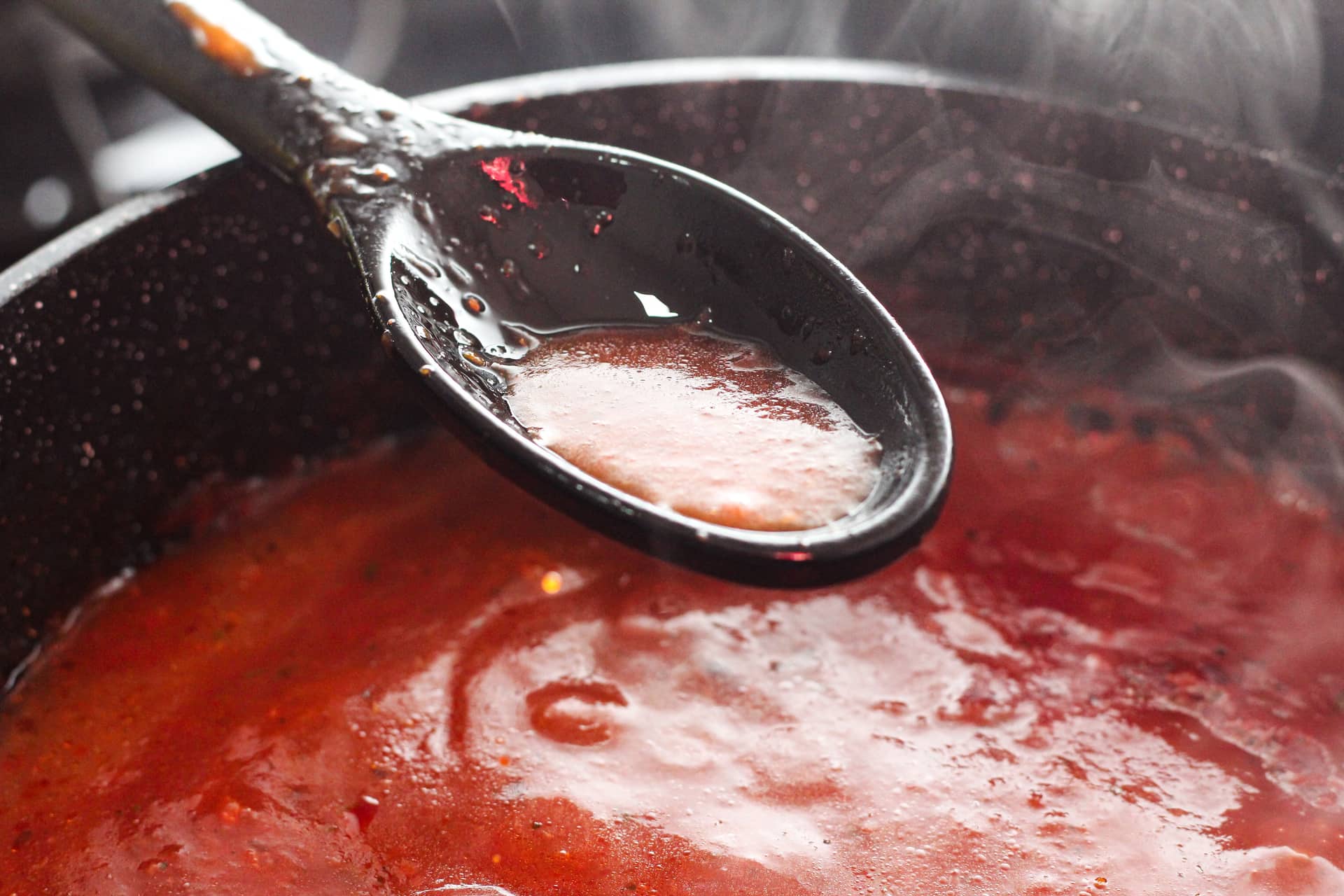
The National Center for Home Food Preservation writes the mill into its procedures directly. For tomato juice, it says to press heated juice through a sieve or food mill to remove skins and seeds. For applesauce, it says to press through a sieve or food mill, or skip the pressing step if you prefer chunk-style sauce.
Two details in those instructions are worth noticing before you buy. The produce is heated first — the mill strains softened, cooked food rather than raw fruit. And in the applesauce procedure the apples are washed, peeled and cored before cooking, so the mill is giving you texture rather than doing your peeling for you. Plenty of cooks skip peeling and let the strainer catch the skins; if you are following the tested recipe, follow its preparation as written.
How we screened these
We have not used any of these. What we checked is each maker's published specifications against how the tools are actually used on a canning day, and whether the parts are available when something wears. The method is on how we pick.
- Continuous or batch? Does it separate skins and seeds while you keep feeding it, or does it hold a bowlful before you stop and clear it?
- Capacity against a real harvest. A few quarts of applesauce and a bushel of tomatoes are different problems.
- Mounting. Does it clamp to a counter edge, sit over a pot, or both — and will your counter actually take it?
- Screens and discs included. Smooth sauce, chunky salsa and seedless jam need different openings.
- Spare parts. A cracked hopper or worn screen should be a small repair, not a new machine.
The two types, side by side
| Rotary food mill | Tomato strainer / sauce maker | |
|---|---|---|
| How it works | Crank a blade over a perforated disc in a bowl | Crank an auger that pushes produce through a screen |
| Skins and seeds | Stay in the bowl until you clear them | Leave through their own outlet as you go |
| Capacity | One bowlful, then clear it | Continuous — keep feeding the hopper |
| Mounting | Sits over a pot or bowl | Clamps to a counter edge (some add suction) |
| Best for | A few quarts of applesauce or sauce | A bushel of tomatoes, big apple days |
| Storage | Folds into a drawer | Bulky; needs a cupboard |
| Cost | The cheaper of the two | Generally dearer |
Why continuous separation matters so much
On a small batch the difference between the two types barely registers. On a large one it is the entire story. A rotary mill holds one bowlful; when the disc clogs with skins and seeds, you stop, scrape it clean, and start again. With a bushel of tomatoes that cycle repeats dozens of times, and each stop is sticky, hot and slow.
A tomato strainer never stops for that reason. Its auger pushes the pulp through the screen while the skins and seeds travel along and drop out the end into their own bowl. You feed the hopper, crank, and move the sauce bowl when it fills. That is the whole reason these clamp-on machines exist, and it is why the buyer with a September harvest in hand usually wants one.
Quick picks
Every pick below is screened against the National Center for Home Food Preservation’s published canner rules first. Tap a row for the full write-up.
| # | Product | Best for | Key spec | Price |
|---|---|---|---|---|
| 1 |  Norpro Sauce Master (1951) Food StrainerThe tool that makes a bushel of tomatoes a job rather than an ordeal. You crank softened tomatoes into the hopper, sauce comes out one side and skins and seeds come out the other, continuously, with no peeling and no emptying a bowl every two minutes. Norpro sells every part separately, so it is a repair rather than a replacement when something wears. | Tomato sauce in real volume | Separates skins and seeds | $70.95 · View on Amazon#ad we earn a commission · price as of October 18, 2026 |
| 2 | OXO Good Grips Stainless Steel Food MillThe rotary food mill most kitchens should own if their canning is measured in batches of a few quarts rather than bushels. It sits over a pot, takes three discs for three textures, and folds away into a drawer — which a clamp-on strainer never quite does. | Smaller batches and applesauce | 2.3 qt, 3 discs | Check price on Amazon#ad we earn a commission · live price pending |
| 3 |  Weston Metal Tomato Strainer (07-1201-W)The same job as the Norpro in stainless steel with a larger hopper and a mount that works on counters a clamp cannot grip. You pay meaningfully more for it, and what you get is fewer refills and a hopper that will not crack. | A bigger hopper, in stainless | 1 gallon hopper | Check price on Amazon#ad we earn a commission · live price pending |
| 4 | Blenders and food processors, for strained sauceSkipA blender purees whatever you put in it, skins and seeds included. It does not separate anything. Tested tomato juice and sauce procedures press heated produce through a sieve or food mill specifically to take the skins and seeds out, so a blender is solving a different problem. | Nothing - use a mill or strainer | Does not separate skins and seeds | Check price on Amazon#ad we earn a commission · live price pending |
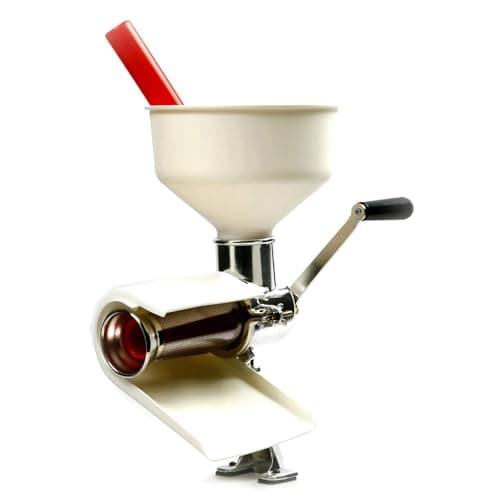
Norpro Sauce Master (1951) Food Strainer
The tool that makes a bushel of tomatoes a job rather than an ordeal. You crank softened tomatoes into the hopper, sauce comes out one side and skins and seeds come out the other, continuously, with no peeling and no emptying a bowl every two minutes. Norpro sells every part separately, so it is a repair rather than a replacement when something wears.
Published specs
- Model
- 1951
- How it works
- Forces food through a chrome plated steel screen, separating juice and pulp in one operation (Norpro)
- Standard screen
- 6" / 15 cm, 1/16" chromed steel mesh
- Included
- Standard fine mesh screen, standard spiral, recipe and instruction booklet
- Mounting
- Body frame with table clamp
- Optional screens
- Berry, pumpkin and salsa screens, sold separately
- Spare parts
- Hopper, screen and body frame sold individually by Norpro
What works
- Continuous separation is the whole point: skins and seeds leave through one outlet and sauce through the other, so you are feeding a machine rather than scraping a bowl — which is what makes big tomato days workable
- Norpro sells the hopper, the screen and the body frame with clamp as individual parts, so a cracked hopper or a worn screen is a small repair
- Optional berry and salsa screens extend it past tomatoes to seedless jams and chunkier sauces from the same base
What to know first
- It clamps to a table or counter edge, and thick, rounded or overhanging countertops do not always take a clamp — check your edge before you buy
- It does not replace the cooking step. Tested procedures press heated, softened produce; raw hard tomatoes jam the spiral and waste fruit
- Norpro sells a pumpkin screen, but pureed pumpkin has no tested home canning process. That screen is for fresh use or the freezer, never for jars
Specs from Norpro, 1951 Sauce Master, NCHFP, Tomato Juice. We have not handled this product — see how we pick.
OXO Good Grips Stainless Steel Food Mill
The rotary food mill most kitchens should own if their canning is measured in batches of a few quarts rather than bushels. It sits over a pot, takes three discs for three textures, and folds away into a drawer — which a clamp-on strainer never quite does.
Published specs
- Capacity
- 2.3 quarts
- Discs
- 3 stainless steel — fine, medium and coarse
- Bowl
- Stainless steel, suited to hot foods
- Fits over
- Bowls and pots up to 11 inches in diameter, on non-slip legs
- Storage
- Legs fold; disc release button for disassembly
- Cleaning
- Dishwasher safe
What works
- Three discs cover smooth applesauce, medium tomato sauce and coarse purees without buying accessories
- Rests directly over a pot or bowl, so there is no counter edge to find and nothing to clamp
- Folds flat and lives in a drawer, which matters for a tool most people use a few weeks a year
What to know first
- Batch-limited: 2.3 quarts at a time, then you clear the disc and refill. Fine for a few quarts of applesauce; slow and tiring for a bushel of tomatoes
- The legs rest on pots up to 11 inches across — most large stockpots and canners are wider, so you mill into a smaller pot or bowl
- Hand-cranking dense, seedy produce takes real effort compared with a strainer's auger, and the difference shows over a long day
Specs from OXO, Good Grips Food Mill, NCHFP, Applesauce. We have not handled this product — see how we pick.
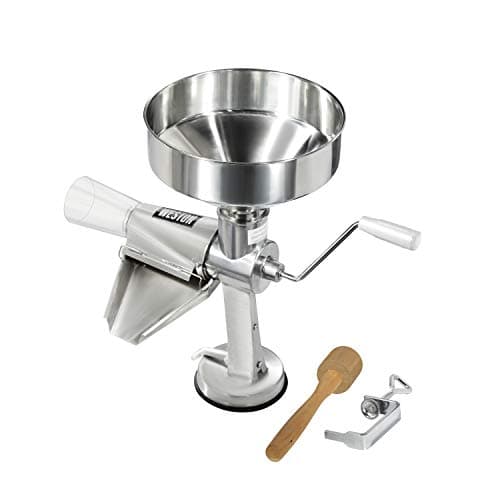
Weston Metal Tomato Strainer (07-1201-W)
The same job as the Norpro in stainless steel with a larger hopper and a mount that works on counters a clamp cannot grip. You pay meaningfully more for it, and what you get is fewer refills and a hopper that will not crack.
Published specs
- Model
- 07-1201-W
- Hopper
- 1 gallon, stainless steel
- Screen included
- 1.5 mm stainless steel multipurpose screen
- Mounting
- Dual mount — suction cup or C-clamp
- Included
- Stomper, splash guard and chute
- Warranty
- 1-year limited
What works
- A one-gallon hopper holds more tomatoes between refills, which adds up across a long session
- Stainless hopper rather than plastic, so no cracking and no staining from a season of tomato sauce
- The dual mount means a counter that will not take a clamp can still hold it, via the suction base
What to know first
- Meaningfully dearer than the Norpro for the same fundamental job
- Ships with one 1.5 mm screen. Other textures mean buying more, where the rotary mills include three discs
- Use the C-clamp wherever your counter allows it. The suction option exists for counters that cannot take a clamp, and hard cranking asks a lot of any base
Specs from Weston, Metal Tomato Strainer 07-1201-W, NCHFP, Tomato Juice. We have not handled this product — see how we pick.
Blenders and food processors, for strained sauce
A blender purees whatever you put in it, skins and seeds included. It does not separate anything. Tested tomato juice and sauce procedures press heated produce through a sieve or food mill specifically to take the skins and seeds out, so a blender is solving a different problem.
Published specs
- What a blender does
- Purees everything, skins and seeds included
- What the tested procedure does
- NCHFP: press heated juice through a sieve or food mill to remove skins and seeds
- The alternative
- A food mill or a tomato strainer
What works
- There is no upside for strained sauce. A blender is the right tool for a recipe written to keep the skins in, which is a different recipe
What to know first
- Skins and seeds end up in the sauce rather than out of it, which changes the result a strained recipe was written around
- Following a tested recipe means following its preparation steps too, including the straining step
- Peeling tomatoes by hand first so a blender can do the rest is exactly the slow work a strainer exists to remove
Specs from NCHFP, Tomato Juice. We have not handled this product — see how we pick.
The counter edge, which decides the strainer
Clamp-on strainers need a counter or table edge the clamp can actually grip, and this is the most common reason one does not work in a particular kitchen. Thick stone countertops, rounded bullnose edges and counters with a deep overhang or a drawer directly beneath can all defeat a clamp.
Look at your edge before you buy. A sturdy table often works better than the kitchen counter, and it keeps the operation away from the stove where the canner is running. If no edge will take a clamp, the Weston's suction mount is the reason to consider it — though a clamp, where your surface allows one, is the steadier way to take hard cranking.
Screens and textures
The screen or disc decides what comes out. Fine openings give smooth sauce and seedless jam; coarser ones leave body for salsa and chunky sauce. A rotary mill usually includes several discs; a strainer typically ships with one standard screen and sells others separately. Neither separates juice from pulp for jelly; that is what a steam juicer does.
- Smooth tomato sauce and juice — a fine screen or the fine disc.
- Applesauce — fine for smooth, medium if you like some texture, or skip pressing entirely for chunk-style.
- Seedless berry jam — a berry screen, sold separately for strainers.
- Salsa — a coarse or salsa screen. Remember that tested salsa recipes are ratio-dependent, so changing the texture is fine but changing the ingredient proportions is not.
Straining does not replace the acid
Worth saying plainly on a page about tomato gear, because smooth, strained sauce looks finished. Every current NCHFP tomato process requires added acid in the jar — 1/2 teaspoon citric acid or 2 tablespoons bottled lemon juice per quart — and the instruction is not to leave it out. A food mill changes texture; it does nothing to acidity. The doses and alternatives are in canning additives and firming agents.
Cleaning and storage
Clean either type while the produce is still wet. Tomato and apple pulp dried into a fine screen is genuinely hard to shift, and a brush through the screen immediately after use takes a minute rather than a soak. Take strainers fully apart so the auger housing does not trap pulp.
Storage is the quiet argument for a rotary mill. It folds and fits in a drawer. A strainer with its hopper, body and clamp is a cupboard occupant for the eleven months you are not using it, which matters in a small kitchen more than the price difference does.
The decision, in one paragraph
If tomatoes come to you by the bushel, buy a clamp-on strainer — the Norpro Sauce Master if your counter takes a clamp and you want the proven, repairable one, or the Weston if you want stainless and a bigger hopper or need its suction mount. If your canning is a few quarts of applesauce or sauce at a time, buy a rotary food mill and enjoy the drawer space. Skip the blender for anything meant to be strained, and remember that neither tool replaces the acid a tomato jar requires.
Next stepWhich foods are worth canningCommon questions
Do I need a food mill for canning tomatoes?
What is the difference between a food mill and a tomato strainer?
Do I have to peel tomatoes before using a strainer?
Can I use a blender instead of a food mill?
Does straining tomatoes make them safe to can without acid?
Can I can pumpkin puree made with a strainer?
Can I use a food mill for seedless jam?
Is a food mill worth it for small batches?
Do you earn a commission on these?
Sources
- NCHFP — Tomato Juice
- NCHFP — Applesauce
- NCHFP — Canning Tomatoes and Tomato Products
- Norpro — 1951 Sauce Master
- OXO — Good Grips Food Mill
- Weston — Metal Tomato Strainer 07-1201-W
Product specifications are taken from each manufacturer’s own published page, cited on the product. We have not handled these products — how we pick.