The best foods for canning
Plenty of foods are safe to can and still not worth the jar. This is the honest ranking, and what each tier asks you to buy.
Disclosure: we earn a commission on purchases made through links on this page, at no extra cost to you. It does not change what we recommend — see how we pick and our affiliate disclosure.
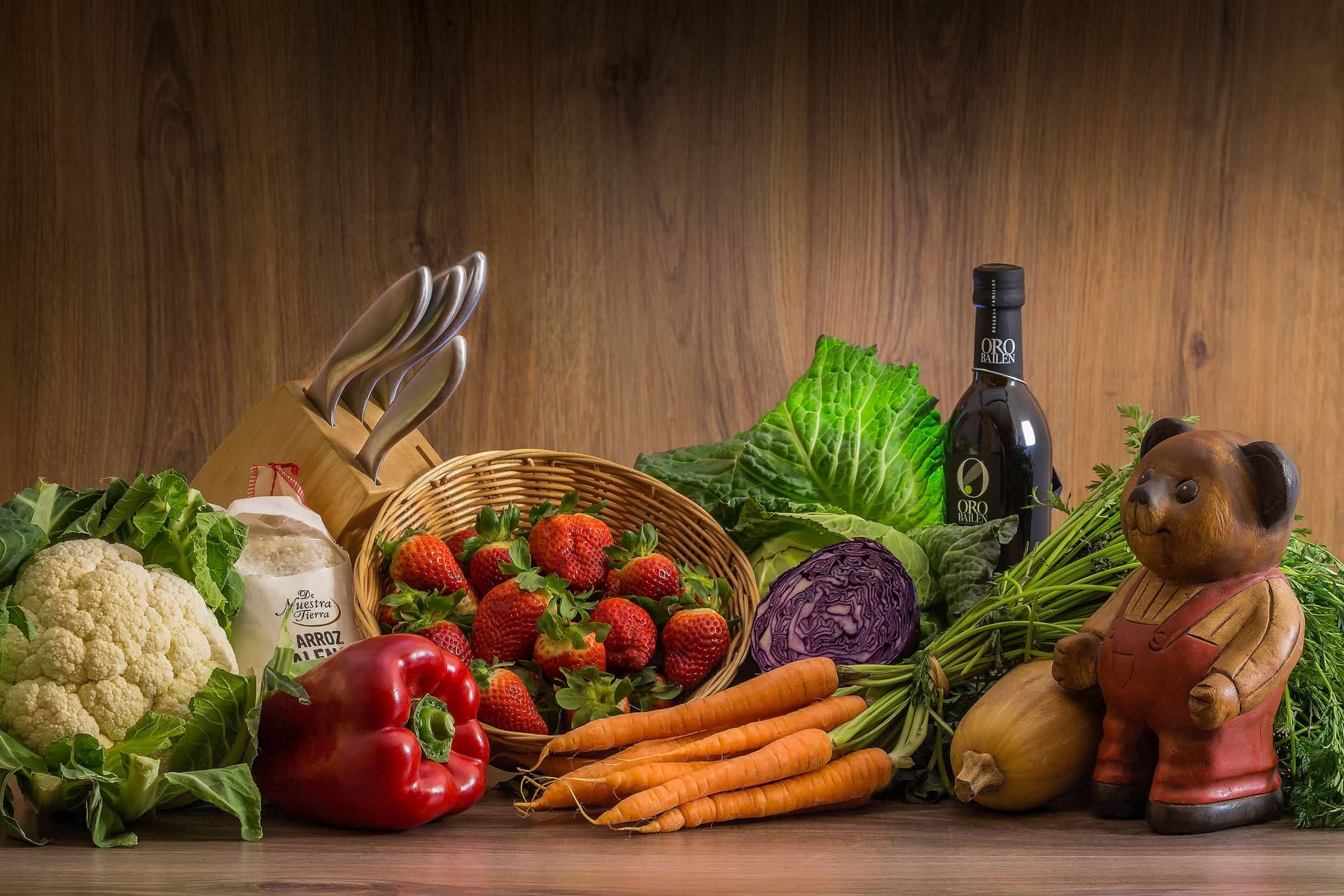
The best foods to can first are high-acid ones a water bath handles: pickles, jam and jelly, fruit in syrup, applesauce and properly acidified tomatoes. Low-acid foods — green beans, corn, meat and stock — are worth canning once you own a pressure canner. Some safe foods are still better frozen.
Most canning advice answers a different question than the one people ask. "What can I can?" gets you a safety list — which foods have a tested process and which method that process needs. That list matters and this site covers it in what can you water bath can and what foods need pressure canning.
This page answers the other question: of the foods that are safe to can, which are actually worth the jar? Those are not the same list. A jar, a lid, an afternoon and a shelf slot all cost something, and some perfectly safe canned foods come out worse than the frozen version and cost more effort to produce.
How we ranked these
Safety is the entry requirement rather than the ranking. Everything below has a tested process — nothing here is a judgement call about whether a food is safe. What we are ranking is whether canning is the right thing to do with it. The full method is on how we pick.
- Does canning improve it, or just preserve it? Pickles and jam are transformed by the process. Green beans are preserved by it. Both are valid; one is more exciting to open in February.
- How does it compare to the frozen version? Freezing is easier and often better. A food only earns a jar if canning beats the freezer on taste, texture, shelf space or not needing electricity.
- Effort per jar. Some foods are a long afternoon for six jars. That is fine for something you love and a poor trade for something you tolerate.
- Will you actually eat it? The most common canning regret is a shelf of something nobody reaches for.
- What does it force you to own? High-acid foods need a water bath canner. Low-acid foods need a pressure canner. That is the single biggest cost difference between the tiers.
Tier 1: start here, water bath only
These are high-acid foods, which means a boiling water bath is the correct method and the cheapest equipment gets you started. They are also, not coincidentally, the foods canning is genuinely best at.
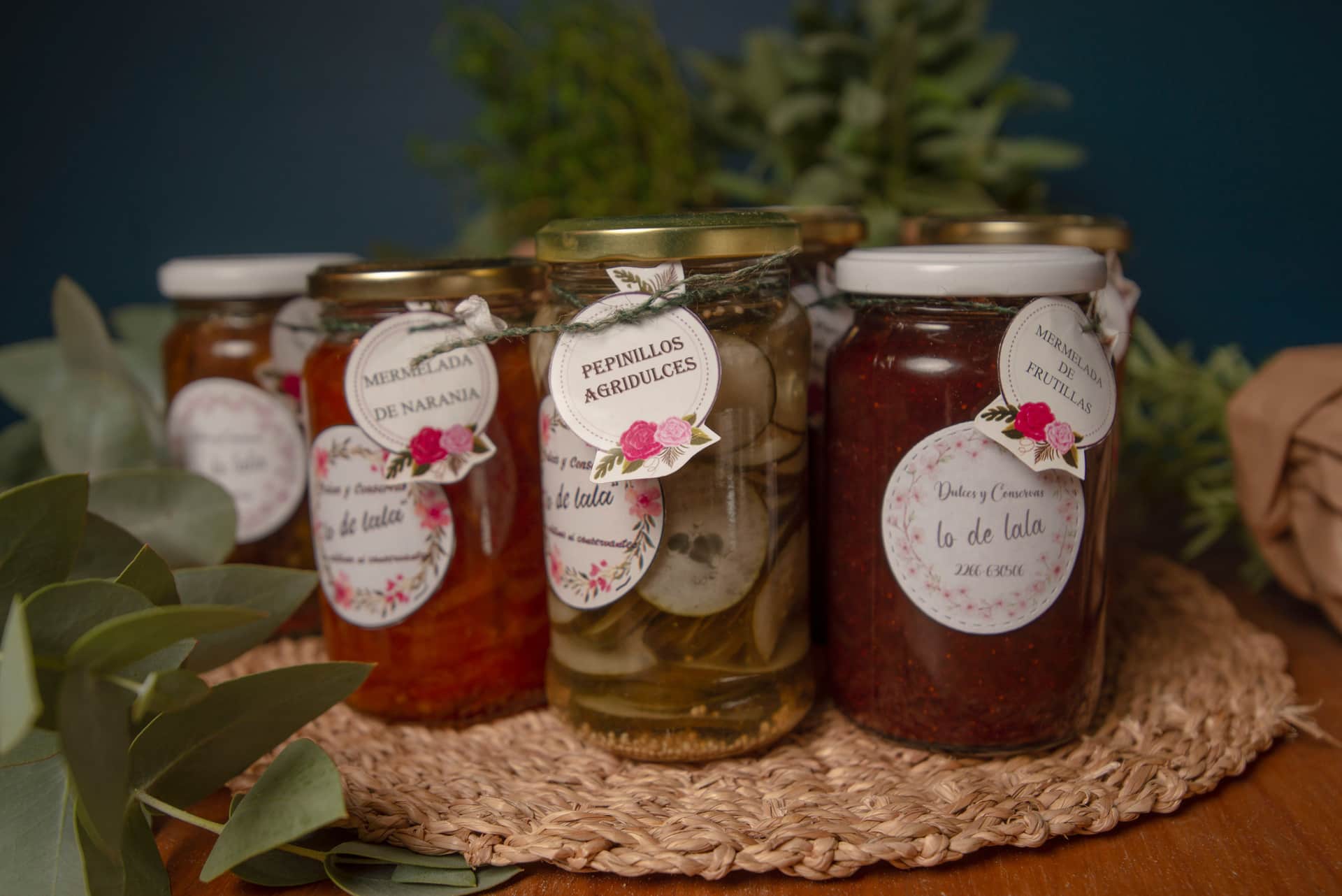
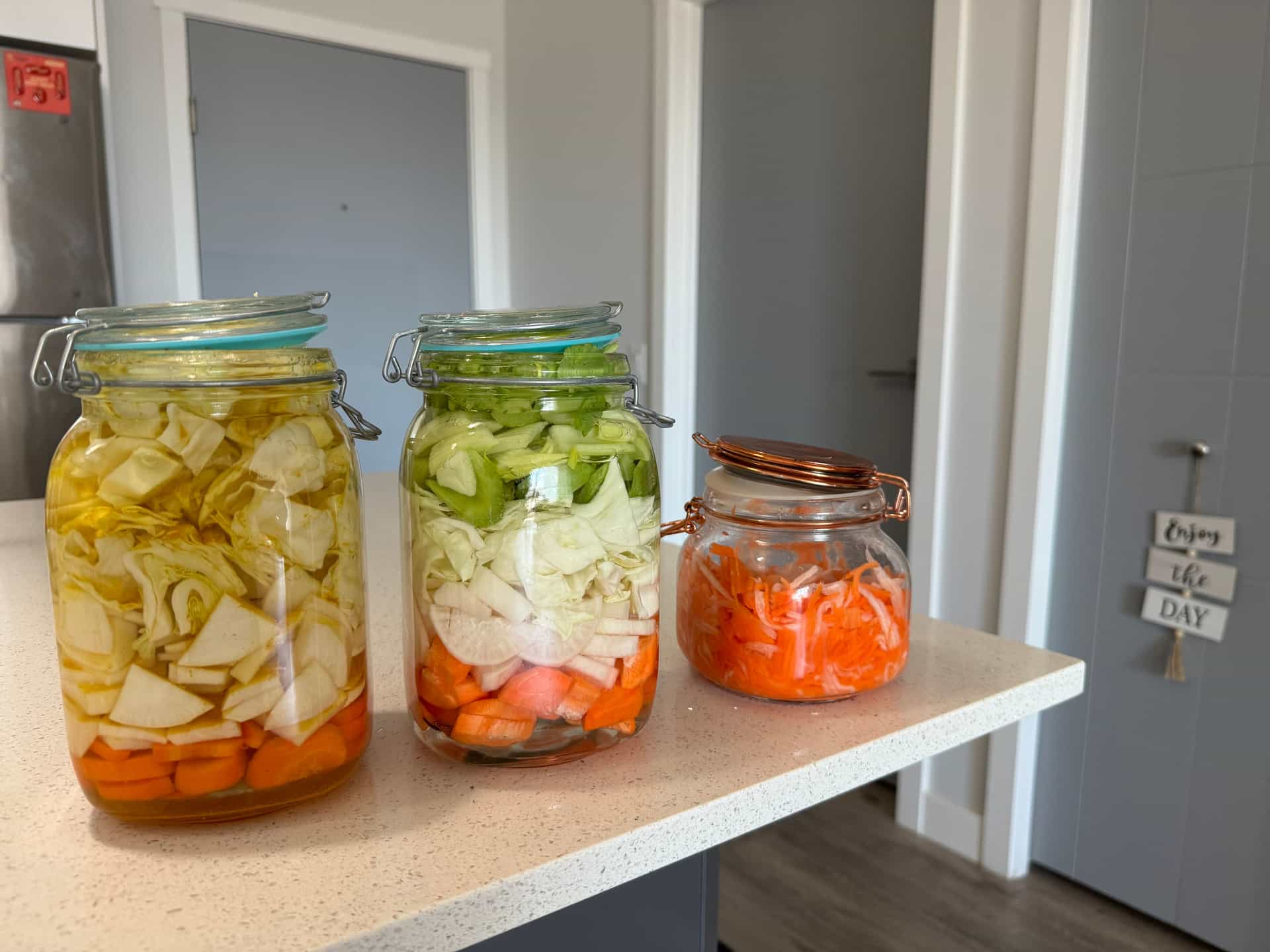
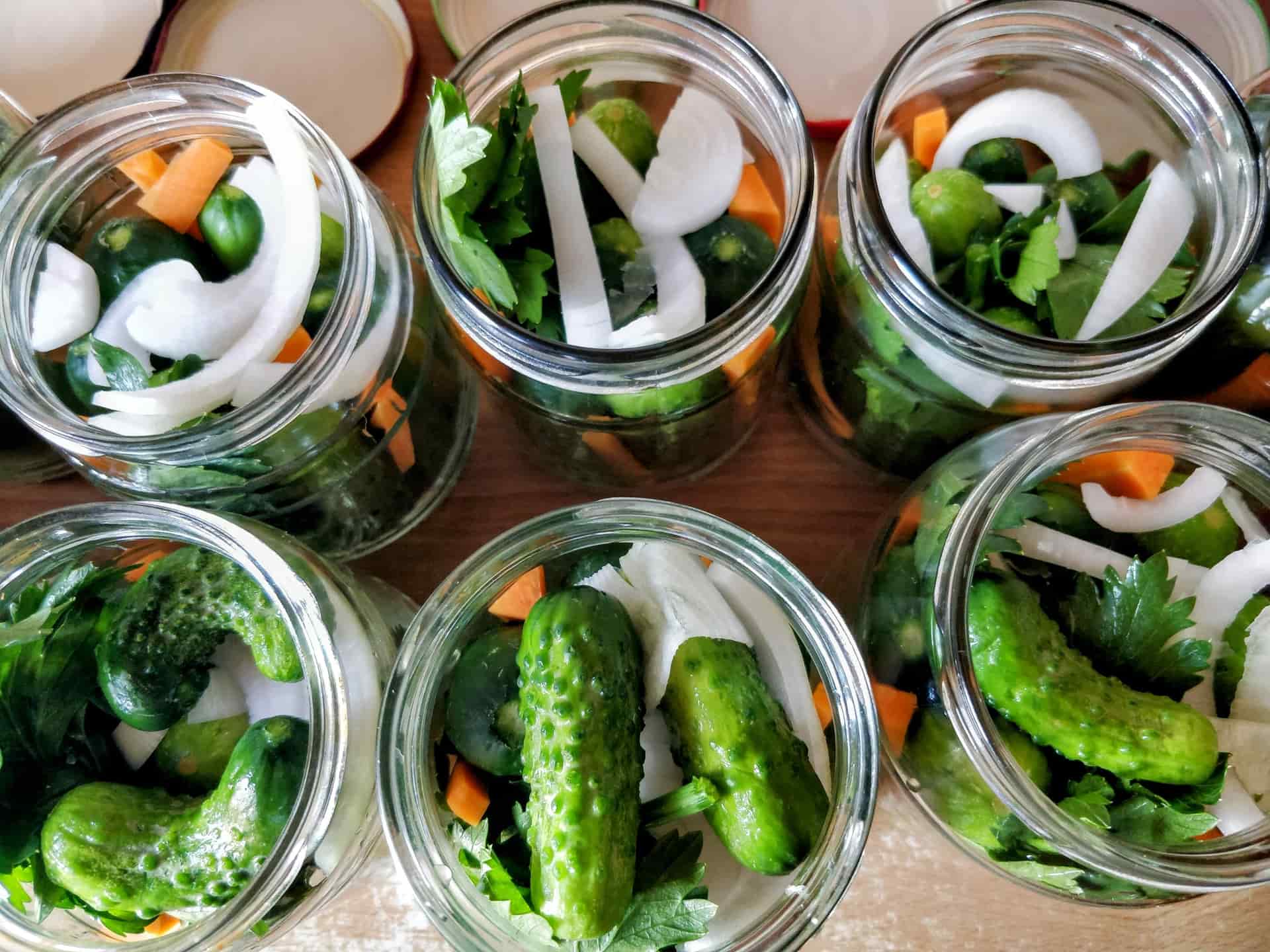
- Pickles of every kind. Cucumbers, green beans, carrots, beets, okra, peppers. The vinegar brine does the preserving and the texture holds up. This is the category most people can most of, and for good reason.
- Jam, jelly and marmalade. Canning is the standard way to keep these and there is no frozen version worth comparing. Small jars suit them — see best 4 oz canning jars.
- Fruit in syrup or juice. Peaches, pears, plums, cherries. Frozen fruit wins for smoothies; canned fruit wins for eating out of the jar in winter and for not needing freezer space.
- Applesauce and fruit butters. Long cooking already changes the texture, so canning costs the food nothing it had not already given up — and a food mill makes the pressing step quick.
- Tested salsas, chutneys and relishes. With the strong caveat below about following the recipe exactly.
- Tomatoes, with added acid. The most-canned food in the country and the one with a rule attached.
Tier 2: worth it once you own a pressure canner
Low-acid foods, which means a pressure canner and no alternative — a boiling water bath reaches 212F and cannot exceed it, and these foods need the roughly 240F only pressure reaches. The equipment cost is the real barrier, so the question is which low-acid foods justify it.
- Stock and broth. The strongest argument for a pressure canner. Shelf-stable stock is genuinely useful, it frees a lot of freezer space, and homemade is markedly better than the boxed version.
- Green beans. The classic, and the food most people buy a pressure canner for. Texture is softer than frozen; the payoff is a shelf that survives a power cut.
- Meat and poultry. Expensive to buy in tins and excellent home-canned. Covered in detail in best pressure canner for meat.
- Dried beans. Canning your own is far cheaper than buying tins and the result is better. A quietly excellent use of a canner.
- Soups and stews, within the tested rules — no thickeners, no pasta or rice, and jars no more than half solids.
Tier 3: safe, but usually better another way
This is the tier nobody writes about, and it is the one that saves you the most time. All of these have tested processes. None of them is a good first project, and several are things you will can once and not repeat.
| Food | Safe to can? | Usually better |
|---|---|---|
| Corn | Yes, pressure canned | Frozen — keeps its bite and sweetness |
| Peas | Yes, pressure canned | Frozen — canned peas go soft and gray |
| Potatoes | Yes, pressure canned | A cool dark cupboard — they store for months as they are |
| Broccoli and cauliflower | No tested process | Frozen — there is no canning route |
| Zucchini | No tested process for plain | Frozen or pickled — pickled zucchini is tested |
| Winter squash | Cubed only, pressure canned | Cubed, or frozen — pureed has no safe process |
| Berries | Yes, water bath | Frozen — canned berries lose structure entirely |
The pattern is worth naming: canning suits foods that are already soft, already acidic, or already transformed. It works against foods whose appeal is crispness or fresh texture. Corn, peas and berries all lose the thing you liked about them; pickles and jam do not, because their appeal was never crispness in the raw sense.
Quick picks
Every pick below is screened against the National Center for Home Food Preservation’s published canner rules first. Tap a row for the full write-up.
| # | Product | Best for | Key spec | Price |
|---|---|---|---|---|
| 1 |  Granite Ware 21.5-Quart Water Bath Canner with RackThe canner almost everyone starts with, and there is very little wrong with that. Porcelain enamel on steel, a rack that holds a full seven-quart load, light enough to lift full, and cheap enough that it is not the thing standing between you and a first batch. | A first water bath canner | 7 quarts / 9 pints | $79.99 · View on Amazon#ad we earn a commission · price as of October 18, 2026 |
| 2 |  Presto 23-Quart Pressure Canner and Cooker (01781)The default first pressure canner, and the one most beginners should buy: it takes a full seven-quart load, it doubles as a boiling-water canner for pints and half-pints, and it costs a fraction of a cast-aluminum canner. The dial gauge is the catch, and it is a real one. | A first pressure canner | 7 quarts / 20 pints | |
| 3 | 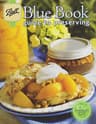 Ball Blue Book Guide to PreservingThe cheap, thin one that has been in kitchens for a century, and the one to buy first. Every recipe in it is tested, which is the only property that matters — a canning recipe is a validated process, not a suggestion. | The first book to own | Tested recipes, cheap | $29.99 · View on Amazon#ad we earn a commission · price as of October 18, 2026 |
| 4 | Ball Citric AcidNot optional, and that is the important thing about it. Every current NCHFP tomato process requires added acid, and citric acid is the version that does the job without pushing the flavor anywhere. A jar of it lasts several seasons and removes the annual question entirely. | Acidifying tomatoes | 1/2 tsp per quart | Check price on Amazon#ad we earn a commission · live price pending |
| 5 | Reused commercial food jarsSkipSkip pasta sauce, pickle and mayonnaise jars. They are manufactured to be filled once in a factory, not heated and cooled repeatedly, and their rims are not made to the standard a two-piece canning lid seals against. | Nothing - skip these | Not made for canning | Check price on Amazon#ad we earn a commission · live price pending |
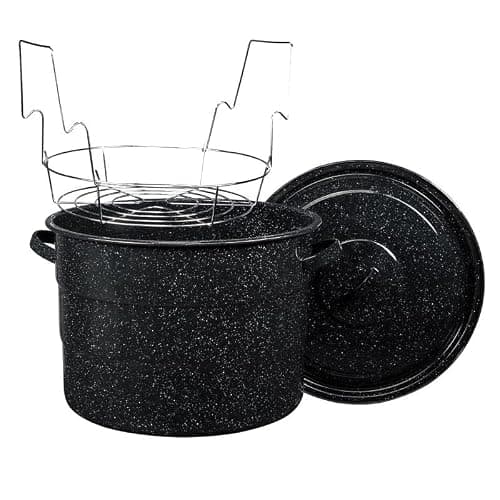
Granite Ware 21.5-Quart Water Bath Canner with Rack
The canner almost everyone starts with, and there is very little wrong with that. Porcelain enamel on steel, a rack that holds a full seven-quart load, light enough to lift full, and cheap enough that it is not the thing standing between you and a first batch.
Published specs
- Capacity
- 21.5 quarts
- Rack capacity
- 7 quart jars, 9 pints, or 12 half-pints
- Material
- Porcelain enamel on steel
- Dimensions
- Height 9.75", depth 16.25", width 14.25"
- Weight
- About 4 lb empty
- Included
- Pot, lid and jar rack
- Base diameter
- Not published by Granite Ware
What works
- Light. Four pounds empty means you can move it full of hot water without a second person
- The enamel surface is non-reactive, so tomatoes and vinegar brines do not pick up a metallic edge
- Deep enough to cover quart jars with the 1 inch of briskly boiling water the NCHFP requires, which a stockpot often is not
What to know first
- Enamel chips if you knock it, and a chipped rim will rust. It is cookware to be careful with, not to stack things on
- The base diameter is not published, so on an electric range you have to measure it against your element yourself
- Thin steel heats fast and loses heat fast — expect to ride the burner a little to hold a steady boil
Specs from NCHFP, Recommended Canners. We have not handled this product — see how we pick.
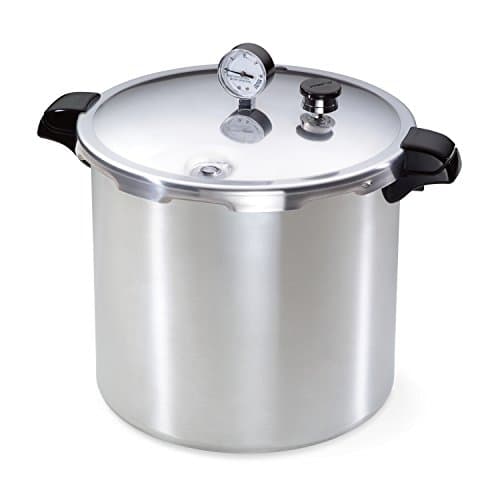
Presto 23-Quart Pressure Canner and Cooker (01781)
The default first pressure canner, and the one most beginners should buy: it takes a full seven-quart load, it doubles as a boiling-water canner for pints and half-pints, and it costs a fraction of a cast-aluminum canner. The dial gauge is the catch, and it is a real one.
Published specs
- Liquid capacity
- 23 quarts (21.8 liters)
- Jar capacity
- 26 half-pints, 20 pints, 7 quarts
- Material
- Warp-resistant aluminum
- Gauge
- Dial gauge
- Ranges
- Regular and smooth-top
- Burner limit
- 12,000 BTUs or less
- Also
- Doubles as a boiling-water canner
- Warranty
- 12-year limited
- Base diameter
- Not published by Presto
What works
- Seven quart jars is the standard batch size every tested NCHFP recipe is written around, so you are never processing a half load
- Doubles as a boiling-water canner for pints and half-pints, which means one pot covers the jam-and-pickles year as well as the beans
- Presto sells a replacement dial gauge and sealing ring separately, so a decade-old canner is a repair rather than a replacement
What to know first
- A dial gauge should be checked for accuracy every year — most extension offices do it free, and most owners never go. A weighted gauge needs no calibration at all
- Presto does not publish a base diameter, so you cannot check it against the NCHFP element rule without measuring the box yourself. See will it fit your stove
- Rated for burners of 12,000 BTUs or less, which rules out most outdoor propane burners and some high-output gas ranges
Specs from Presto, 23-Quart Pressure Canner and Cooker (01781). We have not handled this product — see how we pick.
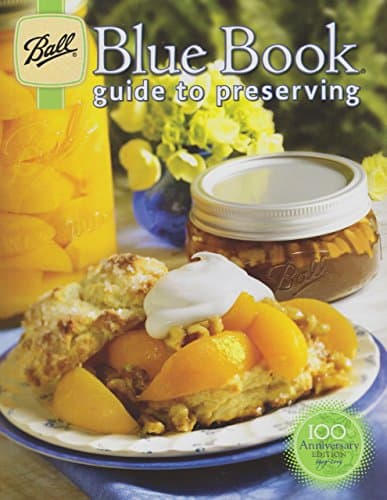
Ball Blue Book Guide to Preserving
The cheap, thin one that has been in kitchens for a century, and the one to buy first. Every recipe in it is tested, which is the only property that matters — a canning recipe is a validated process, not a suggestion.
Published specs
- Publisher
- Ball / Newell Brands
- Content
- Tested water bath and pressure canning recipes
- Why it matters
- A tested source you can hold while your hands are wet
What works
- Tested recipes, which is the entire point of buying a canning book rather than reading a blog
- Cheap enough to buy alongside your first case of jars without thinking about it
- Compact and spill-tolerant in a way a laptop on a counter is not
What to know first
- Recipe range is narrower than the bigger books — this is a foundation, not a library
- Editions change; a very old copy may predate current guidance and should be cross-checked against the NCHFP
- Not a technique manual. It tells you what to do, less about why
Specs from NCHFP, Recommended Canners. We have not handled this product — see how we pick.
Ball Citric Acid
Not optional, and that is the important thing about it. Every current NCHFP tomato process requires added acid, and citric acid is the version that does the job without pushing the flavor anywhere. A jar of it lasts several seasons and removes the annual question entirely.
Published specs
- NCHFP dose for tomatoes
- 1/4 teaspoon per pint, 1/2 teaspoon per quart
- Why
- NCHFP: to ensure safe acidity levels in whole, crushed, or juiced tomatoes, add the specified amount of acid
- The rule
- NCHFP: do not leave acid out
- Flavor
- Neutral compared with the vinegar alternative
- Alternatives
- Bottled lemon juice, or 5% vinegar
What works
- Smaller dose by volume than bottled lemon juice, so it changes the texture and taste of a tomato pack less than the other two acid options
- Shelf-stable powder. It does not go off between harvests the way an opened bottle of juice effectively does
- It is the cheapest insurance on this whole site — the acid is what makes a tomato pack a water bath food at all
What to know first
- It is measured small and the dose matters, so this is a level-teaspoon job rather than an eyeballed one
- It does not firm, preserve or season. It is doing one chemical job
- Brand labels sometimes state a different dose than the NCHFP figure. Follow the amount in the tested recipe you are using, and if they disagree, the tested recipe wins
Specs from NCHFP, Canning Tomatoes and Tomato Products. We have not handled this product — see how we pick.
Reused commercial food jars
Skip pasta sauce, pickle and mayonnaise jars. They are manufactured to be filled once in a factory, not heated and cooled repeatedly, and their rims are not made to the standard a two-piece canning lid seals against.
Published specs
- Thread standard
- Not guaranteed to match a canning lid
- Glass
- Not specified for repeated thermal cycling
- The alternative
- Jars sold specifically for home canning
What works
- They are free, which is the entire argument for them and it is not enough
What to know first
- A lid that appears to fit may not seal reliably against a rim that was not made for it
- Repeated heating and cooling is exactly the stress these jars were not designed for
- A jar that breaks in a canner is a burn hazard as well as a lost batch
Specs from NCHFP, Recommended Canners. We have not handled this product — see how we pick.
What has no safe process at all
Separate from the tiers, because this is not a preference. There are foods with no tested home canning process, and the answer for all of them is the freezer rather than a different canner or a longer time.
- Dairy of any kind, including milk, cream and butter.
- Eggs, pickled or otherwise, for shelf storage.
- Pureed pumpkin or winter squash — cubed and pressure canned is the tested route.
- Thickened or floured sauces and gravies, because thickeners change how heat moves through the jar.
- Pasta, rice and grains in a canned dish.
- Pesto, oil-heavy mixtures and nut butters.
If you find a recipe online for any of these, you have found a recipe that has not been tested — which is the whole reason how to find safe canning recipes exists as its own page.
What each tier actually asks you to buy
This is the practical consequence of the ranking, and it is why the tiers are ordered the way they are.
Tier 1 needs a water bath canner, jars, lids and a tested recipe source. That is the cheapest honest way into canning, and it covers everything most people actually want to make. A deep stockpot plus a rack qualifies if you already own one — canning without a canner works through what does.
Tier 2 needs a pressure canner, which is the real step up in cost. The useful shortcut is that a 23-quart stovetop pressure canner doubles as a boiling water canner, so buying it first covers both tiers from one pot rather than two. The full spend picture is in what canning costs to start.
Tomatoes need one more thing than people expect: added acid, every time, in every current process. A jar of citric acid is the cheapest insurance on this entire page and it lasts several seasons — the doses and alternatives are in canning additives and firming agents.
If you are choosing one thing to can first
Pickles. They are high-acid so a water bath does the job, the brine does most of the preserving work, the result is genuinely better than the supermarket version, and the failure modes are soft pickles rather than anything dangerous. You need the cheapest equipment tier and you get a jar you will actually open.
Jam is the close second and is even simpler, with the caveat that it is mostly sugar and you should want jam. Tomatoes are the most useful thing to have on a shelf and the one where following the acid rule matters most.
The decision, in one paragraph
Start with high-acid foods — pickles, jam, fruit and acidified tomatoes — because they need the cheapest equipment and canning genuinely improves them. Add a pressure canner when stock, beans or meat are what you actually want on the shelf, not before. Skip corn, peas, potatoes and berries unless you have a specific reason, because the freezer or the cupboard does those better. And check every recipe against a tested source, because the foods with no safe process are not obvious from looking at them.
Next stepWhat to buy for your first batchCommon questions
What are the best foods for canning?
What foods should you not can?
What is the easiest thing to can for a beginner?
Is it worth canning vegetables?
Can you can tomatoes without adding acid?
Is canned food better than frozen?
Do you earn a commission on these?
Sources
- National Center for Home Food Preservation
- NCHFP — Recommended Canners
- SDSU Extension — Water Bathing vs Pressure Canning
Product specifications are taken from each manufacturer’s own published page, cited on the product. We have not handled these products — how we pick.