What to get someone who cans
The problem with buying canning gear for somebody else is that the good stuff depends on their kitchen. These are the things that do not.
Disclosure: we earn a commission on purchases made through links on this page, at no extra cost to you. It does not change what we recommend — see how we pick and our affiliate disclosure.
Get the current edition of the Ball Blue Book, or a bulk case of flat lids. The book is the one item a canner wants the newest version of and rarely buys for themselves, and lids are the only true consumable in canning - every jar needs a new one, every year, forever. Both work without you knowing their stove size, their jar sizes or what is already in their drawer, which is what disqualifies most canning gifts.
Buying for a canner is harder than it looks, and not because the gear is obscure. It is because the two biggest purchases in this hobby - the canner and the jars - are decided by things a gift buyer cannot know. A canner has to match the diameter of their stove element. Jar sizes are decided by what they actually preserve.
So the gift that works is defined by a constraint rather than a wish list: it has to be useful without being a duplicate, and useful without being a fit question. That turns out to be a short, specific list.
The three rules a canning gift has to pass
- 1It cannot depend on their stove. The NCHFP rule for electric ranges is that a canner should be no more than 4 inches wider in diameter than its element. You do not know their element. So no canners, unless you have measured it - the arithmetic is on will it fit your stove.
- 2It cannot be something they already own. Anyone who cans owns a jar lifter, a funnel and jars. A second of each is a shelf problem, not a present. Consumables are immune to this: a case of lids is never a duplicate.
- 3It should not require them to make a decision. A gift card to choose a canner puts the research back on them. A book, a case of lids or a bag of Pickle Crisp is finished the moment they open it.
What we deliberately did not weight: looks. Gift guides in this category fill up with decorative jars, monogrammed crates and spice sets, and a working canner has nowhere to put any of it. Everything below is something that gets used up or used hard.
Quick picks
Every pick below is screened against the National Center for Home Food Preservation’s published canner rules first. Tap a row for the full write-up.
| # | Product | Best for | Key spec | Price |
|---|---|---|---|---|
| 1 | 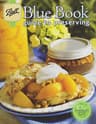 Ball Blue Book Guide to PreservingThe cheap, thin one that has been in kitchens for a century, and the one to buy first. Every recipe in it is tested, which is the only property that matters — a canning recipe is a validated process, not a suggestion. | The first book to own | Tested recipes, cheap | $29.99 · View on Amazon#ad we earn a commission · price as of October 18, 2026 |
| 2 |  ForJars Canning Lids, Regular Mouth (100-pack)Lids are the only true consumable in canning, they store indefinitely if kept dry, and they are the item that sells out regionally in August. Buying a season's worth in spring removes the one shortage that can stop you with produce already on the counter. | A season of lids in one box | 100 lids | $35.95 · View on Amazon#ad we earn a commission · price as of October 18, 2026 |
| 3 | Ball Premium Jar Lifter (10731)If you buy exactly one canning tool, buy this. Rubberized jaws shaped to a jar shoulder, lifting a hot quart straight up out of boiling water without tilting it. Kitchen tongs do not do this and the failure mode is a burn. | The one tool to buy first | Fits regular and wide | Check price on Amazon#ad we earn a commission · live price pending |
| 4 |  Ball Pickle Crisp Granules (calcium chloride)The one additive on this page that is purely about texture, and the one most likely to fix the complaint people actually have about home pickles. It is calcium chloride, it firms the vegetable's natural pectin, and Iowa State Extension is clear that it does not change the pH or pose a safety risk. | Pickles that go soft | 1/8 tsp per pint | |
| 5 |  Avery Printable Dissolvable Labels (4224)The label that disappears in the wash, which is the specific problem home canners have: jars are reused every year and last year's label has to come off completely. Avery's 4224 sheets are printable, so a batch of forty jars gets identical labels with the contents and date already on them. | Printing a whole batch at once | 90 labels, dissolvable, printable | |
| 6 | Granite Ware Enamel-on-Steel Canner KitThe canner, the rack and the tool set in one box. It works out cheaper than buying the pieces separately and, more usefully, means nothing is missing on the morning you actually start. | Canner and tools together | Canner, rack and tools | Check price on Amazon#ad we earn a commission · live price pending |
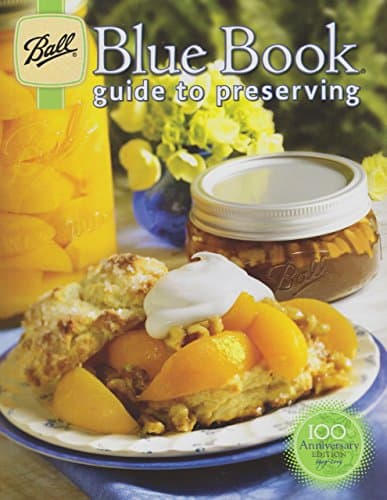
Ball Blue Book Guide to Preserving
The cheap, thin one that has been in kitchens for a century, and the one to buy first. Every recipe in it is tested, which is the only property that matters — a canning recipe is a validated process, not a suggestion.
Published specs
- Publisher
- Ball / Newell Brands
- Content
- Tested water bath and pressure canning recipes
- Why it matters
- A tested source you can hold while your hands are wet
What works
- Tested recipes, which is the entire point of buying a canning book rather than reading a blog
- Cheap enough to buy alongside your first case of jars without thinking about it
- Compact and spill-tolerant in a way a laptop on a counter is not
What to know first
- Recipe range is narrower than the bigger books — this is a foundation, not a library
- Editions change; a very old copy may predate current guidance and should be cross-checked against the NCHFP
- Not a technique manual. It tells you what to do, less about why
Specs from NCHFP, Recommended Canners. We have not handled this product — see how we pick.
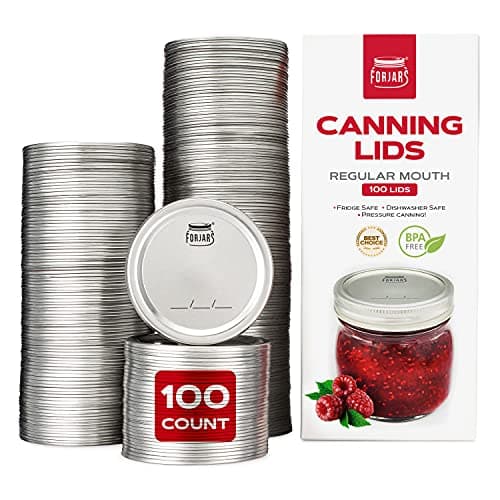
ForJars Canning Lids, Regular Mouth (100-pack)
Lids are the only true consumable in canning, they store indefinitely if kept dry, and they are the item that sells out regionally in August. Buying a season's worth in spring removes the one shortage that can stop you with produce already on the counter.
Published specs
- Pack
- 100 lids
- Mouth
- Regular
- Type
- Flat lids — single use, as all flat lids are
- Bands
- Not included in this pack
- Storage
- Indefinite if kept dry and undented
What works
- Removes the August supply problem entirely. Regular-mouth lids are the most widely stocked canning item in the country and therefore the first to sell out when a whole region cans at once
- Per-lid cost at 100 is meaningfully below a 12-count box, and there is no spoilage risk to buying ahead
- ForJars is a canning-specific brand rather than an unbranded marketplace lid, which is worth something on the one component whose job is the seal
What to know first
- No bands included, so this is a top-up for people who already own rings rather than a first purchase
- One hundred lids of one mouth size is a commitment — buy the size you actually use most, not a hedge
- A bulk box that gets stored damp is a bulk box of rusted lids. Keep it dry and flat
Specs from NCHFP, Recommended Jars and Lids. We have not handled this product — see how we pick.
Ball Premium Jar Lifter (10731)
If you buy exactly one canning tool, buy this. Rubberized jaws shaped to a jar shoulder, lifting a hot quart straight up out of boiling water without tilting it. Kitchen tongs do not do this and the failure mode is a burn.
Published specs
- Fits
- Regular and wide mouth jars
- Grip
- Rubberized jaws
- Why it matters
- Lifts a jar level, without tilting the seal
What works
- Lifts a jar straight up rather than pinching it, which keeps water off the sealing surface
- The rubber grip holds on a wet jar, which is the exact moment tongs fail
- Costs less than a case of jars and prevents the most common kitchen injury in this hobby
What to know first
- Only does one job. Everything else in a tool set is still missing
- Nearly always cheaper bought inside a set than alone
- The rubber degrades over years of boiling water; it is not a lifetime tool
Specs from NCHFP, Recommended Canners. We have not handled this product — see how we pick.
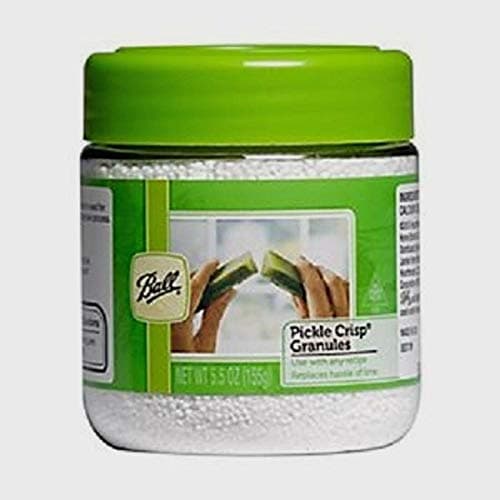
Ball Pickle Crisp Granules (calcium chloride)
The one additive on this page that is purely about texture, and the one most likely to fix the complaint people actually have about home pickles. It is calcium chloride, it firms the vegetable's natural pectin, and Iowa State Extension is clear that it does not change the pH or pose a safety risk.
Published specs
- What it is
- Calcium chloride
- What it does
- Iowa State Extension: it works by firming the natural pectin of the vegetable
- Dose
- Generally 1/8 teaspoon per pint and 1/4 teaspoon per quart
- Safety
- Does not have the hydroxide component of lime, so it does not change the pH of pickled food or pose a food safety risk
- Replaces
- Food-grade lime soaking, with less fuss
- Added
- To each jar before processing
What works
- It solves a real and common disappointment. Soft pickles are the single most-reported home canning letdown, and this addresses the cause rather than the recipe
- Because it does not shift pH, adding it does not invalidate the acidity a tested pickle recipe depends on — which is the reason most additives are a bad idea
- Far less work than the traditional pickling-lime soak, which needs repeated rinsing to get the lime back out
What to know first
- It is a texture aid and nothing more. It does not preserve, does not acidify, and does not extend a processing time
- Iowa State notes most recipes do not specifically state its use, and there are no established guidelines beyond pickles. Outside pickles you are on your own, and we would not
- It cannot rescue produce that was already limp. Firming works on a fresh, crisp cucumber, not on one that sat in a warm car
Specs from Iowa State University Extension, Calcium Chloride for Pickling Crispness. We have not handled this product — see how we pick.
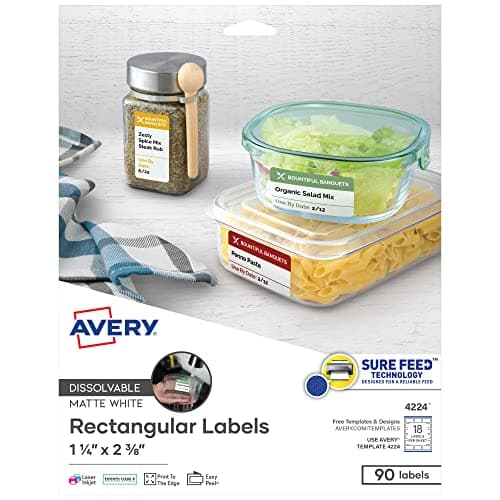
Avery Printable Dissolvable Labels (4224)
The label that disappears in the wash, which is the specific problem home canners have: jars are reused every year and last year's label has to come off completely. Avery's 4224 sheets are printable, so a batch of forty jars gets identical labels with the contents and date already on them.
Published specs
- Product
- Avery 4224
- Size
- 1-1/4" x 2-3/8" rectangle, 18 per sheet, 90 labels (Avery)
- Material
- Dissolvable paper label, laser and inkjet printable (Avery)
- Removal
- "Labels dissolve quickly and easily with no residue when washed by hand or in the dishwasher" (Avery)
- Food contact
- Freezer and microwave safe; FDA-compliant adhesive for indirect food contact (Avery)
What works
- Printable, so contents, date and batch go on every jar legibly without forty handwritten labels
- Dissolves rather than peels, which is the difference between a jar you can reuse and one with a gummy ghost on the side
- Avery publishes a template number, so the sheet lines up correctly the first time
What to know first
- Dissolvable means dissolvable: a jar wiped with a wet cloth or stored somewhere damp can lose its label
- You need a printer and a template, which is more setup than writing on a sticker
- Ninety labels is not many if you can in volume, and the per-label cost is the highest of our picks
Specs from Avery, 4224 Dissolvable Rectangle Labels, NCHFP, Storing Home Canned Foods. We have not handled this product — see how we pick.
Granite Ware Enamel-on-Steel Canner Kit
The canner, the rack and the tool set in one box. It works out cheaper than buying the pieces separately and, more usefully, means nothing is missing on the morning you actually start.
Published specs
- Contents
- Enamel water bath canner, jar rack and canning tools
- Canner material
- Porcelain enamel on steel
- Covers
- High-acid foods only — this is not a pressure canner
What works
- One purchase and you can start, which is worth more than the money it saves
- The enamel canner is the same one most people buy on its own
- Nothing in the box is a piece you will later replace as inadequate, except possibly the lid wand
What to know first
- Water bath only. Beans, corn, meat and plain vegetables still need a pressure canner
- Kit contents vary between sellers — check the tool list before you buy
- If you already own a stockpot deep enough, you are buying a rack and tools at a canner's price
Specs from NCHFP, Recommended Canners. We have not handled this product — see how we pick.
Why lids are the best-kept gift in canning
Flat lids are single-use by design. Ball puts it in its own instructions: "When canning, it is crucial to use NEW lids each time because undersides of the lids have a special softened sealing compound that is made to mold and seal to the jar." The jars last decades and the bands last years. The lid is consumed every time.
Which makes a bulk case of lids the rare gift that is impossible to get wrong and genuinely welcome - the one thing a canner always needs more of and never enjoys paying for. Two things to check before you buy: mouth size and date.
- Mouth size is not interchangeable. Regular mouth lids are about 70 mm and wide mouth about 86 mm. If you do not know which they use, regular mouth is the commoner of the two, and wide mouth vs regular mouth explains why people own both.
- Lids have a shelf life. NCHFP: "Gaskets in unused lids work well for at least 5 years from date of manufacture," and "Buy only the quantity of lids you will use in a year." A hundred lids is a season or two, not a decade.
The book, and why the edition matters
This is the gift most canners will not buy themselves, because the one on their shelf still works. It mostly does. What changes between editions is the part that matters: tested process times get revised, practices get retired, and recipes get withdrawn.
Old canning books recommend things that are no longer considered safe - open kettle canning, paraffin seals on jams, oven canning, water bathing low-acid vegetables. A 1970s Blue Book is a nice object and a bad instruction manual. Giving somebody the current edition is quietly one of the most useful things in this whole list, and the comparison between books is in the best canning books.
What to get for someone who has not started yet
Different problem, and the stove constraint comes back. If you are buying for somebody who keeps saying they want to try canning, a starter kit is the right shape of gift - a canner, a rack and the basic tools in one box, so they are not making five decisions before their first jar.
The catch is the one from rule one: a kit contains a pot, and a pot has a diameter. Before buying, find out whether their stove is gas, electric coil, or a smooth top. Gas is forgiving. An electric coil needs the element check. A smooth-top range needs its own homework, because several canner makers rule their pots out for glass - see pressure canning on a glass top stove.
If you cannot find that out without spoiling the surprise, buy the book and a case of jars instead. The full kit comparison is the best canning starter kits, and what a first season actually costs is in what does it cost to start canning.
The gifts to skip
| Popular gift | Why it misses | Better version |
|---|---|---|
| A canner, unmeasured | May not suit their stove element | Ask about the stove first, or buy the book |
| Decorative or colored jars | Ball retires jars used for non-food purposes | A case of plain jars in a size they use |
| A magnetic lid wand | In every tool set already, and current guidance does not call for boiling lids | A second jar lifter, which does get used |
| Antique jars | Extension services say decorative use only | Modern jars, and the antique as an ornament |
| A second funnel or bubble remover | They own one, and it has not worn out | Labels, which get used up |
| A gift card for a canner | Hands the research back to them | A kit you have checked, or a consumable |
On antique jars specifically, since they turn up in gift guides constantly: SDSU Extension says it plainly - "it is not recommended to use vintage or antique canning jars for food preservation. Instead, enjoy those jars as vases, canisters or just a nice touch to your home décor." Give it as an ornament and say so. The reasoning is in old canning jars.
Assembling it, if you want it to look like a present
A case of lids in a box is a useful gift that looks like a delivery. Two cheap ways to fix that without breaking any of the three rules:
- Fill a wide-mouth jar with the small things - labels, a bag of Pickle Crisp, a packet of pickling spice - and put the lid case and the book underneath. The jar is the wrapping and it gets used.
- Add the consumable they are least likely to have bought: Pickle Crisp if they make pickles, pectin if they make jam, canning salt if they are new. Each is a few dollars and each solves a specific complaint about last season.
What not to do is put food in a jar and seal it with a flat lid as though it were canned. A lid that pulls down in a cold car is not a preserved jar, and the person you are giving it to will know.
The decision, in one paragraph
For a canner who already has their gear: the current Ball Blue Book, or a case of 100 flat lids in the mouth size they use. For somebody who cans a lot: a second jar lifter, because the first one is always in the dishwasher, plus labels and Pickle Crisp. For somebody who has not started: a starter kit, but find out what their stove is first. And skip anything decorative, because a working canner has no shelf space and Ball retires any jar that has been used for something else.
Next stepWhich edition of which bookCommon questions
What should I get someone who cans?
Is a canner a good gift?
How many lids should I buy as a gift?
Regular mouth or wide mouth lids?
Are decorative or antique jars a good gift for a canner?
What is the one tool worth gifting twice?
Can I put homemade jam in a jar as a gift?
Do you earn a commission on these?
Sources
- NCHFP — Recommended Jars and Lids (lid shelf life and quantity)
- NCHFP — Recommended Canners
- Ball — Use & Care (canning jars, lids and bands)
- Penn State Extension — Canning Jars and Lids, An Update
- SDSU Extension — Canning Jar Update
Product specifications are taken from each manufacturer’s own published page, cited on the product. We have not handled these products — how we pick.