The best 4 oz canning jars
The smallest jar worth owning. Right for jelly and gifts, wrong for anything you actually eat by the spoonful.
Disclosure: we earn a commission on purchases made through links on this page, at no extra cost to you. It does not change what we recommend — see how we pick and our affiliate disclosure.
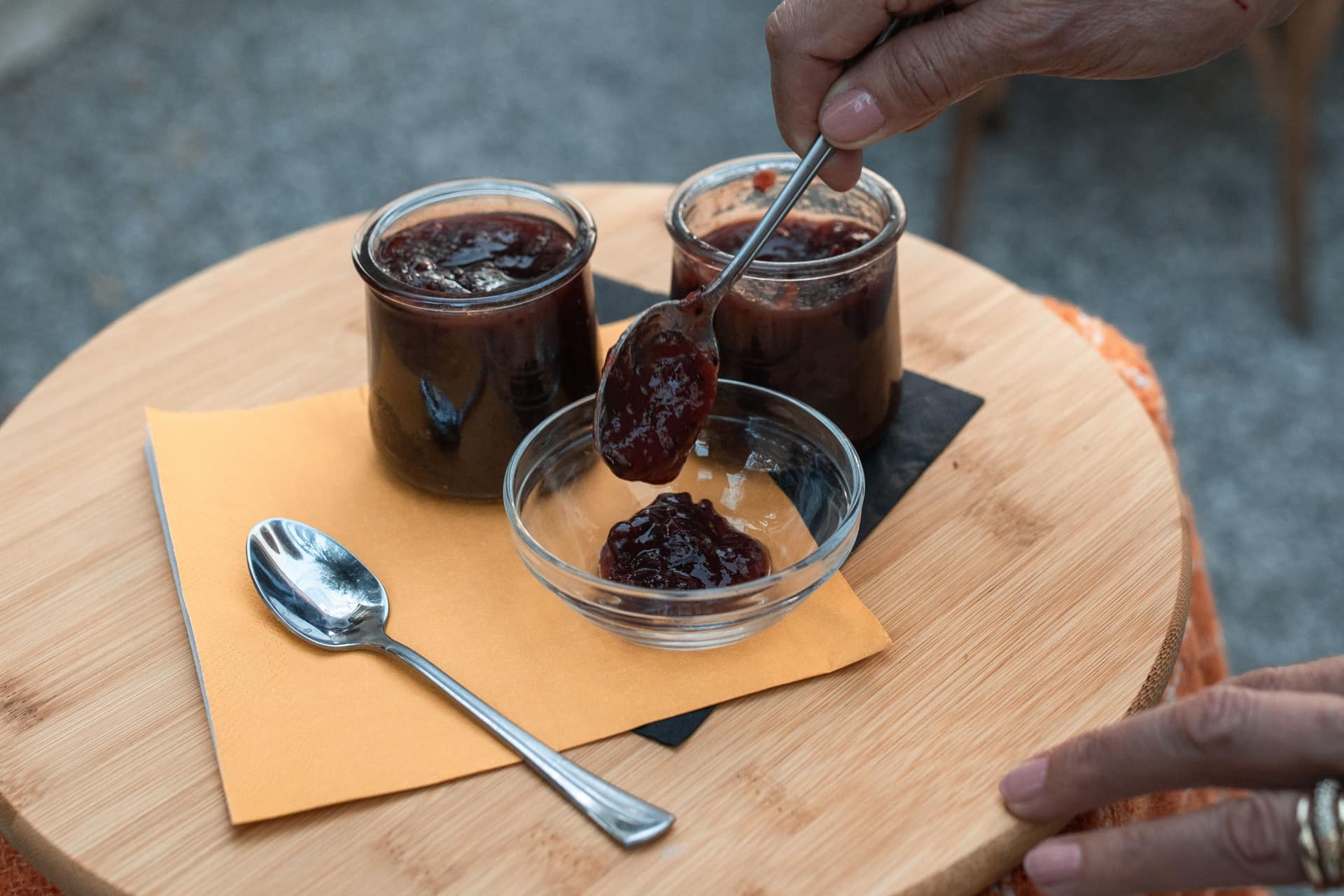
A 4 oz jar holds half a cup and takes a standard regular-mouth lid. It is the right size for jelly, marmalade and gifts, because a household finishes it before the contents dull in the fridge. Small jars do not get a shorter processing time — use the time the tested recipe gives for that jar size.
The quarter-pint is the jar people buy last and then wish they had bought first. It is not a general-purpose size and it is not trying to be. It solves one specific problem, and it solves it better than anything else on the shelf.
That problem is jelly — strained through a jelly bag and set with pectin. A pint of jelly is a commitment. Opened, it sits in the fridge losing its set and its color long before a normal household gets to the bottom of it. Four ounces is roughly the amount two people will actually finish while it is still good.
How we screened these
We have not handled these jars. What we checked is whether each is a recommended Mason-type canning jar, whether it takes a lid size you already stock, and whether the pack quantity makes sense against a canner load. The method is on how we pick.
- Is it a canning jar? The NCHFP names threaded Mason-type jars with two-piece self-sealing lids. Decorative small glass often is not.
- Lid size — regular mouth, so it does not add a third lid size to your shelf.
- Pack quantity against a canner load — a standard canner takes twelve half-pints, and quarter-pints run to similar numbers.
- What it is actually for — jelly, gifts and odd half batches, not staples.
- Headspace discipline — small jars are the easiest to overfill.
Quick picks
Every pick below is screened against the National Center for Home Food Preservation’s published canner rules first. Tap a row for the full write-up.
| # | Product | Best for | Key spec | Price |
|---|---|---|---|---|
| 1 |  Ball Quilted Crystal Jelly Jars, 4 oz (quarter-pint)The smallest jar worth owning, and the one most people underbuy. A quarter-pint holds enough jelly for a household to finish before it dulls in the fridge, it is the right size to give away, and it is what you reach for when a batch makes an awkward extra half jar. | Jelly, gifts and sample batches | 4 oz, regular mouth | |
| 2 |  ForJars 4 oz Regular Mouth Canning Jars (12-pack)The same job as the Ball quarter-pint in a larger pack, from the lid maker a lot of canners already buy. Worth knowing about mainly because 4 oz jars are usually sold in small sets, and a jelly day goes through more of them than you expect. | A bigger 4 oz batch | 12 jars per pack | $20.95 · View on Amazon#ad we earn a commission · price as of October 18, 2026 |
| 3 |  Ball Half-Pint Jelly Jars (8 oz)Small jars for the things you eat slowly. A half-pint of jam opens, gets used and gets finished before it goes dull in the fridge, and a full canner load of them processes in a fraction of the time a quart load does. | Jam, jelly and gifts | 8 oz / 1 cup | $45.99 · View on Amazon#ad we earn a commission · price as of October 18, 2026 |
| 4 | Reused commercial food jarsSkipSkip pasta sauce, pickle and mayonnaise jars. They are manufactured to be filled once in a factory, not heated and cooled repeatedly, and their rims are not made to the standard a two-piece canning lid seals against. | Nothing - skip these | Not made for canning | Check price on Amazon#ad we earn a commission · live price pending |
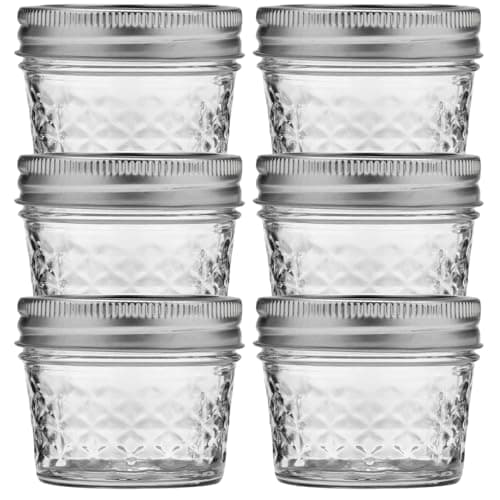
Ball Quilted Crystal Jelly Jars, 4 oz (quarter-pint)
The smallest jar worth owning, and the one most people underbuy. A quarter-pint holds enough jelly for a household to finish before it dulls in the fridge, it is the right size to give away, and it is what you reach for when a batch makes an awkward extra half jar.
Published specs
- Volume
- 4 oz (1/2 cup)
- Mouth
- Regular, about 2-3/8 inches
- Style
- Quilted crystal
- Included
- Jars, lids and bands
- Processing
- Uses the tested time for the recipe, not a shorter one
- NCHFP status
- A recommended Mason-type home canning jar
What works
- The right size for jelly, which dulls and weeps in the fridge long before a pint gets finished in most households
- Takes standard regular-mouth lids, so it does not add a third lid size to your shelf
- Genuinely the best gift jar — a 4 oz jar of something reads as a present in a way a quart does not
What to know first
- More jars means more rims to wipe and more lids to buy per batch, which is real work on a big day
- A 4 oz jar of anything you actually eat regularly is an annoyance rather than a convenience — this is a jelly and gift jar, not a staple jar
- Small jars are easy to overfill. The headspace in a tested recipe is not optional because the jar is little
Specs from NCHFP, Recommended Jars and Lids. We have not handled this product — see how we pick.
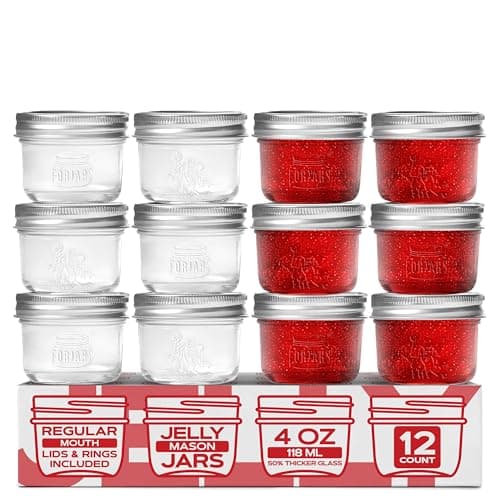
ForJars 4 oz Regular Mouth Canning Jars (12-pack)
The same job as the Ball quarter-pint in a larger pack, from the lid maker a lot of canners already buy. Worth knowing about mainly because 4 oz jars are usually sold in small sets, and a jelly day goes through more of them than you expect.
Published specs
- Volume
- 4 oz
- Mouth
- Regular
- Pack
- 12 jars with lids
- Brand
- ForJars, better known for its lids
What works
- Twelve jars is one comfortable canner load of quarter-pints rather than a part load
- Regular-mouth standard, so the lids you already stock fit
- ForJars is a real canning brand rather than an unbranded import, which matters more for glass than people assume
What to know first
- We have not handled these, and ForJars is better established in lids than in glass
- A 12-pack of 4 oz jars is a lot of jelly if jelly is not actually your thing
- Quilted glass is a Ball signature; if you want that specific look this is not it
Specs from NCHFP, Recommended Jars and Lids. We have not handled this product — see how we pick.
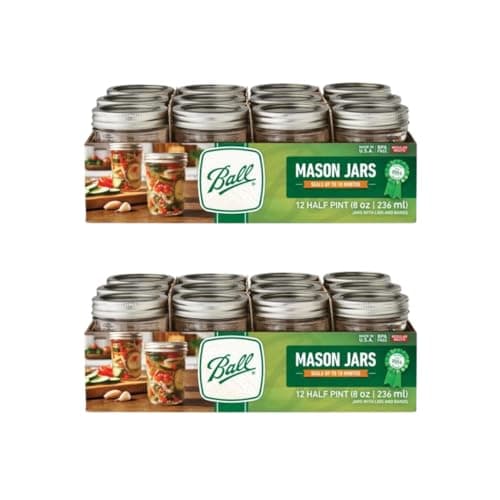
Ball Half-Pint Jelly Jars (8 oz)
Small jars for the things you eat slowly. A half-pint of jam opens, gets used and gets finished before it goes dull in the fridge, and a full canner load of them processes in a fraction of the time a quart load does.
Published specs
- Volume
- 8 oz / 1 cup
- Mouth
- Regular, about 70 mm lid diameter
- Jar dimensions
- About 3 3/4" tall x 2 3/8" wide
- Typical load
- 12 half-pints in a 21.5-quart canner rack
What works
- Short processing times, so a jam day is genuinely a morning rather than a day
- The right size for anything you open and use a spoonful of at a time
- Uses the same regular-mouth lids as pint jars, so no second lid size to stock
What to know first
- Too small to be useful for anything you cook with in volume
- More jars per batch means more lids, and lids are the recurring cost
- Easy to over-buy in a jam-making mood and then not use for a year
Specs from Ball, Mason Jars & Lids, Regular Mouth. We have not handled this product — see how we pick.
Reused commercial food jars
Skip pasta sauce, pickle and mayonnaise jars. They are manufactured to be filled once in a factory, not heated and cooled repeatedly, and their rims are not made to the standard a two-piece canning lid seals against.
Published specs
- Thread standard
- Not guaranteed to match a canning lid
- Glass
- Not specified for repeated thermal cycling
- The alternative
- Jars sold specifically for home canning
What works
- They are free, which is the entire argument for them and it is not enough
What to know first
- A lid that appears to fit may not seal reliably against a rim that was not made for it
- Repeated heating and cooling is exactly the stress these jars were not designed for
- A jar that breaks in a canner is a burn hazard as well as a lost batch
Specs from NCHFP, Recommended Canners. We have not handled this product — see how we pick.
What a 4 oz jar is genuinely good at
Four jobs, and it beats every other size at all four:
- Jelly and marmalade. The set softens and the flavor dulls once opened. Small jars mean you open a fresh one rather than finishing a tired one.
- Gifts. A 4 oz jar of something homemade reads as a present. A quart of it reads as a chore you have transferred to somebody else.
- The awkward extra. Almost every batch makes a little more than the jars you filled. A couple of quarter-pints absorb that instead of leaving you with a half-empty pint that never seals properly in your memory.
- Strong flavors. Pepper jelly, concentrated chutney, anything used a teaspoon at a time.
The rule small jars do not escape
This is the one thing worth being blunt about. A smaller jar does not get a shorter processing time on your own judgement. Processing times come from the tested recipe for the jar size named in it, and where a recipe gives a time for half-pints or pints, that is the time — a quarter-pint is processed for the time the recipe specifies, not for less because it is little.
The same goes for headspace. The gap a recipe specifies is what lets a vacuum form as the jar cools, and it does not scale down because the jar did. Overfilling a 4 oz jar is the most common way to get a failed seal out of this size — and diagnosing that is canning lids not sealing.
Where the quarter-pint is the wrong call
Anything you eat regularly. Four ounces of tomato sauce is an irritation rather than a portion, and a shelf of quarter-pint pickles means opening three jars for one meal. The size that suits most staple foods is the pint, and the full size chart is in canning jar sizes.
It is also the wrong call for anything low-acid. Jar size does not change method: green beans, corn, plain vegetables, meat and stock need a pressure canner whatever the jar holds. That split is set out in what can you water bath can.
How many to buy
Fewer than you would buy of pints, and more than the six that come in a small set. A single jelly day goes through more quarter-pints than people expect, because the whole point of the size is that a batch fills a lot of them. A dozen is a sensible first purchase; two dozen if you gift.
What actually goes in them
The quarter-pint suits a specific class of food: things that are intense, things that are expensive per jar to make, and things that lose their quality once the jar is open. In practice that is a short and fairly predictable list.
- Jelly of every kind. The classic use and the reason the size exists. Jelly is mostly sugar and pectin, it sets firm and then softens once opened, and nobody eats a pint of it quickly.
- Pepper jelly and hot sauces. Used a teaspoon at a time, so a pint would outlive its own flavor.
- Marmalade and conserves. Expensive in fruit and time per jar, which makes a small jar feel generous rather than mean.
- Concentrated chutneys and relishes, where a little goes onto a plate rather than into a bowl.
- The awkward extra. Almost every batch makes slightly more than the jars you filled. Two quarter-pints absorb that cleanly.
The gifting case, honestly
This is a real reason to own the size and it is worth saying without embarrassment. A 4 oz jar of homemade jelly is a present somebody will actually finish. A quart of it is a logistical problem you have handed to a colleague.
Two practical notes if that is why you are buying. Label what is in it and when you made it — the person receiving it has none of your context and a year-old unlabeled jar goes in a cupboard rather than on toast. And give the band with the jar but tell them it comes off: bands are for processing and storage, and leaving one screwed down on a sealed jar can trap moisture and rust it in place.
Headspace in a small jar
Worth its own section because small jars are where headspace goes wrong most often. The gap a recipe specifies is not decoration — it is what lets air be driven out during processing so a vacuum forms as the jar cools. In a 4 oz jar that gap looks enormous relative to the contents, and the temptation to fill closer to the rim is strong.
Resist it. Too little headspace and food expands into the sealing surface during processing, which contaminates the rim from the inside and produces exactly the failure covered in canning lids not sealing. The figure in the recipe applies to the jar size the recipe names, and it does not scale down because the jar did.
Loading a canner full of small jars
A quarter-pint is short, and that changes how the canner behaves. The water requirement does not shrink with the jar: you still need at least 1 inch of briskly boiling water over the tops, and 2 inches once a process runs past 30 minutes. Over a short jar that means a lot of water above a little glass, and the pot takes longer to come back to a boil once the jars go in.
Two things follow. Use the rack as normal — short jars are more prone to tipping and drifting together, and jars knocking each other is one of the ways rims get chipped. And do not mix jar heights in one load if you can avoid it, because the water level that covers a quart properly is a lot of water over a quarter-pint, and the level that just covers the small ones will not cover the tall ones at all.
If you are running a mixed day, process by jar size in separate batches. It is slower on paper and faster in practice, because every jar in the load gets the time its recipe actually specifies.
The decision, in one paragraph
Buy quarter-pints if you make jelly, marmalade or anything you give away, and buy regular-mouth so the lids you already own fit. Do not buy them as a general-purpose jar, do not shorten the processing time because the jar is small, and do not fill them past the headspace the recipe gives. For everything else, the pint is the jar that earns its shelf space.
Next stepThe full jar size chartCommon questions
How much does a 4 oz canning jar hold?
Do 4 oz jars use special lids?
Can you process 4 oz jars for less time?
What are 4 oz jars best for?
How many 4 oz jars fit in a water bath canner?
Are 4 oz jars worth buying, or should I just use half-pints?
Can I put 4 oz jars in a pressure canner?
Do you earn a commission on these?
Sources
- NCHFP — Recommended Jars and Lids
- NCHFP — Recommended Canners
- National Center for Home Food Preservation
Product specifications are taken from each manufacturer’s own published page, cited on the product. We have not handled these products — how we pick.